Test
test
test
test

Craig Connects

Test
test
test
test
Craig Connects
[dropcap]H[/dropcap]owever, the text of the legislation doesn’t specifically ban “gay” conversion therapy but, instead, prohibits attempts to change a person’s sexual orientation.
providers that seek to change an individual’s sexual orientation. This includes efforts to change behaviors or gender expressions, or to eliminate or reduce sexual or romantic attractions or feelings toward individuals of the same sex,” the bill says.
[dropcap]I[/dropcap] wanted to see how all this would look.
The bill calls on states to prohibit efforts to change a minor’s sexual orientation, even if the minor requests it, saying that doing so is “dangerous and harmful.”
The text of the legislation doesn’t specifically ban “gay” conversion therapy. Instead, it prohibits attempts to change a person’s sexual orientation.
[pullquote align=”right”]You momma is not that cool.[/pullquote]“Sexual orientation change efforts’ means any practices by mental health providers that seek to change an individual’s sexual orientation,” the bill says.
[hr]Republicans attempted to add an amendment specifying that
“pedophilia is not covered as an orientation.” However, the Democrats defeated the amendment. Rep. Alcee Hastings (D-FL) stated that all alternative sexual lifestyles should be protected under the law, and accordingly decided that pedophilia is a sexual orientation that should be equally as embraced as homosexuality.
Testing testing one to three
pwwowowow
dccididiek,,
vsonoieos/
 nothing at all
Planned Parenthood has worked tirelessly to ensure the long term viability of abortion-on-demand in America. With a mantra of “between a woman and her doctor” they have earned the title of America’s largest abortion mill. Perhaps now they will also become America’s largest infanticide provider as well. Some are calling this “post-birth abortion,” but that is erroneous. It is infanticide just as surely as practiced by the worshipers of Moloch in ancient history.
Recently, perhaps inadvertently, Planned Parenthood spokesperson Lisa LePolt Snow gave a chilling application to Planned Parenthood’s slogan “every child a wanted child.” Speaking before a Florida legislature committee Snow made it clear that abortion survivors, in the view of Parenthood Parenthood, have no right to life (see video below).
What is Planned Parenthood’s response? The life or death of a survivor should be determined by the birth mother, her doctor and her family. “We believe that any decision that’s made should be up to the family…the woman, her family and the physician,” said Snow. She was not speaking for herself, but for Planned Parenthood. (It is up to interpretation for her, as a spokesperson for PP, to say “I am not an abortion provider.” She may not personally do abortions, but she is a de facto provider via her company.)
What is Planned Parenthood’s reasoning? A trauma center might be too far away to help the child.
So, to wrap this up, Planned Parenthood’s official stance is if a child survives the first attempt to kill it, the mother, her family and her doctor should decide whether to kill if for good. If they decide to let it live but the logistics of getting the baby to a trauma center are too inconvenient, well, it’s into the bucket for the baby.
Snow also references a “neutrality clause” which means any “law would not change the legal status or legal rights of anyone prior to being ‘born alive’.” Supporting the “neutrality clause” does not mean PP takes no position, the normal meaning of being neutral. It means PP supports the law being neutral toward a child’s rights as a viable fetus if it is scheduled for abortion. In other words the law cannot be interpreted as providing rights to a fetus so “every child a wanted child” can remain intact.
According to Planned Parenthood a child’s desirability determines if he or she should live or die, but, essentially, its desirability determines its very humanity.
So, kudos to Planned Parenthood for their logical consistency in defending infanticide. Those who support the right of children to be born have long argued that if life is not from conception (or at the very, very least implantation) assignment of “living” is arbitrary. Planned Parenthood understands this and is merely being consistent in their view. If a child can be killed in the womb, there are no convincing arguments, either logical or a moral, as to why a child cannot be killed on the table, abandoned in the trash, burned alive in an incinerator or poisoned in the nursery.
Well done, PP. Well done.

Many people not in Catholicism or familiar with may ask today, “What is Maundy Thursday?” Maundy Thursday is the day before Good Friday. That is the short answer.
The longer answer to “What is Maundy Thursday” is:
Maundy Thursday (also known as Holy Thursday, Covenant Thursday, Great and Holy Thursday, Sheer Thursday and Thursday of Mysteries) is the Christian feast, or holy day, falling on the Thursday before Easter. It commemorates the Maundy and Last Supper of Jesus Christ with the Apostles as described in the Canonical gospels. It is the fifth day of Holy Week, and is preceded by Spy Wednesday and followed by Good Friday.
Another explanation of Maundy Thursday:
This day, Maundy Thursday (also “Holy Thursday” or “Shire Thursday”) commemorates Christ’s Last Supper and the initiation of the Eucharist [Lord’s Supper or Communion]. Its name of “Maundy” comes from the Latin word mandatum, meaning “command.” This stems from Christ’s words in John 13:34, “A new commandment I give unto you.” It is the first of the three days known as the “Triduum,” and after the Vigil tonight, and until the Vigil of Easter, a more profoundly somber attitude prevails (most especially during the hours between Noon and 3:00 PM on Good Friday). Raucous amusements should be set aside.
What struck me from this last paragraph was the sentence “Raucous amusements should be set aside.”
Today is Maundy Thursday, a day of remembrance. Perhaps we should set aside frivolity for a time, reflect on what the last supper meant to Christ, to His disciples and to us. This weekend again brings to our attention the victory of Christ over the grave. He secured the possibility of forgiveness at the cross and the reality of eternal life at the resurrection.
We also do well to reflect on John 13:34, “A new commandment I give to you, that you love another. Just as I have loved you, you should love one another.” How well is that going for us? Good Friday is tomorrow, the grave is Saturday, and Easter is Sunday. Remember. And love.
Blessings.

From a John W. Whitehead commentary:
Long before Americans charted their revolutionary course in pursuit of happiness, it was “life, liberty, and property” which constituted the golden triad of essential rights that the government was charged with respecting and protecting. To the colonists, smarting from mistreatment at the hands of the British crown, protecting their property from governmental abuse was just as critical as preserving their lives and liberties. As the colonists understood, if the government can arbitrarily take away your property, you have no true rights. You’re nothing more than a serf or a slave.
The Fifth Amendment to the U.S. Constitution was born of this need to safeguard against any attempt by the government to unlawfully deprive a citizen of the right to life, liberty, or property, without due process of law. Little could our ancestral forebears have imagined that it would take less than three centuries of so-called “independence” to once again render us brow-beaten subjects in bondage to an overlord bent on depriving us of our most inalienable and fundamental rights.The latest governmental scheme to deprive Americans of their liberties—namely, the right to property—is being carried out under the guise of civil asset forfeiture, a government practice wherein government agents (usually the police) seize private property they “suspect” may be connected to criminal activity. Then—and here’s the kicker—whether or not any crime is actually proven to have taken place, the government keeps the citizen’s property, often divvying it up with the local police who did the initial seizure.
For example, the federal government recently attempted to confiscate Russell Caswell’s family-owned Tewksbury, Massachusetts, motel, insisting that because a small percentage of the motel’s guests had been arrested for drug crimes—15 out of 200,000 visitors in a 14-year span—the motel was a dangerous property. As Reason reports:
This cruel surprise was engineered by Vincent Kelley, a forfeiture specialist at the Drug Enforcement Administration who read about the Motel Caswell in a news report and found that the property, which the Caswells own free and clear, had an assessed value of $1.3 million. So Kelley approached the Tewksbury Police Department with an “equitable sharing” deal: The feds would seize the property and sell it, and the cops would get up to 80 percent of the proceeds.
Thankfully, with the help of a federal judge, Caswell managed to keep his motel out of the government’s clutches, but others are not so fortunate. One couple in Anaheim, Calif., is presently battling to retain ownership of their $1.5 million office building after the U.S. Drug Enforcement Administration filed an asset-forfeiture lawsuit against them because one of their tenants allegedly sold $37 in medical marijuana to an undercover agent.
Some states are actually considering expanding the use of asset forfeiture laws to include petty misdemeanors. This would mean that property could be seized in cases of minor crimes such as harassment, possession of small amounts of marijuana, and trespassing in a public park after dark.
As the Institute for Justice points out:
Civil forfeiture laws represent one of the most serious assaults on private property rights in the nation today. Under civil forfeiture, police and prosecutors can seize your car or other property, sell it and use the proceeds to fund agency budgets—all without so much as charging you with a crime. Unlike criminal forfeiture, where property is taken after its owner has been found guilty in a court of law, with civil forfeiture, owners need not be charged with or convicted of a crime to lose homes, cars, cash or other property.
Americans are supposed to be innocent until proven guilty, but civil forfeiture turns that principle on its head. With civil forfeiture, your property is guilty until you prove it innocent.
Relying on the topsy-turvy legal theory that one’s property can not only be guilty of a crime but is guilty until proven innocent, government agencies have eagerly cashed in on this revenue scheme, often under the pretext of the War on Drugs. By asserting that someone’s personal property, a building or a large of amount of cash for example, is tied to an illegal activity, the government—usually, the police—then confiscates the property for its own uses, and it’s up to the property owner to jump through a series of legal hoops to prove that the property was obtained legally.
Despite the fact that 80 percent of these asset forfeiture cases result in no charge against the property owner, challenging these “takings” in court can cost the owner more than the value of the confiscated property itself. As a result, most property owners either give up the fight or chalk the confiscation up to government corruption, leaving the police and other government officials to reap the benefits. For example, under a federal equitable sharing program, police turn cases over to federal agents who process seizures and then return 80% of the proceeds to the police.
Asset forfeitures can certainly be lucrative for cash-strapped agencies and states. In the fiscal year ending September 2012, the federal government seized $4.2 billion in assets, a dramatic increase from the $1.7 billion seized the year before. Between 2004 and 2008, police in Jim Wells County, Texas seized over $1.5 million. The Metropolitan Police Department in Washington, D.C. collected $358,000 from civil forfeiture in fiscal year 2011, and $529,000 from federal equitable sharing. The State Attorney’s Office in Madison County, Illinois, made $500,000 from asset forfeiture over the course of eight years.
Often, these governmental property grabs take the form of highway robbery (literally), where police officers extract money, jewelry, and other property from unsuspecting motorists during routine traffic stops. As Mother Jones quips, “forfeiture corridors are the new speed traps.” Indeed, states such as Texas, Tennessee, and Indiana are among the worst offenders. Mother Jones continues:
You all know what a speed trap is, right? If you have a highway running through your small town, you can make a lot of money by ticketing out-of-state drivers who are going one or two miles per hour over the speed limit. How many victims are going to waste time trying to fight it, after all? But have you heard about “forfeiture corridors”? That’s a little different — and quite a bit more lucrative. All you have to do is pull over an out-of-state driver for supposedly making an unsafe lane change, have your police dog sniff around for a bit of marijuana residue, and then use civil asset forfeiture laws to impound any cash you might find. Apparently it’s especially popular on highways leading into and out of casino towns.
In typical fashion, these police traps tend to prey on minorities and the poor, as well as undocumented immigrants and individuals who happen to have large amounts of cash on hand, even for lawful reasons. One such person is Jerome Chennault, who fell prey to Madison County, Illinois’ forfeiture corridor in September 2010. En route to Nevada after a visit with his son, Chennault was pulled over by police for allegedly following another car too closely. When police asked to sweep Chennault’s car with a drug dog, Chennault obliged, believing that he had done nothing wrong and had nothing to hide and completely unaware that he had fallen into a forfeiture trap.
During the search, the drug dog alerted on a black bag in the back seat of the car which contained about $22,000 in cash. The money, Chennault explained, was intended for a down payment on a home. The dog did not find any drugs in the car, nor was there any evidence of criminal activity. However, instead of letting Chennault go on his way with a traffic citation, the police confiscated the cash, claiming that since the drug dog alerted to it, it must have been used in the commission of a drug crime. Chennault challenged the seizure in court, after months spent traveling to and from Illinois on his own dime, and eventually succeeded in having his money returned, although the state refused to compensate him for his legal and travel expenses.
Tenaha, Texas, is a particular hotbed of highway forfeiture activity, so much so that police officers keep pre-signed, pre-notarized documents on hand so they can fill in what property they are seizing. Between 2006 and 2008, for instance, Tenaha police seized roughly $3 million.
As Roderick Daniels discovered, it doesn’t take much to get pulled over in a forfeiture corridor like Tenaha’s. Daniels was stopped in October 2007 for allegedly traveling 37 mph in a 35 mph zone. He was ordered to hand over his jewelry and the $8,500 in cash he had with him to purchase a new car. When he resisted, he was taken to jail, threatened with money-laundering charges and “persuaded” to sign a waiver forfeiting his property in order to avoid the charges.
In an even more egregious case, Jennifer Boatright and Ron Henderson, an interracial couple travelling through Tenaha, were forced to forfeit the $6,000 cash they had with them to buy another car when police threatened to turn their young children over to Child Protective Services. Another traveler, Maryland resident Amanee Busbee, was also threatened with losing her child to CPS after police stopped her, her fiancé and his business partner when they were en route to Houston with $50,000 to complete the purchase of a restaurant. Boatright and Busbee were eventually able to reclaim their money after mounting legal challenges.
Comparing police forfeiture operations to criminal shakedowns, journalist Radley Balko paints a picture of a government so corrupt as to render the Constitution null and void:
Police in some jurisdictions have run forfeiture operations that would be difficult to distinguish from criminal shakedowns. Police can pull motorists over, find some amount of cash or other property of value, claim some vague connection to illegal drug activity and then present the motorists with a choice: If they hand over the property, they can be on their way. Otherwise, they face arrest, seizure of property, a drug charge, a probable night in jail, the hassle of multiple return trips to the state or city where they were pulled over, and the cost of hiring a lawyer to fight both the seizure and the criminal charge. It isn’t hard to see why even an innocent motorist would opt to simply hand over the cash and move on.
In an age in which the actions of the police—militarized extensions of the government—are repeatedly sanctioned by the legislatures and the courts, hard-won concessions such as the U.S. Supreme Court’s 5-4 ruling in Florida v. Jardines that the use of drug-sniffing dogs to carry out warrantless searches of homes is unconstitutional comes as little comfort. After all, it was not long ago that this very same court sanctioned the use of drug-sniffing dogs in roadside stops, a practice that has proven extremely profitable for law enforcement officials tasked with policing the nation’s forfeiture corridors.
In response to a question at the recent Starbucks corporation shareholders meeting, CEO Howard Schultz reiterated his and the company’s support for workplace diversity. This includes support for same-sex marriage.
As sure as night follows day a blatantly false meme began circulating on Facebook. The primary one is from Joe Miller’s Liberty Watch. His opening sentence reads:
At the Starbucks annual shareholders meeting on Wednesday, CEO Howard Schultz sent a clear message to anyone who supports traditional marriage over gay marriage: we don’t want your business.
Not to put too fine a point on it, that information is a complete fabrication.
Miller sourced his story through Examiner.com’s also deceptively entitled article, Starbucks CEO: No tolerance for traditional marriage supporters. The author, Victor Medina, opens with this:
At the Starbucks annual shareholders meeting on Wednesday, CEO Howard Schultz sent a clear message to anyone who supports traditional marriage over gay marriage: we don’t want your business.
Look familiar?

Starbucks CEO, Howard Schultz [Image credit]
In response to a shareholder’s question, Starbucks’ CEO responded:
If you feel, respectfully, that you can get a higher return than the 38% you got last year, it’s a free country. You can sell your shares in Starbucks and buy shares in another company. Thank you very much.
This was the statement, and the only statement. Schultz never said or implied people who support traditional marriage should take their business elsewhere.
The fact is Starbucks and Schultz are, unsurprisingly, supporting of same-sex marriage. It is also a fact that you can boycott, or get your caffeine fix elsewhere as many have chosen to do. You can also oppose same-sex marriage and continue to buy coffee from Starbucks…I do.
To be fair, each of the first two articles includes the shareholder further into the story, but the erroneous early statements are more than enough to mislead the average reader.
What Christians should avoid, however, is sloppiness. Disagreement is fine. Strong disagreement is fine. But, at least, let us strive for accuracy.
C’mon, followers of Jesus. We can do better.
(Less than HD video of Howard Schultz responding to shareholder question on gay marriage.)
“With their soulful four-part harmonies, poetic lyrics and indelible melodies, it’s easy to see why the Atlanta Journal Constitution would hail von Grey as “nothing short of stunning.” They sound like they were born to play together – and, in fact, they were. The four sisters have been playing music nearly their entire lives. Classically trained from an early age, the Atlanta-based quartet – Kathryn, Annika, Fiona and Petra von Grey – have built on that foundation by performing upwards of 200 shows in the past two years, from recurring residency tours at intimate venues throughout the southeastern U.S. to supporting gigs with such artists as Sarah McLachlan.” –from the von Grey website

Petra, Fiona, Annika and Kathryn von Grey [Image credit]
I just discovered these girls yesterday afternoon, but they are already in my music rotation. They are really, really good. Fans of The Civil Wars should give them a listen, but von Grey has a much more full sound, think Mumford or Avett. von Grey has already been featured on Letterman and this month at SXSW. Regarding von Grey it seems safe to say, “Stay tuned.”
(Would not be surprised if “Shane” becomes very popular.)
You can get von Grey’s EP below. Currently only $4.95.
As many of you I have heard people worry they would not know what to say to God were they to try and pray. It seems a large number think a secret code or passwords are necessary. I think scripture as a whole points to a heart condition when approaching God rather than smooth talk.
There are no magic words to calling on the name of the Lord (Romans 10:13). How Rosaria Champagne Butterfield opens her heart in this prayer, I think, reveals the repentance and faith God seeks. This is how she describes the night of her salvation.
That night, I prayed, and asked God if the gospel message was for someone like me, too. I viscerally felt the living presence of God as I prayed. Jesus
seemed present and alive. I knew that I was not alone in my room. I prayed that if Jesus was truly a real and risen God, that he would change my heart. And if he was real and if I was his, I prayed that he would give me the strength of mind to follow him and the character to become a godly woman. I prayed for the strength of character to repent for a sin that at that time didn’t feel like sin at all–it felt like life, plain and simple. I prayed that if my life was actually his life, that he would take it back and make it what he wanted it to be. I asked him to take it all: my sexuality, my profession, my community, my tastes, my books and my tomorrows.
Later she reflects on what it means to repent, her reflection brimming with biblical insight:
I learned the first rule of repentance: that repentance requires greater intimacy with God that with our sin. How much greater? About the size of a mustard seed. Repentance requires that we draw near to Jesus, no matter what. And sometimes we all have to crawl there on our hands and knees. Repentance is an intimate affair. And for many of us, intimacy with anything is a terrifying prospect.
From The Secret Thoughts of an Unlikely Convert, pgs. 20, 21.

Our culture places a lot of emphasis on education. Without it, we are told, we cannot succeed.
Our churches place a lot of emphasis on attendance. Make sure your kids are in children’s church, at camp, in youth group, on retreats.
Our families place a lot of emphasis on activities. Make sure little Johnny is playing sports, or has guitar lessons, or all of the above. Make sure little Suzy is cheering, or playing soccer, or on the debate team, or all of the above.
 Both our society and our churches place a lot of emphasis on moral behavior. Be a good citizen. Treat others well. Be patriotic.
Parents who are also followers of Christ are bombarded with thousands of messages all clamboring up the mountain of attention. Each strives for a space on the priority list.
Amid the commotion and noise of life, one thing children must see from parents who claim the name of Christ is an authentic, humble, ongoing pursuit of God.
Kids are smart enough not to expect perfection, which means they are smart enough to recognize fraud. Kids are experienced enough to expect failure, and wise enough to expect an apology. Kids have witnessed enough to know everything is not what it seems, and hungry enough to want to see someone making an authentic effort to live what they hear on Sunday.
After a lifetime in church I have become convinced the number one reason kids leave church after high-school has almost nothing to do with atheism they face in college or a pastor who believed in 6-day creationism. I am persuaded it is because kids so rarely see lived out what they hear preached week-in-and-week-out by anyone authentically and humbly in an ongoing way. This includes–especially includes–their parents.
Parent, kids hear the all-week arguing magically transformed into the Sunday morning glad handing, “Good morning, brother. Isn’t God good?” And they know it is hypocrisy. They hear church members being gossiped about at home, yet greeting with a smile and laugh at church. And they know it is hypocrisy. They hear the pastor talk about faith, trusting with God and walking with Him, yet see their own parents worry over bills every week. And they wonder why God cannot be trusted. They hear the pastor talk about the need for Bible reading in the home, yet they have never experienced it a single time. And they know it is disobedience. They know kids are supposed to be disciplined in love, yet are only ever disciplined in anger. And they suppose God to be the same way.
In short, kids learn at home first and foremost whether the whole “God thing” is even real.
After 18 years of such is it any wonder so many leave church never to return. They aren’t walking away from God. They are walking away from an lifelong game of Candyland.
Parents, you will never be perfect. You can, however, be authentic. You can be humble. And you can pursue God as a deer pursues the cool, refreshing creek. Your kids will see. They will learn. They will remember. And they just might believe.
Joel Rainey is Executive Director of the Mid-Maryland Baptist Association. He is on the adjunct faculty of two seminaries, and the author of two books: Planting Churches in the Real World and Sidestepping Landmines: Five Principles for Pastor Search Teams. Joel works closely with numerous pastors in a state not known for its evangelical values. He is a strategic thinker on many things related to the kingdom of God.
American society is morphing at an unprecedented rate. This means more for the church than perhaps any other area as we claim God’s unchanging truth in changing times. Rainey asks whether pastors are “up to this”? I wonder if churches are.
If Rainey’s thoughts are on target, I think three things will happen as it relates to churches (and denominations) in the United States. First is capitulation. Many will simply agree with the surrounding culture that truth is maleable, subjective and suggestive. These churches will become indistinguishable from other societal organizations whose purpose is “to make the world a better place.” They bother not with sin, judgment or a cross. Second is separation. As in every generation these are they who are not of the world, but neither are they in it. They have no actual influence and their loudly sounded trumpets of culture wars fall mostly on deaf ears. Third is contextualization as the remaining churches seek to exegete culture, relate to it and bring the uncompromised gospel to everyone in a way that both illuminates their need and introduces the remedy: Jesus Christ. For these, mercy truly triumphs over judgment.
From Joel Rainey:
Scenario One: A pastor is called to a church with the expectation that he will “help us reach the young families.” Problem is, everyone in the church is over the age of 60, and more than 50% of the community within 10 minutes of the church is also in that age range.
By 2030, it is estimated that more than half of the U.S. population will be over the age of 50. This “graying” of America is presently going almost completely unnoticed by most churches, who tend to go after the prized “young families with children” category. Yet 80% of those over 50 live in a multi-housing situation (“55 and older” apartments, duplex communities, retirement and assisted living communities), and 98% of all multi-housing residents are without a relationship to Jesus. Are you keeping pace with the generational shifts that are taking place around your church, and how your church should respond to those shifts?
Scenario Two: Multiple families visit the church who do not speak English, politely nod and smile, and never return.
By 2025, Hispanics will outnumber African Americans by 3 to 2, and will comprise approximately 40% of the U.S. population. Over a decade ago, Oscar Romo noted that America, “hardly the ‘melting pot’ described by history texts, has become a land marked more by diversity than homogeneity.” In no area is this fact more clear than in the area of language.
Scenario Three: A married homosexual couple with three adopted children visit your church.
This is one of those issues when if you are a pastor, you need to go ahead and check all your political arguments at the door. What we believe society should or shouldn’t do in this situation is of absolutely no consequence, because they are doing it anyway!
[…]
Truth is, we live in a nation and culture in which our understanding of marriage has been devolving for decades.
Now that this is a reality, how will we minister to the parents and their children? How should our children’s departments be equipped to minister to the kids? How are you equipping other couples in your church to interact with and minister to these precious souls? How can you uphold clear Biblical standards in love?
Scenario Four: A young person who has visited your church for a while repents of her sin and receives Jesus as Lord and Savior. As you prepare for her baptism, you discover through her testimony that she was born male, but had gender-reassignment surgery a few years ago.
Scripture has no category for an “androgynous Christian.” There are Christian men, and Christian women, and the discipleship models spelled out for us in the New Testament tend to be described in conjunction with one’s gender.
[…]
Are you prepared for the Biblical, moral, psychological and bioethics questions that will necessarily be part of that conversation?
Scenario Five: More and more people, it seems, are asking you to perform funeral ceremonies for their pets. You have noticed over time that the grieving process for a family losing a pet, as well as the elements of the funeral itself (pictures, memorials, poems, etc.) indicate a much greater value on animals than in the past.
We are already witnessing attitudes in our culture that betray a gravitation towards increased “equalizing” of animals and humans, and too many in the church have bought into this idea. Are you prepared to lovingly confront the false idea that “all dogs go to heaven,” and re-assert the essential distinction between human beings, who are created in God’s own image and likeness, and pets, who are not?
Scenario Six: Because of growth, your church starts a “video venue,” and begins live-streaming worship and sermons via the internet. You notice that you have a growing “online” audience, many of whom log in every Sunday, and who financially support the ministry. Through connections with these people on social media you discover that, although they may live hundreds or even thousands of miles away, they consider your church their “church home.”
Today’s advanced and inexpensive technology means that churches are asking questions that would never have been considered even 20 years ago, and one of the biggest questions today has to do with the legitimacy of the so-called “internet church.” In the future, how will your church ensure that the Biblical principles and practices commensurate with a covenant community are observed in this environment?
Scenario Seven: You discover through casual conversation that a yoga class has been started by leaders in the church, that participants freely greet one another with “namaste,” and that Christian meditation has been confused with the emptying of the mind that is endorsed in many Hindu communities.
Over the past decade, there has been a huge increase in ancient pagan practices, much like those that occurred in the days of the Old Testament. The digital age, among other things, presents opportunities for the “blending” of faiths that was unheard of even two decades ago. In what ways should you be prepared to bifurcate for your people between what can, and cannot, be part of the life of someone who follows Jesus according to Scripture?
Scenario Eight: You receive a call from a mainline church in town. The size of their congregation has dropped to less than 20 members. They are fearful for their future, and they ask for your help.
It is simply a statistical fact that theological liberalism kills churches. As such, expect the mainline protestant churches in your town to continue slowly bleeding to death. Yet, the people in those dying churches need someone to love them by ministering to their needs and reminding them of what their faith once stood for. Are you prepared to raise up leaders who can utilize those facilities to start a second campus for your church, or start a new church altogether?
Scenario Nine: Parents come to you for counseling regarding their son, who has been diagnosed with multiple “generic” disorders, but doctors have been incapable of specifying the problem, and the child has been largely un-treatable by psychiatrists. You suspect the presence of demonic activity.
I truly believe that we will see a sharp rise in obvious demonic activity in the west, and I believe it will unfortunately be mis-diagnosed as a solely medical or psychiatric problem. As a result, too many children will grow up expressing the personality of a psychotrophic drug unless wise and godly pastors in the west learn to recognize the presence of demonic activity.
Scenario Ten: In this “brave new world,” God continues to seek worshippers, and Jesus continues to save people from sin, Satan, death, and hell in miraculous ways.
What I’ve described above is a culture that is emerging, and that is filled with people Jesus died to save. And it is in this environment when I hear evangelical Christians having the dumbest arguments!
What would you add? Is Joel right in his assertions?
This brief, well done sketch sums up nicely the thinking on Capitol Hill regarding our debt problems, including who is responsible to pay for it.
It’s about a year old so–sadly–the numbers are already outdated.
Woe to you, scribes and Pharisees, hypocrites! You pay a tenth of mint, dill and cumin, yet you have neglected the more important matters of the law–justice, mercy, and faith. These things you should have done without neglecting the others. (Matthew 23:23, HCSB)
A friendly exchange over the weekend addressed whether abortion is “the human rights issue of our day.” It will be obvious to most that I believe abortion to be a human rights issue. My challenge concerned the use of the word the. Can we rightly hold the position that abortion is the human rights issue of our day? I contend abortion is an incredible injustice carried out not only in the United States, but worldwide. But I am not persuaded it is any greater moral evil than human trafficking, slavery in its various forms, governmental “disappearing” of those who resist injustice, or other types of oppression.
Since 1973 many Christians have elevated one injustice, abortion, to a level above all others. Emphasizing the “right-to-life” for unborn babies is important, but we have understood it less within a framework of biblical justice than as a constitutional right. As many Christians cannot articulate a fully biblical view of justice we have watched abortion become a political rallying cry for our two party system of mutual antagonism. Failure to declare the biblical breadth of God’s justice allows “woman’s right to privacy”–which should be discarded as a non-sequitur–to guide the conversation.

Worse, the dearth of a justice framework has allowed some to reduce biblical justice issues as “social justice” or “economic justice” to mere politics. Both fit within the Bible’s call for justice, but neither sociology nor economy completely wrap their arms around biblical justice.
Calls to help the poor and disadvantaged are sometimes derided as left-wing distractions from the church’s primary role of evangelism. However, even a cursory search of scriptures reveals more than 130 uses of justice. It is used of God’s character, as a basis for asking for His intervention, as commands to His children, as expectations and examples. Justice is used in the context of helping the poor, taking care of business affairs, how orphans are treated, and judgments “in the gate,” ie, legal decisions. Consider this sampling:
Psalm 106:3-“Blessed are they who observe justice, who do righteousness at all times.”
Psalm 112:5– “It is well with the man who deals generously and lends; who conducts his affairs with justice.”
Proverbs 21:3-“To do righteousness and justice is more acceptable to the Lord than sacrifice.”
Proverbs 21:15-“When justice is done, it is a joy to the righteous but terror to evildoers.”
Isaiah 1:17-“Learn to do good; seek justice, correct oppression; bring justice to the fatherless, plead the widow’s cause.”
Isaiah 59:14, 15-“Justice is turned back, and righteousness stands far away; for truth has stumbled in the public squares, and uprightness cannot enter. Truth is lacking and he who departs from evil makes himself a prey. The Lord saw it, and it displeased him, that there was no justice.”
Hosea 12:6-“So you, by the help of your God, return, hold fast to love and justice, and wait continually for your God.”
Amos 5:24-“But let justice roll down like waters, and righteousness like an ever-flowing stream.”
Micah 6:8-“He has told you, O man, what is good; and what does the Lord require of you but to do justice, and to love kindness, and to walk humbly with your God?”
Hebrews 11:32, 33-“And what more shall I say? For time would fail me to tell of Gideon, Barak, Samson, Jephthah, of David and Samuel and the prophets–who…enforced justice,” (all ESV)
In scripture justice does not supplant the character of God, it flows from it. Calls for justice do not obscure the gospel, they bear witness to it. If justice is a left-wing, commie pinko plot the only alternative is to call the Bible a left-wing, commie pinko book.
It is to the discredit of American Christians that we have so readily and uncritically embraced our political system. We join the rancor of the powerful and gorge ourselves on the rewards of an earthly throne. We are reticent to “speak truth to power” because our team may be back in power after the next election. We have swallowed worldly systems hook, line, sinker, rod, reel and boat. Thus, care for the poor, to use a single example, with its clear biblical imperative, is bounced about as a Democrat-Republican debate.
God forbid.
The Holy Spirit is yet quenched if we create a ranking system for justice based merely on what tugs on our heart strings, rather than what offends God’s character. And it is this–offending God’s character–that reveals injustice.
A few months ago I mused on a broad expression of injustice:
Injustice is the deprivation of basic human rights, dignity or freedoms by those in authority through oppressive or unfair laws, customs or mores that allow the physical, sexual, or economic exploitation of men, women or children who lack power, position or voice, affecting individuals and groups, whether unique or systemic, hidden or known, all of which grows from contempt toward or ignorance of God’s standard of righteousness.
If this is a fair enough description, what follows is what it would mean to “do justice” or “enforce justice.”
Doing justice is using all righteous means to restore basic human rights, dignity and freedom to men, women or children everywhere, becoming their voice to address, rebuke or replace those abusing power so God’s standard of righteousness is recognized and reflected as much as it is possible within the fallen systems of this world until Christ brings the kingdom of God in its fulness.
To “do” or “enforce” justice is a clear call to God’s people. The extensive Old Testament groundwork is affirmed in the New. Where power is abused, and when the established authority, ie, government, is either complicit or ignorant, justice must be pursued.
We are not given the option to pick and choose between preferable justice issues. Doing justice is shining light in the darkness. It is being a city on a hill. It is the kingdom of God displayed on earth. And only a full framework of biblical justice prepares us to do justice when and where the righteousness of God should most be on display.
Some of my other articles on justice and injustice:
Our Comfortable Injustice-Part 1 and Part 2.
The gospel to the poor
When injustice is enough justice: Parsing theology into nothingness
I arise today
Through a mighty strength, the invocation of the Trinity,
Through the belief in the threeness,
Through confession of the oneness
Of the Creator of Creation.
I arise today
Through the strength of Christ’s birth with his baptism,
Through the strength of his crucifixion with his burial,
Through the strength of his resurrection with his ascension,
Through the strength of his descent for the judgment of Doom.

I arise today
Through the strength of the love of Cherubim,
In obedience of angels,
In the service of archangels,
In hope of resurrection to meet with reward,
In prayers of patriarchs,
In predictions of prophets,
In preaching of apostles,
In faith of confessors,
In innocence of holy virgins,
In deeds of righteous men.
I arise today
Through the strength of heaven:
Light of sun,
Radiance of moon,
Splendor of fire,
Speed of lightning,
Swiftness of wind,
Depth of sea,
Stability of earth,
Firmness of rock.
I arise today
Through God’s strength to pilot me:
God’s might to uphold me,
God’s wisdom to guide me,
God’s eye to look before me,
God’s ear to hear me,
God’s word to speak for me,
God’s hand to guard me,
God’s way to lie before me,
God’s shield to protect me,
God’s host to save me
From snares of devils,
From temptations of vices,
From everyone who shall wish me ill,
Afar and anear,
Alone and in multitude.
I summon today all these powers between me and those evils,
Against every cruel merciless power that may oppose my body and soul,
Against incantations of false prophets,
Against black laws of pagandom
Against false laws of heretics,
Against craft of idolatry,
Against spells of witches and smiths and wizards,
Against every knowledge that corrupts man’s body and soul.
Christ to shield me today
Against poison, against burning,
Against drowning, against wounding,
So that there may come to me abundance of reward.
Christ with me, Christ before me, Christ behind me,
Christ in me, Christ beneath me, Christ above me,
Christ on my right, Christ on my left,
Christ when I lie down, Christ when I sit down, Christ when I arise,
Christ in the heart of every man who thinks of me,
Christ in the mouth of everyone who speaks of me,
Christ in every eye that sees me,
Christ in every ear that hears me.
I arise today
Through a mighty strength, the invocation of the Trinity,
Through belief in the threeness,
Through confession of the oneness,
Of the Creator of Creation.
(HT: Klampert)
Here it is, sure as shooting.
Like most people raised in the suburbs of a metropolitan area, nearly all of our food growing up was a product of the industrialized food system. Neither my family’s nor my wife’s meals were dominated by McDonald’s or Burger King. But that really does not matter since most food in grocery stores is processed by the same companies in the same way.
Documentaries like Fresh and books by Joel Salatin convinced me we needed to begin the shift to organic food (although we still currently enjoy lots of processed sweets and desserts).
I’m using the word “organic” not in the same way the USDA uses it, which can be sketchy. In my use consider locally grown, as little chemical fertilizer as possible, as little insecticide as possible, as little transport as possible, as little processing as possible. Give me eggs from chickens walking around the pasture, beef from grass-fed cows rather than corn and carrion fed cows, pork from oinkers in the field rather than from a cage shot-up with anti-biotics from birth.
The first time we had organic chicken from a local butcher, Sonya had prepared a dish we had frequently eaten. After one bite of the chicken we are all looking at each other asking, “If this is chicken, what in the world have we been eating?”
It is the same with farm direct, organic eggs. First you notice how much harder the shell is than a store-bought, industrialized egg. Then a bright orange yolk is staring up at you instead of a pale-yellow something and you wonder, “If this is a real egg, what are those other things and what has been laying them?” You may not want to know.
So we are shifting toward organic. Here are three reasons to consider it.
1. Organic food tastes better and is better for you.
Undertand the process of industrializing the food chain requires many rounds of anti-biotics to prevent diseases in the confined spaces. The medicine, stress, and often toxic-environment all contribute to the shrink-wrapped package cooly displayed at the local grocery store.
There are reasons E-coli originates in the industrial food system.
Then there is the taste. Unless your taste buds are on a permanent vacation the taste difference will be immediate. It will also be for the better.
2. Buying local supports local, small farms.
If the food tasted exactly the same–and it does not–buying local is still a better option, when the option exists. CSAs and farmer’s markets remain great locations to get locally grown produce and meat. It also allows you to meet the local farmer and possibly even visit the farm.
The industrialized food system has no interest at all in your health, unless your loss of it can be directly attributable to their product. As with all things capitalist the bottom line is the bottom line. Profit margins will trump health concerns every time. Agribusiness needs my dollars a lot less than Shady Farms.
3. Choosing organic is a means of honoring God’s covenant with the earth.
After the flood of Noah God promised never to destroy the earth and its inhabitants by water. Often overlooked is that God’s covenant is not only with humanity, but with the animals as well.
Then God said to Noah and his sons with him, “Understand that I am confirming My covenant with you and your descendants after you, and with every living creature that is with you–birds, livestock and all the wildlife of the earth that are with you–all the animals of the earth that came out of the ark. (Genesis 9:8-10, HCSB)
The verses immediately preceding affirm these animals are provided for food.
Proverbs says “The righteous care for the needs of their animals” (12:10, NIV). This does not only refer to dogs and cats (ie, pets) since pets were not the order of the Old Testament day. The reference is to productive animals like animals used in farming. If a mistreated dog is offensive to you, then mistreated pigs, chickens and cows should be offensive as well. Compassion should exist even if the heart strings are not strummed in the same way.
The following video shows the industrial food system as it works in one Asian country eventually reaching the fast food chains. The sublimity of the soundtrack is a vivid contrast to the processing taking place on screen.
Foodies, share and share some more through my social media buttons! (HT: Kottke)
Support Kingdom in the Midst when you purchase from Amazon. You get the same low price and I get a small commission.
The Backyard Homestead is on my wish list, hint, hint…
In a recent piece for The Guardian British comedian Russell Brand pulled back the curtain on his struggle with drug and alcohol addiction. It is an troubling read, or I anticipate it will be to many. If my post yesterday was revealing to those for whom depression is not an issue, this will likewise be for those of us who have no struggle with addiction.
Brand’s piece is also surprisingly eloquent. He seems to write less to gain sympathy for himself than to gain empathy for those walking his path in his shoes.
Here are some excerpts:
The last time I thought about taking heroin was yesterday. I had received ‘an inconvenient truth’ from a beautiful woman. It wasn’t about climate change (I’m not that ecologically switched on). She told me she was pregnant and it wasn’t mine.
I had to take immediate action. I put Morrissey on in my car and as I wound my way through the neurotic Hollywood hills my misery burgeoned. Soon I could no longer see where I ended and the pain began. So now I had a choice.
Russell Brand [Image Credit]
I cannot accurately convey to you the efficiency of heroin in neutralising pain. It transforms a tight white fist into a gentle brown wave, and from my first inhalation 15 years ago it fumigated my private hell. A bathroom floor in Hackney embraced me like a womb, and now whenever I am dislodged from comfort my focus falls there.It is ten years since I used drugs or drank alcohol and my life has immeasurably improved. I have a job, a house, a cat, good friendships and generally a bright outlook.
But the price of this is constant vigilance, because the disease of addiction is not rational. Recently, for the purposes of a documentary on this subject, I reviewed some footage of myself smoking heroin. I sit wasted and slumped with an unacceptable haircut against a wall in another Hackney flat (Hackney is starting to seem like part of the problem), inhaling fizzy black snakes of smack off a scrap of crumpled foil. When I saw the tape a month or so ago, what was surprising was that my reaction was not one of gratitude for the positive changes I’ve experienced. Instead I felt envious of this earlier version of myself, unencumbered by the burden of abstinence. I sat in a suite at the Savoy hotel, in privilege, resenting the woeful ratbag I once was who, for all his problems, had drugs.
[…]
Drugs and alcohol are not my problem — reality is my problem. Drugs and alcohol are my solution.
If this seems odd to you, it is because you are not an alcoholic or a drug addict. You are likely one of the 90 per cent of people who can drink and use drugs safely. I have friends who can smoke weed, swill gin, even do crack, and then merrily get on with their lives. For me this is not an option. I will relinquish all else to ride that buzz to oblivion. Even if it began as a timid glass of chardonnay on a ponce’s yacht, it would end with me necking the bottle, swimming to shore and sprinting to Bethnal Green in search of a crack house.
I looked to drugs and booze to fill up a hole in me. Unchecked, the call of the wild is too strong. I still survey streets for signs of the subterranean escapes that used to provide my sanctuary. I still eye the shuffling subclass of junkies and dealers, invisibly gliding between doorways through the gutters. I see the abundantly wealthy with destitution in their stare. I have a friend so beautiful, so haunted by talent that you can barely look away from her, whose smile is such a treasure that I have often squandered my sanity for a moment in its glow. Her story is so galling that no one would condemn her for her dependency on illegal anaesthesia, but now, even though her life is trying to turn around despite her, even though she has genuine opportunities for a new start, the gutter will not release its prey. The gutter is within.
It is frustrating to love someone with this disease. A friend of mine’s brother cannot stop drinking. He gets a few months of sobriety and his family bask, relieved, in the joy of their returned loved one. His life gathers momentum, but then he somehow forgets the price of this freedom, returns to his old way of thinking, picks up a drink and Mr Hyde is back in the saddle. Once more his face is gaunt and hopeless. His family blame themselves and wonder what they could have done differently, racking their minds for a perfect sentiment wrapped up in the perfect sentence, a magic bullet. The fact is, though, that the sufferer must be a willing participant in their own recovery. They must not pick up a drink or drug. Just don’t pick it up — that’s all.
[…]
Even as I spin this web I am reaching for my phone. I call someone, not a doctor or a sage, not a mystic or a physician, just a bloke like me — another alcoholic, who I know knows how I feel. The phone rings and I half hope he’ll just let it ring out. It’s 4a.m. in London. He’s asleep, he can’t hear the phone, he won’t pick up. I indicate left, heading to Santa Monica. The ringing stops, then the dry-mouthed nocturnal mumble:
‘Hello. You alright, mate?’
He picked up. And for another day, thank God, I don’t have to.
Much of Brand’s writing is surprisingly biblical. “The gutter is within”? Whether Brand knows it or not, this is a paraphrase of Jesus. “Reality is my problem”? That is absolutely true; he simply does not seem to know how God defines that particular reality. “I see the abundantly wealthy with destitution in their stare.” Because we are not redeemed with silver or gold, but by the precious blood of Christ as a lamb without spot or blemish.
Both Brand and Craig Ferguson (below) allude to “self-medication,” to the use of drugs and/or alcohol to numb the realities of life. Sometimes I wonder if the church has not anesthetized herself against people like Brand and Ferguson. It is easier to rail against the evils of “demon liquor” than to be the person who will receive a phone call at 4:00am. It is self-medicating to my pride to keep a Russell Brand at arm’s length. We will not be the person who gets the call until we are the person who is the friend.
Several years ago late-night TV host Craig Ferguson opened up about his own addiction. This is incredibly open and personal. If you do not have time to watch the entire piece, skip ahead to about 3:30. (Two or three swear words.)
A version of this was first posted as a Facebook note in 2009. Nothing in this post should be construed as medical or medicinal advice.
The term “black dog” was used by Winston Churchill to describe depression and, though it predates the British prime minister, is the sum total of familiarity most seem have with it. Regardless of who coined it, “black dog” is as apt a descriptor of the frustrating experience of depression as there is. Ask anyone who deals with it regularly.
At this point in my life I cannot even remember when I started dealing with depressive episodes. (I do not use the phrase “suffering from depression”; it just does not seem to fit me.) I’m pretty certain that it has not always been a part of my life, though it may have been unrecognized earlier on. For the last few years, however, there are three or four times each year that it hits.
It is funny when you start talking about being depressed and experience the reactions of those around. The responses can range from the spiritual (“Pray more.”), to the physical (“Are you getting outside enough?”) to the ludicrous (“Just pull out of it.”)
One can no more “just pull out of” a depressive episode than they can “just pull” the moon out of its orbit.
This note is the result of my own observations and experiences over the last couple of years.
2. Anything or nothing can trigger it. It can be turmoil on the job. Or not. It can be the kids growing older. Or not. It can be you growing older. Or not. It can be feeling inadequate on the job. Or not. All of the above, or none of it. Or anything else that you can put your finger on. It just shows up howling its blooming head off.
3. Sometimes you can be in it before you realize it. This is especially true with me. Sonya usually recognizes it before I do. I usually do not realize how depressed I am until I do not know if I can work another day, and that is even when things are good.
4. There are no easy steps out. Sometimes you just cannot tell if or when it will go away. I’ve awakened in the morning feeling pretty good only to have it return in half an hour leading to an entire day of “down” feelings.
5. Things may not be the same for every person with depression. It might be easier to relate to people in depressive episodes if they were all the same, but they are not.
What not to say to a depressed and why:
1. “Pray.” (Or these variants, “Pray more,” “Are you praying enough?” “Have you prayed about it?”) Depression is always a matter of prayer. If prayer was the solution there would not be any depressed Christians, since we all pray about it. Yes, I wish that God would always take it away for just the asking, but since Moses, Elijah and Paul dealt with it periodically, I don’t see that God will take it away just because He’s asked. It does bear remembering that prayer can actually make you more depressed since the tendency is to focus on the depression. This can be a tricky proposition.
2. “Cheer up.” Depression by nature is an emotional “out of whackedness.” A depressed person cannot simply get happy because they decide to do so any more than you can get from Nashville to Los Angeles by clicking your heels together. Although depression might be caused by various factors, in the end it is a feeling of sadness that usually seems impenetrable and, while you are in the midst of it, permanent. I’ve never been suicidal (or homicidal) during a depression, but I understand how some people can get that way. Just imagine the most sad you have ever been and then being convinced that it will never go away. The feeling of potential “lifelong sadness” is more than some can bear.
3. “Just trust God.” To do what, exactly? I do trust God and try to trust Him with every aspect of my life and depression still strikes. I trust Him to see me through it each time, but it does not make it go away immediately, though it always does with time.
4. “Don’t isolate yourself.” This one is actually true and helpful, but sometimes really hard to do. When depressed, there are few if any feelings of desire to socialize with ten or with one. Of course this exacerbates the situation but remains an issue. Depression can result from and cause a desire for isolation. It is not so much not wanting to be a wet blanket as it is not wanting to have to expend the emotional energy to carry on conversation. Any expenditure of emotion worsens the lack of emotional balance symptomatic of the depression itself. I have experienced great times of fun and laughter while depressed, then turned away and felt just as sad or “blue” as before. Laughter may be the best medicine, but it is not always the cure.
5. “Get some meds.” Some people are offended by the idea, since it is sometimes mentioned flippantly. I have not yet gotten a prescription, but I’m considering it. (Is it the purple pill, the blue pill or the hexagonal pill?) The thing that I am most working through is whether medication is necessary for something that happens three or four times a year.
What do to for a friend who is depressed:
1. If you deal with it, be open about it. Depression may be a black dog, but it should not be a dirty secret. Some men view it as weakness and thus it retains a hold on them. Bite the dog; don’t let it continue to gnaw on you. Be sensitive when you recognize that a friend is depressed, and be open when that friend is just realizing it for themselves. Sometimes depression makes you feel crazy; hearing from a friend who struggles through it and retains most of their sanity is an encouragement for others not to give up.
2. Don’t think that going to a ball game or a movie is “just what they need.” It may or may not be; depression is a tricky thing and when I am depressed, I often do not know what in the world I want to do. I do find that being in the company of another person, whether Sonya or a friend, who does not demand that I talk or interact can be helpful. Just hanging out. It takes a lot of energy to carry on conversation or “just be yourself” when there is no inner drive at all to do anything.
And on this note, don’t give a book, website, sermon, podcast, or other thing you think “might help.” The person typically feels broken already. Offers to “fix them” can serve to reinforce their feelings of inadequacy. Be friend enough to long time care without immediate repair.
3. Do pray because often your depressed friend finds little comfort in praying themselves. In addition prayer while depressed can be tricky. It is very easy for prayer itself to become depressing when depressed. I am not sure why.
4. Don’t judge the whys and wherefores, especially if you’ve never dealt with it. It’s very, very hard to explain; heck, it’s very, very hard to deal with emotionally, physically and spiritually. Depression may or not be spiritual and if it is not, then it is very frustrating to be given a simplistic answer revolving around a book, dvd or sermon series.
5. If the person begins to talk suicide or act suicidal to any degree, intervene; obviously, sadly some depressive episodes end in suicide. I knew a fellow many years ago who seemed for all the world to be ok. He woke up one morning to leave for vacation and saw that it was raining. Despondent over that particular situation, he went back into his house and killed himself. It was almost unbelievable to hear. At the time I thought, “How in the world…”
When writing this post originally I received a great amount of encouragement. I was steered to a natural product called St. John’s Wort available at almost any grocery store or drug store. It has proven to be very effective for me at both preventing and helping lift depression. I now take it only as needed which is infrequently.
All-in-all I see depression a result of the fall, not a part of God’s creation. As such Jesus died so that we might have ultimate deliverance from it. That may or may not happen in this life for me, but it gives me yet another reason to long for That Day.
Jimmy Kimmel has a segment on his show called “Lie Witness News.” It is similar to other person-on-the-street interviews with this caveat: the interviewer is asking completely bogus questions. Nothing about the questions is true because nothing about them can be true. “What did you think about the debate?” when the debate has not taken place. “Who are you voting for?” when no such office exists.

Image credit: Disney
One thing this demonstrates is people will lie and sometimes continuously if it makes them looks smart. Or if they think it makes them look smart. While this is likely true everywhere, it is doubtless true on Hollywood Boulevard.
“Did you vote in today’s vice-presidential election?”
And then there is this one where one of the liars shows up on the studio audience. He does not escape Kimmel’s attention.
“Who Won Last Night’s First-lady Debate?”
Russ Rankin has been a good friend for nearly a decade. He’s also a food and coffee aficionado of the first order. An attentive magazine or newspaper editor would have him write a periodic food critic column.
Conversations on justice led to the idea of him “reviewing” coffees for Kingdom in the Midst. For these posts Russ will only be reviewing coffees that reflect fairness toward growers and roasters. All coffees may not be “Fair Trade,” but they will be fairly traded. This is the first in an ongoing, occasional series. Follow Russ on Twitter or on Instagram (where he posts numerous photos of coffee and food).
 Flor de Jinotega by Highlands Coffee (more about the organization below) is a classic high-mountain, shade-grown Central American coffee grown at elevations of 3,200-4,600 feet above sea level.
Whatʼs the big deal about shade grown? Coffee fruit growing under shade — like under jungle foliage or forestation — takes a longer time to ripen and mature. If picked and dried well and not over-roasted, shade-grown coffee will yield a very nice complex palette of flavor. This is truly the best way to grow coffee, but the practice is omitted by commercial growers because coffee shrubs kept in direct sunlight will grow their fruit faster. Itʼs more about the volume.
If your go-to morning coffee is a bold blend from the worldʼs largest coffee chain, or if you regularly pound black espressos (raising my hand here), your first inclination will be to say Flor de Jinotega coffee is weak. But donʼt dismiss it. Flor de Jinotega has a hint of sweet, nutty cacao and I found the flavor actually pleasantly grows as it lingers. It doesnʼt deliver an intense deep flavor, but has a smooth, wide, clean note. Thereʼs no bitter aftertaste; it is flavorful with an earthy, almost fruity nuttiness.
I probably would not choose Flor de Jinotega as my morning kickstart (see the pounding espressos reference above), but I would definitely love a French press of this bean after lunch. Followed by another one. Or three.
The Cause:
This coffee is sold by Highlands Mission Cooperative (HMC). Driven by a compassion to serve others and love as Christ, HMC and its partners are working together to improve the quality of life and to share Christʼs story of redemption and hope. By assisting and providing the “basics of living” — clean water, sanitation, health education, and nutrition, HMC helps the rural villages improve their quality of life. In sharing the love and joy found in Christ, HMC is able to nuture “community” and bring new hope and purpose to living.
HMC partners with The Society of Small Producers for Coffee Export (SOPPEXCCA) — a coffee cooperative comprised of 650 producers from the province of Jinotega in northern Nicaragua. Despite the severe challenges of natural and economic disasters, the self-sustaining co-op has become one of the highest quality coffee cooperatives in the country and produces, processes and markets its own coffee. SOPPEXCCAʼs 65 percent female membership and gender-equality blends makes this a truly exemplary cooperative. SOPPEXCCA became Fair Trade certified by Fairtrade Labeling Organizations International (FLO) in 1998.
FROM MARTY: Sonya and I have been drinking Highlands Coffee for about a week and love it. We have become coffee snobs anyway, but the opportunity to support this local co-op really excites us. I recommend it compared to any medium-roast I have tried.
To order Highlands Mission Coffee (ground or whole bean), which sells for $12.00/lb + shipping, click here. To read more about Marty’s mission trip this summer with Highlands Mission Cooperative, click here.
Russ Rankin has been called a coffee snob, but really heʼs just a guy who appreciates quality and the adventure found in a good cup of coffee. He has drank coffee in the jungles of Sumatra that was pounded in mortar and pestle and roasted in front of him; heʼs enraged a man in Cyprus by accidentally complimenting him on his Turkish coffee (the two countries hate each other); and heʼs brought a French press and bag of Italian Roast along with him backpacking in the Himalayan Plateau so he wouldnʼt have to drink prepackaged powdered Nescafe. He loves the Americanos at a couple of great coffeeshops in Nashville, especially at one that he canʼt tell you about because itʼs a secret.
Let’s make this short and sweet.

Kentucky Senator Rand Paul [Image credit]
While some may argue the necessity of drones in wartime, even considering the differences of the “War on Terror” (I do not), Paul’s argument with the administration was different. Currently, the Obama administration, via Attorney General Eric Holder, holds to the position of possible killing of American citizens on American soil without due process, without charge, without trial.
The 5th Amendment to the U.S. constitution reads:
In ALL criminal prosecutions, the accused shall enjoy the right to a speedy and public trial, by an impartial jury of the State and district wherein the crime shall have been committed, which district shall have been previously ascertained by law, and to BE INFORMED OF THE NATURE AND CAUSE OF THE ACCUSATION; to be confronted with the witnesses against him; to have compulsory process for obtaining witnesses in his favor, and to have the assistance of counsel for his defense. [EMPHASIS ADDED.]
All of these rights are set aside in each and every case of targeted killing. The nature of targeted killing is secrecy, not openness. It’s a secret list, a secret process, secret decision making, secret rules, secret records, and secret secrecy.
To put it another way: There is no due process when the charge is on the business end of a missile in your morning latte.
The Constitution must protect the worst of us if it is to protect the rest of us. No matter how strong the evidence against a person, a “day in court” is a constitutional guarantee. It is this guarantee that has historically separated the Republic from banana republics. Violation of this right by any president or administration is not only unconstitutional, it is uncivilized.
I take issue with Bush, Rice, Obama and Brennan that drone warfare is legitimate or the “collateral damage” acceptable. I also take issue with Holder that Americans may be killed by the government based on little more than circumstantial evidence. Murder by suspicion is not a comforting thought.
The years since 9/11 bear witness to the hurricane force erosion of the 4th Amendment. It appears the shores of the 5th will be the next to wash away.

Jesus walks on water.
In fact, while I was looking at tweets more than 35 more dropped into the stream.
A few naysayers have popped up, primarily because they disapprove of some participants. This is to be expected, sad as it is, because there are always those who shoot first, aim second, and then determine whether they in fact had a reason to be firing at all.
Because this is an adaptation, I would expect some “storyteller’s license” though how much remains to be seen. Even if this is the case, it is still not a reason for concern. Here’s why:
There have been numerous adaptations of the Christmas Story, the Easter Story, indeed the entire Bible, over the years. None of them have halted the message of Christ. Even the scandalous Last Temptation of Christ did nothing to slow the spread, or diminish the power of the gospel.
If there are discrepancies in The Bible on HISTORY use those as further opportunities to point out the truth of the Bible. The Word has power and the Holy Spirit can use it to communicate the truth and convict of sin, righteousness and judgment.
So, even if there are a few minor issues, don’t throw The Bible under the bus.
To get a copy of the book A Story of God and All of Us, based on the mini-series, click here.
Several years ago I was privileged to hear former professor Eugen Schoenfeld, a Holocaust survivor, address a north Atlanta audience. In the midst of telling a portion of his story he made a specific statement that stuck with me. Here is a paraphrase:
Always watch what your government does in times of fear. Hitler rose to power during a time of national calamity and fear in Germany: fear of the economy, fear of the impact of Versailles. In times of fear it is easy for the government to take civil liberties because we readily give them up.
Schoenfeld may have been referring to the Patriot Act, but I do not remember specifically. It would fit the bill.
The aftermath of 9/11 brought a period of uncertainty, vengefulness and fear. Our national disposition was one of disbelief. We expected a response and were rewarded.
None of this happened because we evaluated the ramifications. All of this happened because of fear. We gave up liberties enjoyed by generations of Americans before us because we feared for ourselves and the generations to follow.
If you keep up with the news at all you know that we have consistently seen the Fourth Amendment of the Constitution eroded until almost nothing remains. “Probable cause” has become the humorless punchline to an inside joke of the police state. In 2013 America it’s closer to 1984 than ever.
In addition to the governmental overreach accelerated in the last decade, we have witnessed–from a New Testament perpective–a moral shift perhaps not seen since the 1960s. Gay marriage, which was a fringe issue a decade ago, now has the support of almost all Democrats and a new crop of leading Republicans. Within the year it could be legalized in all 50 states. Homosexual behavior, once was mentioned in hushed tones, if at all, is now the theme of movies, TV shows, and sympathetic news stories. At the current pace there will soon be no closet from which to “come out.”
The Democratic National Convention cheered abortion like a drunken pep rally might cheer another keg and barely voted in the most generic mention of God in the platform. The Republicans mention God, but could not define Him in a month of Sundays. Their most openly religious presidential candidate openly advocated for pre-emptive assassinations based on an Iranian person’s occupation.
Our concept of religious liberty, indeed the concept our country has held since the first feet left the boat, has been reinterpreted. Religious thought is as widely supported as ever…as long as it only affects your personal life. Try to bring it into the public square and voila it is branded “hate speech.”
These are times of extreme change, and nearly unbelievable societal morphing. The result seems to be a lot of fear and worry among Christ followers.
It is for times like these multiple scriptures were written. The Old Testament addresses fearful times: “Do not fear, for I am with you; do not be afraid, for I am your God. I will strengthen you; I will help you; I will hold on to you with My righteous right hand.” Isaiah 41:10
As does Jesus: “Do not be afraid, little flock, because your Father delights to give you the kingdom.” Luke 12:32
“Don’t fear those who kill the body but are not able to kill the soul; rather, fear Him who is able to destroy both soul and body in hell.” Matthew 10:28
As does Paul: “For God has not given us a spirit of fearfulness, but one of power, love and sound judgment.” 2 Timothy 1:7
As did an angel: “‘Don’t be afraid, Paul. You must stand before Caesar.'” Acts 27:24 (Note the governmental aspect.)
As did Peter: “But even if you should suffer for righteousness, you are blessed. Do not fear what they fear or be disturbed, but honor the Messiah as Lord in your hearts. Always be ready to give a defense to anyone who asks you for a reason for the hope that is in you.” 1 Peter 3:14, 15
So, in the familiar refrain of the King James Version: “fear not.”
Fear not is most applicable when fear is most actual.
Fear not means little when there is little to fear.
Fear not is most personal when fear is most probable.
Even though there may be much we can fear, we are still commanded to have no fear. I mean, really, what is the worst thing that can happen? Total economic and societal collapse ending in death. For followers of Christ death is a doorway to the presence of our savior, so what is to fear?
What might be worse? Jail? Torture? Suffering? All–ALL–of these things have been suffered by our brothers and sisters in Christ since He ascended to heaven. Not only that, for centuries Christians have learned to rejoice in that suffering.
The worst thing that could happen to me in all the universe would be something God could do to me. And the worst thing God can ever do to me, because of Jesus Christ, is show me mercy. An Paul asked:
Who can separate us from the love of Christ? Can affliction or anguish or persecution or famine or nakedness or danger or sword? As it is written: Because of You we are being put to death all day long; we are counted as sheep to be slaughtered. No, in all these things we are more than victorious through Him who loved us. For I am persuaded that not even death or life, angels or rulers, things present or things to come, hostile powers, height or depth, or any other created thing will have the power to separate us from the love of God that is in Christ Jesus our Lord! [Romans 8:35-39]
Who knows? We might even begin to live like the church again rather than cogs in political machinery.
All scripture from the Holman Christian Standard Bible.
God has provided me with an awesome opportunity. He has opened a door for me to go on a mission trip this summer with the Highlands Mission Cooperative to Los Loma Del Nance, Nicaragua. My trip will be this summer, led by my good friend Dan Brothers.

Almost never a shortage of kids. [Image]
In addition to the filter project we will be hosting Backyard Bible Clubs for the children in the community. We will end our week with a community gathering on Saturday with a time of fellowship, worship and sharing. There may also be an opportunity for me to participate in ministry training with some local leaders.
No less a blessing is this mission opportunity will be with my youngest daughter, Abigail.
I have two needs related to this trip. First, I need prayer. Would you consider praying for me to have faith in God for power, health, effectiveness and that I would be sensitive to any cultural challenges I might face? Pray that God not only moves in the lives of the Nicaraguan people (I would love to see some come to faith in Christ), but in my life as well as I fully expect God to change me during this trip.
Second, I am looking for financial supporters. Would you pray about being a financial partner with me? Travel costs are not cheap, and having friends (or strangers) help bear this burden will be crucial to my participation. However you decide to support me, whether financially, prayerfully, or both, I will be thankful. I will be publishing a specific prayer list as the mission date approaches.
The total cost for this trip (round trip from Nashville) is $2,200 which includes airfare, visa, immunizations, and accommodations.
I will need the money in these stages:
$250 before March 15th
$876 before May 1st
$174 before June 1
$900 before June 15th
Donations are 100% tax-deductible through Highlands Mission Cooperative. To donate online, please go to the Highlands Mission Cooperative donation page then follow the directions. Make sure to indicate “Marty Duren” in the “special instructions to seller” box during the payment process.
If you need to mail a check, make payable and mail to:
BIMA
P. O. Box 1155
Flowery Branch, GA 30542
ATTN: Highland Mission, Marty Duren
You will be issued a receipt from BIMA at the year’s end. Any amount received above $2,200 will either help cover unforeseen expenses or be given to support another team member.
Thank you so much for taking the time to read this letter. Even if you cannot participate in financial support, I would really appreciate your prayers for me and our team.
The following is a John W. Whitehead commentary.
The unspoken power dynamics in a police/civilian encounter will generally favor the police, unless the civilian is a local sports hero, the mayor, or a giant who is impervious to bullets.”—Journalist Justin Peters
~
From time to time throughout history, individuals have been subjected to charges (and eventual punishment) by accusers whose testimony was treated as infallible and inerrant. Once again, we find ourselves repeating history, only this time, it’s the police whose testimony is too often considered beyond reproach and whose accusations have the power to render one’s life over.
In the police state being erected around us, the police can probe, poke, pinch, taser, search, seize, strip and generally manhandle anyone they see fit in almost any circumstance, all with the general blessing of the courts. Making matters worse, however, police dogs—cute, furry, tail-wagging mascots with a badge—have now been elevated to the ranks of inerrant, infallible sanctimonious accusers with the power of the state behind them. This is largely due to the U.S. Supreme Court’s recent ruling in Florida v. Harris, in which a unanimous Court declared roadside stops to be Constitution-free zones where police may search our vehicles based upon a hunch and the presence of a frisky canine.This is what one would call a slow death by a thousand cuts, only it’s the Fourth Amendment being inexorably bled to death. This latest wound, in which a unanimous Supreme Court determined that police officers may use drug-sniffing dogs to conduct warrantless searches of cars during routine traffic stops, comes on the heels of recent decisions by the Court that give police the green light to taser defenseless motorists, strip search non-violent suspects arrested for minor incidents, and break down people’s front doors without evidence that they have done anything wrong.
These are the hallmarks of the emerging American police state, where police officers, no longer mere servants of the people entrusted with keeping the peace, are part of an elite ruling class dependent on keeping the masses corralled, under control, and treated like suspects and enemies rather than citizens. Whether it’s police officers breaking through people’s front doors and shooting them dead in their homes or strip searching innocent motorists on the side of the road, in a police state such as ours, these instances of abuse are not condemned by the government. Rather, they are continually validated by a judicial system that kowtows to every police demand, no matter how unjust, no matter how in opposition to the Constitution.
The justices of the United States Supreme Court through their deference to police power, preference for security over freedom, and evisceration of our most basic rights for the sake of order and expediency have become the architects of the American police state.
In Florida v. Harris, for example, the Court was presented with the case of Clayton Harris who, in 2006, was pulled over by Officer William Wheetley for having an expired license tag. During the stop, Wheetley decided that Harris was acting suspicious and requested to search his vehicle. Harris refused, so Wheetley brought out his drug-sniffing dog, Aldo, to walk around Harris’ car. Aldo allegedly alerted to the door handle of Harris’ car, leading Wheetley to search the vehicle.
Although the search of Harris’ car did not turn up any of the drugs which Aldo was actually trained to detect, such as marijuana, Wheetley found pseudophedrine, a common ingredient in cold medicine, and other materials allegedly used in the manufacture of methamphetamine. Harris was arrested and released on bail, during which time he was again stopped by Officer Wheetley and again subjected to a warrantless search of his vehicle based upon Aldo’s alert, but this time Wheetley found nothing.
Harris challenged the search, arguing that the police had not provided sufficient evidence that Aldo was a reliable drug-sniffing dog, thus his supposed alert on Harris’ door did not give the officer probable cause to search the vehicle. The Florida Supreme Court agreed, ruling that police should be able to prove that the dog actually has a track record of finding drugs while in the field before it is used as an excuse for a warrantless search.
Unfortunately, the U.S. Supreme Court did not see it that way. In reversing the Florida Supreme Court’s ruling, the U.S. Supreme Court sided with police by claiming that all that the police need to do to prove probable cause for a search is simply assert that a drug detection dog has received proper training. As such, the Court has now given the police free reign to use dogs as “search warrants on leashes,” justifying any and all police searches of vehicles stopped on the roadside. The ruling turns man’s best friend into an extension of the police state.
The Supreme Court’s decision is particularly alarming when one considers that drug-sniffing dogs, even expertly trained dogs with reliable handlers, are rarely accurate. One study demonstrated that dogs were incorrect in drug identification up to 60% of the time. A 2011 study published in Animal Cognition involved a series of tests, some designed to fool the dog and some designed to fool the handler. The dogs in these tests falsely alerted 123 out of a total of 144 times. When a test was designed to fool the handler rather than the dog, the dog was twice as likely to falsely alert.
As the Animal Cognition study shows, dogs are heavily influenced by the behavior and biases of their handlers. If an officer thinks he is likely to find something, whether due to personal bias or because he finds the suspect suspicious, he often cues his dog—consciously or unconsciously—to alert on the area to be searched.
Despite being presented with numerous reports documenting flaws in the use of drug-detection dogs, the U.S. Supreme Court opted to ignore plentiful evidence that drug dog alerts are specious at best. Moreover, the justices also chose to interpret Aldo’s failure to detect any of the drugs he was trained to find during the two sniff searches around Harris’ car as proof of Aldo’s superior sniffing skills rather than glaring proof that drug-sniffing dogs do make mistakes. Incredibly, the Court suggested that the dog alert was due to Aldo having smelled an odor that was transferred to the car door after the defendant used methamphetamine—a supposition that is nearly impossible to prove.
Law enforcement officials have come up with a slew of clever excuses to “explain” the not uncommon phenomenon of dogs that alert but fail to uncover drugs. For example, in 2008, U.S. border patrol agent Christopher Jbara claimed that a dog alerted to a car containing no drugs because the car’s window “had been washed by a window washer on the street… and the water used to clean it could have been contaminated with bong water.” The real reason may be that the odors which dogs are trained to detect are simply chemical compositions found in a number of common products. For example, to a dog, perfume may smell like cocaine, glue may smell like heroin, and mosquito repellant may smell like the drug ecstasy.
Unfortunately, the Supreme Court’s decision is merely the latest in a long line of abuses justified by an institution concerned more with establishing order and protecting government agents than with upholding the rights enshrined in the Constitution. For example, in 2011, the U.S. Supreme Court ruled 8-1 in Kentucky v. King that police may smash down doors of homes or apartments without a warrant when in search of illegal drugs which they suspect might be destroyed. Despite the fact that police busted in on the wrong suspect in the wrong apartment, the Court sanctioned the warrantless raid, saying that police had acted lawfully and that was all that mattered.
In April 2012, a divided Supreme Court ruled in Florence v. Burlington that any person who is arrested and processed at a jail house, regardless of the severity of his or her offense (i.e., they can be guilty of nothing more than a minor traffic offense), can be subjected to a strip search by police or jail officials, which involves exposing the genitals and the buttocks.
This “license to probe” is being extended to roadside stops, as police officers throughout the country have begun performing roadside strip searches without any evidence of wrongdoing and without a warrant. For example, Angel Dobbs and her niece, who were pulled over by a Texas state trooper on July 13, 2012, allegedly for flicking cigarette butts out of the car window, were subjected to roadside cavity searches of their anus and vagina. The officer claimed to be searching for marijuana. No marijuana was found.
With case after case stacking up in which the courts empower the police to run roughshod over citizens’ rights, the Constitution be damned, the outlook is decidedly grim. In fact, the U.S. Supreme Court still has to rule on another drug-sniffing, dog-related case, Florida v. Jardines, which challenges warrantless searches of individuals’ homes based on questionable dog alerts. For those hoping that our rights will be restored or at least protected, you could have a long wait.
Indeed, the next decision from the Supreme Court might just take the Fourth Amendment down for the count.
Make sure you catch this part: Angel Dobbs and her niece, who were pulled over by a Texas state trooper on July 13, 2012, allegedly for flicking cigarette butts out of the car window, were subjected to roadside cavity searches of their anus and vagina. The officer claimed to be searching for marijuana. No marijuana was found. The cigarette flicking is only alleged. The police rape is actual.
Do not fear, but be very aware. You may not stop this ship from sinking, but you can at least recognize whose have driven it onto the rocks and where the leaks are located.
Oh, and five of the justices in these unanimous decisions were appointed by Republican presidents, so do not focus on Obama. He is only helping widen the path.
Whitehead’s original commentary here.
In my last post I explored a few issues involved with what I termed “The Senior Adult Dilemma.” I encourage you to read it first for context.
This response came from a friend via Facebook:
Consider that the Boomer generation was perhaps the first to see that government leaders often lied to them. The Sixties were radically different than anything this country had faced. Authority figures, music, sexual revolution, etc., etc. EVERYTHING changed rapidly.
I’ve read stats saying 1 out of 4 were sexually abused and we know that kind of abuse is often by someone in a place of authority in that person’s life. They were drafted into the first war (Vietnam) that was so unpopular that when coming home they were often met at airports and pelted with tomatoes. Even today one can walk in a VFW event and immediately tell the Vietnam vets. This generation was among the first to come out of college with massive student loans.
These folk (Boomers) have been told that they have spent the nation into oblivion, are guilted over abortion (the Supreme Court chief justices who wrote majority opinions were appt. by Republican Presidents Eisenhower and Nixon. Check out Republican Supreme Court appointees and their decisions. Not good. In fact, Ike said his appointment of Earl Warren was the “damnedest fool thing I ever did”.), and many are reduced to working two or three part time jobs to support themselves. One outlives early retirement. They have only know SBC live to be in turmoil their entire ministry life.
My point is that there is a lot of latent anger in almost every congregation among the seniors.
This friend spent more than a decade as a traveling evangelist, and has been nearly two decades in denominational work.
Two other friends, one via Twitter and another offline, also mentioned existing or potential issues with Baby Boomers in the Senior Adult Dilemma. As the oldest Boomers are just hitting retirement age, I think it remains to be seen. I hope, rather, to see Boomers go into their senior years pressing forward without looking back. In point of fact, I have been eyewitness to the Dilemma since before the oldest of the Boomers were out of their 40s.
While Boomers may fall to the same temptations current and past seniors have faced, this seems to be beyond a mere Boomer issue. Unless these issues are addressed, Boomers, Busters, Millennials and future generations may fall as well.
I should note I’m hardly an expert. I have been blessed with some fantastic relationships with senior adults. We loved, honored and respected each other, often in the midst of disagreements about “worship styles” or church direction. Then there were those who did not fit in that group ;^)
What I offer are thoughts as my old age grows larger in the windshield. Now let us consider a few possible solutions:
1. Seniors often feel left out, but need more than Branson, Missouri trips to help them continue to grow in Christ.
Which came first the chicken or the egg? Do churches lower discipleship expectations on seniors to little more than a travel club, or do seniors fail to respond to discipleship efforts requiring more than a travel club?
Another friend who has been in ministry for many years wrote this:
A friend of mine, a pastor and missionary of many decades reached his 70’s and told me this, “I have more time to give, more knowledge to share and a hearts desire to minister but no one wants and old man. If you are over 50-55 try and to get a position in a church, very difficult. I know there are older people who are like those in your article but there are many more who love God, love their church and desire to be in ministry but many times the church has turned them away or formed a “senior saints” group that basically takes trips for pleasure. The older generation needs to be challenged to press on just as every other generation in the church.
2. Aging entrenches routine as a form of comfort and certainty, but church leaders often miss this.
A former co-laborer on a staff once made this observation about his widowed, senior adult mother-in-law: “If a light bulb goes out at my mother-in-law’s house, she will call us every day until I can get over to replace it. Even if it is in a room or closet she rarely uses. She seems fixated on it until I can get it done.”
As we get older and more physically restricted from “adventures,” routines become places of comfort. If this is true of young people–and to some degree it is true of us all–with some it gets much worse with aging. Predictability becomes the groove through which life is comfortably lived. Like residents of The Shire many eschew the unknown and enjoy the serenity of sameness.
But, like nostalgia, routine is not a spiritual gift. Arguably, the desire for a “whole life routine” can work against spiritual growth: it is hard to invite God to break into your routine if you do not want God to break into your routine. Or fail to believe it is something He would even do.
When church leaders misunderstand the routine they multiply problems for themselves. You may not be able to change it; but you do well to take it into consideration in decision making.
3. Most people who come to Christ do so in their younger years and seniors should participate in their church’s efforts to reach them.
Every study I have ever known indicates most people who come to Christ do so while young. Youth pastors used to say the majority are saved before the age of 18. Barna says it is a “substantial majority” (2004) who do so.
If this is the case why would churches in their evangelistic attempts not focus a lot of energy in reaching those under 18? Further, why would senior adults not rejoice to be a part of leading young people to Christ?
One of the great blessings of my ministry was Mrs. Jessie Lancaster. Mrs. Jessie died several years ago. She was single for many, many years. Having no children or relatives in the community, she depended, more than most, on her church family. She was active in an intergenerational small group at our church, and prayed for me relentlessly. She once told me when I had a conflict between leaving for a youth camp and seeing her in the hospital, “Preacher, don’t you ever come see me if you have a chance to lead some young person to Jesus. That’s way more important.”
That is the outlook I want to have at 80.
4. Churches should view aging as a unique discipleship opportunity.
It is a little too easy to say, “You didn’t hear the Apostle Paul complaining while he was chained up in that dark Roman jail!!” I kind of doubt he is in your church. I kind of doubt he is in the pastor’s office, either. But, if we want to produce a different kind of senior adult believer, we might need to develop a different discipleship strategy for senior adults.
Esteemed professor, Howard Hendricks, who died February 20, 2013, described aging as a:
quiet, ill-defined blur that steals up on one with little advance warning. My body refuses to cooperate with my mind, as if it were a stranger. Mysterious little aches and odd moments of forgetfulness pop up. Birthdays become irrelevant. The surprise is that I no longer seem to be quite the ‘me’ I have always known.
It also rings true that you do not see in the mirror what everyone else sees when looking at you.
Perhaps one solution is for churches to implement “aging out” of age-graded small groups. For illustrative purposes let us say age fifty-nine. When reaching 60 members should join younger groups. That would be the only option since no senior adult groups would exist. This combats the feelings of isolation, opens the eyes of all involved to the needs of each age, and helps facilitate organic mentoring. It also helps disconnect the problem of complaints feeding on themselves.
I have heard people talk about “cradle to grave” ministry, but I have seen few ministries last that long.
One thing seems certain: if we want to reduce the amount of stress and heartache experienced both by church leaders and seniors a modified approach to discipleship is needed.
Despite all the challenges in the senior adult dilemma I have been blessed to know many seniors like Jessie Lancaster. Among them:
My Mom and Dad
My Mother began a writing ministry to women in prison after she was 65 years old. She continued ministry to them after they exited prison. For months she drove to Atlanta each Sunday to pick-up a lady and bring her to church. My Dad, in addition to never missing a work day at church, picks up a blind man for church every Sunday and takes him home after Sunday School and church are over. My Dad often takes this man to the doctor.
Their pastor, Chris, has told me on more than one occasion, “Your Mom and Dad are truly missional people.”
Frances and Waymon Lamb
The Lambs were longtime members at a church where I served on staff. They were members when the church was small enough that Frances sent get-well cards to every member who went into the hospital. The first time I ever met her she was hospitalized. When I entered her room, I noticed her leg standing in the corner of the room while she was occupying the bed. Over the course of several months I visited her so many times we joked about her trying out every room in the hospital. At the end of each visit, she had a list a names for which I was to pray…but never for her. God was taking care of her.
After she died, Waymon became a de facto chaplain for the hospital. He had spent so much time there it was like a home away from home. He had already begun visiting sick people when Frances was hospitalized, and continued returning to visit sick people after she passed away. This he did until he was too old to continue.
Waymon outlived almost all his friends, and died after I was no longer on staff at his church. His graveside service was so small, the pastor conducting the service and I had to serve as impromptu pallbearers.
Mr. and Mrs. Benson
Raynor and Lois Benson, with their adult son, Drew, volunteered in the office at my last pastorate. They were amazingly sweet, showing up every Sunday morning to do paperwork, answer the phones and the like while our secretary was completing the extra records from Sunday. They never asked for a thing, never expected a thing, and always were gracious and cheerful.
One week I got a phone call they had been in a car accident and Mrs. Benson had broken a bone; her arm, I think. They insisted that I not visit. I did anyway, for just a few minutes. As I was leaving, Mrs. Benson said, “I’m not going to tell anyone you came by. You didn’t have to come, and if I do tell people all the old people will expect you to come see them every time they get sick.” I could not believe what I was hearing, but was I ever thankful for her wisdom.
Oh, and those “old people” were her peers.
Myrl Kitchens
The “Adult Ladies” teacher in my very first church. She was a great encouragement, and faithful to teach those ladies for many, many ears. She was the first person to teach me what Genesis means by the sun and moon being given for signs.
Far from “callous disregard” for seniors’ concerns, those entrusted with spiritual leadership should help seniors see their true needs, learn to trust God instead of routines, and continue to press on toward the goal of the high calling of God in Christ Jesus.
I have never been much of a Ray Comfort fan. Perhaps it has to do with that sad, sad “disproving evolution with a banana” video, or perhaps it was a sad, sad debate performance I witnessed a few years back. Either way there was not much of a compelling reason to keep up with his stuff.
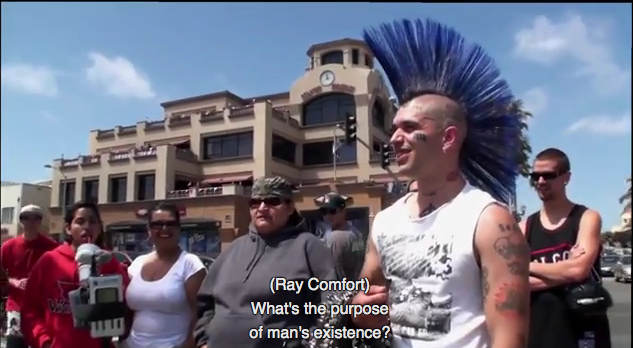
A screen grab from “180.”
Then she sent the link.
When I saw Ray Comfort at the very beginning I winced. But, since I promised to watch it and she was so adamant it was good, I let it roll.
And I was pleasantly surprised.
Filling the full breadth of his person-on-the-street interview style, Comfort takes his microphone to an area resembling Venice Beach. The subject is the Holocaust. Questions focus on personal responsibility and reasoning. Would you have followed orders? How far? Where would you draw the line? Why?
He then turns to abortion as the person-on-the-street realizes, slowly at times, the distinct and unarguable parallels.
A couple of times I thought Comfort was veering into politics, but he did not. He does during a section squeeze in his “Way of the Master” style of street evangelism. Like that part or loathe it, I will say the man is bold.
This is about half-an-hour. It is worth the time if for no other reason to be reminded of the inconsistencies we all face if we think incompletely about issues.
“When is the church going to budget as much for senior adults as for the youth or children’s ministry?”
“Why are we trying to reach primarily young families?”
“Does the preacher not remember who pays his salary?”
“What happened to the piano and organ?”
“We just feel forgotten.”
I call the issues arising from this mindset “The Senior Adult Dilemma.”
As the half-century mark stares me straight in the eyeballs, I am ever more befuddled by sentiments such as these. The Savior, from whom we hear “Deny self” and “Take up your cross daily,” seems extraordinarily at odds with them.
One would expect–or at least hope–wisdom comes with age. Often this is the case, but it is not assured by any means. What is any more sad than a decades-old-in-the-faith Christian who should have matured spiritually, yet remains an infant? A man or woman crowned with glory of gray hair should be helping grill bacon-wrapped filet mignon instead whisking a few ounces of powdered milk–spiritually speaking. This would jibe with Peter’s apostolic desire, it seems.
Everyone tends toward certain affinities. Some gravitate toward music from the 80s, others clothing styles from the 90s, some toward foods from childhood or travels. The problem comes when some try to promote those affinities as the right or only way of doing things, especially ministry in church. (More on this in Part 2.)The truth is when we pursue God we must prefer the time in which we live. Right now. As it relates to time, we have only one culture we can reach: the current one. No amount of longing for a bygone era will cause it to return. Nostalgia is not a spiritual gift.
The senior adult dilemma is not universal in churches, but it is widespread enough to cause heartburn for many a leader. From changing Sunday School meeting rooms, to changing musical styles, to changing service times, it seems anything–no matter how trivial–can start waves of complaints. Not only is this grievous to watch, it is difficult for leaders to experience, as well as being thoroughly unbiblical. What accompanies constant complaining? Loss of influence among those who lead and loss of a hearing among those who will.
Here are a few observations after 46 years in churches, 30 years of salvation and 20 years of pastoral ministry:
1. Physical age neither guarantees nor predicts spiritual maturity.
After having walked with the Lord for nearly 30 years I have witnessed spiritual maturity–and immaturity–at every age. Although a constant growth track until death is desired, it does not always happen. Some of the most selfish and short sighted members of churches were not teenagers. They were people much older than I was then, even older than I am now.
Spiritual maturity is only gained through the obedience. It is not gained through mere participation in religious activities, no matter how noble or persistent. Spiritual maturity is not symbolized by a 142-year attendance pin. The youngest believer walking in faith exhibits more maturity than an 80-year old who has not exercised it in half-a-century.
2. Stubbornness is not a spiritual gift.
Too many senior adults seem to pride themselves on a mentality that is resistant to change. “I ain’t never used a _________ or owned a _________ or done _________ and I’m not about to start now.” While this attitude might be expected in some who are slow to learn, when championed by a full-facultied person it may reveal a disturbing lack of godliness.
To be used by God requires malleability. That whole “potter and clay” thing teaches us one is shaped as One is shaping. Pottery may have a purpose after receiving form, drying and experiencing a trip to the kiln. What it cannot be is further changed. If God must break a person to gain the simplest obedience, repeated usefulness is improbable.
3. Older is not necessarily better; often it is just older.
It never ceases to amaze me how many who complain about “new music” would never consider returning to days before electric power, indoor plumbing, automobiles, telephones, and store bought clothes. I have yet to see a senior adult walk out of a church restroom complaining about using toilet paper instead of pages from the Sears & Roebuck catalog.
Pining for hymns–as with most–has nothing to do with wanting to hear something with good theology. If that were the case, many newer songs (“modern worship music”) would suffice. Instead it is the comfort of the familiar. It can be hard to learn new things; that is true for all of us as we age. I am still trying to learn algebra.
I have heard, “We just need more hymn writers like Fanny J. Crosby.” Really? Fanny Crosby is reputed to have written about 20,000 hymns. We sing between 5 and 10 of them. By any measure that is more misses that hits.
Just because it is older does not mean it is better, and music is just one example.
4. Mentoring by seniors should be organic, not programmatic.
“We need to organize a way for seniors to mentor younger adults. They really have a lot to offer and younger people have a lot to learn.” Or something like that.
Here’s the problem: young people who are passionately seeking God are not interested in being “mentored” by a faithless grouch. What young believers seek is spiritual mentoring, not an hour-a-week of hearing about the failures of former pastors or the perceived shortcomings of the current shepherd.
My mentor, Al Autrey, was considerably older than the teenagers and young adults he mentored. But he was respected and trusted due to his faithfulness. In our late 40s Sonya and I befriended, were accepted by, and began mentoring a group of high-schoolers. This is a relationship that continues. We have young adult friends who ask us for advice and counsel. These are not relationships we have demanded, or expected because “we have a lot to offer.” Maybe we do. But, these relationships would never have blossomed had friendships not been planted first.
One thing we have learned is this: if we pursue God and make friends, mentoring happens. It is harder to stop than to start. This is why I say it should be organic. Programmed mentoring seems like programmed friendships–diametrically opposed to the concept itself.
None of this should be construed as being anti-senior adult, not even close. Like most who read this, I have known scores of solid, Jesus loving, kind, gentle, faithful seniors. But, none of those characteristics existed because they were old. The Fruit of the Spirit may exist in old age, but does not grow due to it. If you want to be a faithful senior adult, be a faithful, obedient younger person. Then, never quit.
In Part 2 we will explore some a few possible solutions to the Senior Adult Dilemma.

Meteor as shot from a dashcam
It appears two granddaughters of Westboro patriarch Fred Phelps have left the fold. Megan and Grace Phelps-Roper, daughters of Shirley Phelps-Roper, have reportedly posted the following on Medium.com under a title borrowed from The Avett Brothers, Head Full of Doubt / Road Full of Promise:
“There’s no fresh start in today’s world. Any twelve-year-old with a cell phone could find out what you did. Everything we do is collated and quantified. Everything sticks.”
Don’t act surprised that I’m quoting Batman. At WBC, reciting lines from pop culture is par for the course. And why not? The sentiments they express are readily identifiable by the masses – and shifting their meaning is as easy as giving them new context. So put Selina Kyle’s words in a different framework:
In a city in a state in the center of a country lives a group of people who believe they are the center of the universe; they know Right and Wrong, and they are Right. They work hard and go to school and get married and have kids who they take to church and teach that continually protesting the lives, deaths, and daily activities of The World is the only genuine statement of compassion that a God-loving human can sincerely make. As parents, they are attentive and engaged, and the children learn their lessons well.Megan Phelps [Image Credit]
This is my framework.
Until very recently, this is what I lived, breathed, studied, believed, preached – loudly, daily, and for nearly 27 years.
I never thought it would change. I never wanted it to.
Then suddenly: it did.
And I left.
Where do you go from there?
I don’t know, exactly. My sister Grace is with me, though. We’re trying to figure it out together.
There are some things we do know.
We know that we’ve done and said things that hurt people. Inflicting pain on others wasn’t the goal, but it was one of the outcomes. We wish it weren’t so, and regret that hurt.
We know that we dearly love our family. They now consider us betrayers, and we are cut off from their lives, but we know they are well-intentioned. We will never not love them.
We know that we can’t undo our whole lives. We can’t even say we’d want to if we could; we are who we are because of all the experiences that brought us to this point. What we can do is try to find a better way to live from here on. That’s our focus.
Up until now, our names have been synonymous with “God Hates Fags.” Any twelve-year-old with a cell phone could find out what we did. We hope Ms. Kyle was right about the other part, too, though – that everything sticks – and that the changes we make in our lives will speak for themselves.
Megan and Grace
Sometimes these types of reports are little more than hopeful urban legends, but the link to this story came from Megan’s well known Twitter account:
Hi. medium.com/turning-points…
— Megan Phelps-Roper (@meganphelps) February 6, 2013
The next day, Grace tweeted simply:
Every day & every day & every day.
— Grace Phelps-Roper (@gracethecurious) February 8, 2013
I hope this report is true. We should pray both of these young ladies come to know God in a way they never before have, but into a relationship into which He invites them.
Previous Westboro articles:
A plea to all media outlets re: the Westboro cult
Is Westboro Baptist Church a cult? Yes, it is
‘The most hated family in America,’ documentary on the Westboro Cult [VIDEO]
Click below to order (pre-order before March 5, 2013) Banished, by former Westboro member Lauren Drain.

From The Atlantic: Obama unaccountable when drones kill innocents
Set aside the question of whether President Obama should be empowered to order the killing of Americans. Instead, let’s ask, “What happens after he orders an extrajudicial assassination?” So long as drone strikes happen in secret, nothing happens. A kill order is given, a Hellfire missile fired, and it doesn’t matter if the human blown limb-from-limb is an Al Qaeda terrorist, an innocent Muslim man, or a five-year-old girl. Even if the target is killed far from any battlefield, in a place where he might easily have been be captured, and the kill order could’ve been postponed without putting national security at risk, the president won’t be investigated or arrested or tried in court or punished.
There is no mechanism for it to happen.
From John W. Whitehead: How a Nobel Peace Prize Winner Became the Head of a Worldwide Assassination Program
The President of the United States of America believes he has the absolute right to kill you based upon secret “evidence” that you might be a terrorist. Not only does he think he can kill you, but he believes he has the right to do so in secret, without formally charging you of any crime and providing you with an opportunity to defend yourself in a court of law. To top it all off, the memo asserts that these decisions about whom to kill are not subject to any judicial review whatsoever.
From Salon: Fact checking Brennan and Feinstein on civilian drone deaths
[A]s WaPo [Washington Post] points out, with U.S. drone bases maintained in West And East Africa (not to mention the recently revealed base in Saudi) as well as strikes in Afghanistan and Somalia, “it’s plausible that the civilian casualties would be even higher than the Long War Journal and New America Foundation stats reflect.” The BIJ’s most up to date statistics, looking at strikes in Pakistan, Yemen and Somalia, suggest that up to 1,128 civilians have been killed in drone strikes. But as Brennan’s hearing made clear yesterday, evidence of trauma and civilian casualties caused by U.S. drones will continue to be a counter-narrative to the prevailing, drone-loving sentiment in Washington.
From The Guardian: Obama’s ‘extreme’ anti-terror tactics face liberal backlash
“If Bush had done the same things as Obama, then more people would have been upset about it. He is a Democrat though, and to an extent can get away with it,” said Daniel Ellsberg, who as a government official leaked the Pentagon Papers in 1971 and helped to expose the truth about the Vietnam war. Ellsberg is now one of the plaintiffs in the case against the NDAA and insists that the administration has used the law to give itself widespread and unconstitutional new powers: “We have been losing our guaranteed freedoms one by one.”
From RT: Brennan the perfect director to increase hostility against Americans
Brennan assured that any actions the CIA would take “will be legally grounded, will be thoroughly anchored in intelligence, will have the appropriate review process, approval process before any action is contemplated, including those actions that might involve the use of lethal force.”
One of those skeptical of Brennan’s words is Jayel Aheram, an Iraq War and Marine Corps veteran, activist and writer who, in an interview with RT, expressed his doubt over the possibility and the commitment of the CIA thoroughly to review the situation on the ground from somewhere far away from the United States.
He also questioned the criteria which might be used for such a review, suggesting that “basically anyone over the age of 18 or 16 in a strike zone constitutes a militant. So I could be going to school somewhere in Yemen, going about my day, and if I get obliterated by one of these drone strikes, am I to be considered a militant?”
From Politico: Drones: Tough talk, little scrutiny
Congress’ public oversight of targeted killings has been almost nonexistent. The last hearings on the drone strikes — held by a House national security subcommittee — faded away after the early months of 2010.
And until Thursday’s Brennan hearing, the two committees with jurisdiction over the CIA drone program — the Senate and House Intelligence Committees — have never held a public inquiry on the program. The Senate and House Armed Services Committees, which oversee the military drone program in war zones, haven’t held hearings, either.
If you are the parent of a middle or high school student, consider posting this to any and all of their social media accounts. It may help them and may help their friends who read it.
We live in a world that no longer sends mixed messages about sex. Our world sends one message about sex: it is for anyone, any time, any where, without boundaries. Anything goes, any one is fair game, victims–if they even exist–are irrelevant.
For many if not most, sex is not sacred. It is not holy. It is not seen as special. It is not seen as a blessing of marriage. It is animalistic.
Too often sex is an expression of violence, not love; power, not kindness; aggression, not gentleness.

Image credit: Troy Benson Photography
“Never before has girlhood been under such a sustained assault – from ads, alcohol marketing, girls’ magazines, sexually explicit TV programmes and the hard pornography that is regularly accessed in so many teenager’s bedrooms,” says the psychologist Steve Biddulph, currently touring the country to promote a book called Raising Girls.
[Boys] are under pressure too, being led to believe that girls will look and behave like porn stars. Our children are becoming victims of pornification.
“It is usually girls who are on the receiving end of some pretty degrading stuff,” says Claire Perry MP, who has just been appointed David Cameron’s special adviser on the commercialisation and sexualisation of childhood. “We’ve got young girls being asked to write their names on their boobs and send pictures. Parents would be really shocked to know this is happening in pretty much every school in the country. Our children are growing up in a very sexualised world.”
And it is not just in the Old Country. A 2010-2011 survey of American middle and high school students revealed
48 percent of students in grades 7-12 experienced some form of sexual harassment in person or electronically via texting, email and social media, according to a major national survey being released Monday by the American Association of University Women.
The harassers often thought they were being funny, but the consequences for their targets can be wrenching, according to the survey. Nearly a third of the victims said the harassment made them feel sick to their stomach, affected their study habits or fueled reluctance to go to school at all.
Ongoing investigations in a Steubenville, Ohio rape case reveals high school behavior as perverse as anything a movie writer could concoct after a week of binge-drinking.
Critics say football’s dominance in the town makes them suspicious that authorities have been lax in investigating allegations involving Big Red players last August, when a 16-year-old West Virginia girl was allegedly carried, unconscious, from one teen party to another and sexually assaulted.
[…]
Two players were arrested and charged with the crime, but many locals think there were other players involved. Some social media activists have posted images, purportedly from the parties, that depict players who have not been charged with a crime. One video, of a now-former player joking about the girl’s condition and treatment, caused worldwide outrage when it went viral a few weeks ago.
The New Yorker adds, “What emerged was terrifying: rumor had it that she’d been repeatedly sexually assaulted at several parties, publicly dragged from house to house, unconscious, as a ‘joke.'”
We have, in large part, allowed society to explain the mechanics of sex, define the meaning of sex and erase the boundaries of sex. Its sacredness questioned, disbelieved and mocked. Unlike stray dogs in the yard where a bucket of water might separate, students grab smartphones and celebrate. Again from Moreton:
Kamal, a boy in the same [grade], says: “Say I got a girlfriend, I would ask her to write my name on her breast and then send it to me and then I would upload it on to Facebook or Bebo or something like that.” The profile picture on his phone, seen by everyone to whom he sends messages, is an image of his girlfriend’s cleavage. Some of the boys at his school have explicit images of up to 30 different girls on their phone. They swap them like we used to swap football cards. If they fancy a girl, they send her a picture of their genitals. As one teenage girl said after the report came out, sending pictures of your body parts is “the new flirting”.
Recall Moreton’s article which gets at the truth: girls are under a sustained assault, an assault that began in Eden and has not slowed. Consider this idiocy from one Missouri school:
when one 13-year-old girl in Missouri reported being harassed about her breast size, her mother called the school district to put an end to her daughter’s humiliation.
The school’s first response? The only way for the bullying to stop was for her daughter to undergo breast reduction surgery.
The problem, in the mind of this school employee, is not bullying or sexual harassment. The problem is obviously the girl’s breasts. If they were smaller all the fellows could get back to trigonometry. Or, more likely, underwater basket weaving. When victims are blamed, abusers are empowered. Take that to the bank.
The effects of hormones, sinfulness, alcohol and callousness make any middle or high school party suspect–off or on campus. By “suspect” I mean 100 percent off limits, especially for believers. These instances are not about reaching people with the gospel where they are; it is about protecting girls from unknowingly ingesting a date-rape-drug spiked drink. Parents who ignore this border on being brain dead. (My apologies to the brain dead for the insult.)
The effects of always available, easily accessible pornography cannot be overstated. Pornography is itself a fantasy; there is nothing real about it from the arranged scenarios to body parts. Porn, at its core, is about women saying “yes” to any sexual encounter, and meaning “yes” even when they say “no.” Everyone looks happy, everyone looks like they have had a good time.
This porn problem goes right into the hallways, classrooms and bathrooms in schools every day. These addictions sustain such a powerful grip some boys say they cannot go to sleep without watching porn. You really think this stays behind the bedroom door?
If you are a middle or high school student reading this understand: you are growing up in a culture that, for the most part, treats sex with disrespect. Since you are a sexual being (by God’s design) you may suffer disrespect as well. That which was designed to be intimate and personal is open and displayed. In this, sex is degraded to be much less that God designed it to be.
The sexual wholeness of our beings far, far surpasses the physical coupling of bodies. Animals can do that; animals regularly do that. You are not an animal; you are a person for whom there are emotional consequences to every act. A person for whom Jesus Christ died and was raised.
What has been one effect of this hyper-sexualization?
A recent report in USAToday, conducted by Market Tools Inc., found 42% of single men and women over the age of 21 would not date a virgin.
Stop and let that sink in for a while. Nearly half of single young adults would not date a person they knew to have no sexual experience.
Further results may reveal why: 44% of women and 63% of men had already had one-night stands. Nearly 1/3 said they’ve had sex by the third date, and forty-six percent by the sixth date. That means almost one in three single adults surveyed go to a movie on Friday, to dinner on Monday and to bed on Tuesday. Another 15 or so percent wait all the way until the following weekend before hopping in the sack.
Alley-cats everywhere salute you.
Young ladies, hear me: you are not an object to be pawed, groped, leered at, assaulted, abused, attacked, or sexualized. You need not give up your body and yourself to please any guy until a pastor or judge has pronounced you as married. Even if that guy gets what he wants, he will still not have what he needs. It is not your fault when parents, police, pastors or school administrators do not come to your defense. You bear the image of God and are worthy of respect.
Young men, hear me: God did not design you to be an aggressor, gawker, abuser, user, or predator. You show manliness at no greater point than when you stand on the side of victims, not when you join running train on them. Real men show restraint. Do not be afraid to swim firmly against the cultural tides for the sake of the gospel.
(Yes, I’m aware of role reversal. Sometimes girls are aggressors and boys are victims. In the realm of sexuality in American schools, however, girls seems to be suffering the most.)
Parents, you must be vigilant. Talk to your kids about bullying and harassment, and protect them. Have very frank discussions with teachers and administrators at their schools. But, most of all, teach them the sacredness of sex and sexuality from the biblical perspective. Model it for them. And pray for them without ceasing.
In my work environment I am surrounded by some incredibly talented young people. (Increasingly I’m surrounded only by younger people, but that is another post for another day…)
These men and women are quicker in comprehension, more knowledgeable than me in numerous areas of social media, have better marketing comprehension then me and–sigh–the list goes on.
As I grew older in pastoral ministry I regularly ran across people more talented than I. In my last pastorate one pastor was far better than me at relationship building, another was far better at project planning and execution, another far more talented in music and management, and another was every bit my equal in preaching. Everywhere I turned I was faced with a team member who excelled me in some area.
Most all of us have some amount of ego that flinches when one better than us comes on the scene. Humility–preferring others over ourselves–is far more admired than practiced.

Phil Keaggy [Image credit]
A Kingdom mindset finds older believers rejoicing over the calling and gifts of younger believers. Nowhere is this more needed than in areas of Christian leadership. Christian leaders need to rejoice when others do well. They must repent from and reject jealousy, which are roots of evil works.
Below is a video of guitar virtuoso Phil Keaggy. It was shot before a concert. Keaggy is seated with another guitarist, James T. La Brie, who is clearly a fan. Keaggy is regarded, by those who know the subject, as one of today’s top guitarists and, perhaps, one of the greatest who ever lived. You do not even have to buy the Jimi Hendrix urban legend to hold that view. La Brie admits his nervousness, which is pretty easy to see with all the squirming he does.
What’s fun to watch, and instructive to older believers and leaders, is Keaggy’s supportive participation. La Brie starts with an instrumental he wrote. Quickly Keaggy provides guitar-body percussion, eventually playing along for most of the piece. La Brie then suggests a second effort, a Joni Mitchell song, and they play together again.
Through both of these, Keaggy makes no effort to overshadow his fan. At no point does he show anything but genuine interest and joy. I know less than zero about playing the guitar. This, however, is as much about leadership as about music.
If you are a younger person, what are some specific things an older person has done to encourage your leadership track?
If you are an older person, how can we avoid the pitfalls of jealousy toward younger, more gifted people who might ultimately take our positions?
Chelsea Welch is a former Applebee’s waitress, recently fired for uploading a picture of a receipt from her work. Said receipt had been issued to a party served by one of her co-workers. The paying customer, Alois Bell, a St. Louis area pastor, went well out of her way to avoid a tip.
The large party had triggered the 18% auto-tip on the meal. Rather than paying the tip, pastor Bell marked out the auto-tip and added “$0” to the bill. Making matters worse, the “pastor” wrote “I give God 10% why should I give you 18?” across the receipt. She made sure to add the word “Pastor” above her signature.
After the story went viral The Smoking Gun heard from Bell,
“My heart is really broken,” Bell added. “I’ve brought embarrassment to my church and ministry.”
A spokesman for Applebee’s said it apologized to Bell for violating her “right to privacy” and confirmed that Welch “is no longer employed by the franchise.”
Look closely at the receipt and you will see the party of 8 people spent only $34.93 on the meal. That is an average of $4.37 each. Have you ever eaten at Applebee’s? Spending that little means
sharing meals or eating only appetizers. Typical menu entrees can exceed $11 each. The current special is 2 for $20. A party of three people eating a normal entree with tea or soft drinks can easily spend–before tip–as much as Bell’s entire party. [A friend suggested the $34.93 was only Bell’s portion, not the entire party. This seems to be the case. 2nd Update: A CNN interview claims the 18% was included in the total and charged to Bell’s credit card. The image does not seem to support the report. -MD]Sad as it is that one server was chastised and stiffed by a customer, and Welch fired by her employer, I am incredibly thankful they brought this nonsense to light, and I’m compelled to write this open letter to Chelsea:
Dear Chelsea,
On behalf of some followers of Jesus Christ, I apologize. One dirty little secret of Americanized Christianity is how badly some of our tribe tip at restaurants. This is a terrible reality, but I am thankful you have brought it to light. Whether you realize it or not you have done us a great service.
Even though pastor Bell is embarrassed now, we should have been embarrassed for years. We have known about this attitude for a long time. Even though our Savior was generous, too many of us are stingy.
In fact, the excuse given–“I give God 10%”–is something I have heard in the past. After reading your story a friend of mine posted to Facebook about family members, both of whom are restaurant servers. They know servers must split tips with staff who do not work the floor. They know Sundays are the worst days to work, since many Christians do not order expensive drinks or tip well on what they do order.
Before the annual meeting of my own tribe social media becomes a flurry of reminders to tip well. I often wonder why the stinginess of many followers of Jesus is so well known it creates this cause for concern, but it remains so common.
I know it’s likely you made less than $3.00 an hour from the restaurant. If your former employer is like most restaurants your tips are part of your salary. Our chintziness is certainly no blessing to you.
It is obvious such poor character on our part is evidence that every negative thing you have heard about followers of Jesus might be true. Believe me that it is not a universal problem, but it is far too widespread. According to Yahoo you said, “I’ve been stiffed on tips before, but this is the first time I’ve seen the Big Man used as reasoning.” The “Big Man” is not the reason; He’s a convenient excuse for our own lack of generosity.
For many years my wife and myself have tipped 15, 20% or more on almost every meal. We have given gift card balances to our server far exceeding a regular tip. Only utterly awful servers do not receive good treatment. I dined with one pastor who left a $100 tip, well exceeding the cost of the entire meal. Many of us “get it.” I am so sorry you had to deal with one who does not.
Believe it or not, the God we (and pastor Bell) claim to serve is not chintzy, cheap or stingy. He is, in fact, extravagant. That we do not follow His lead when dealing with hardworking people in your field is to our shame.
I have no idea whether you will see this. The Internet can be a strange beast, so maybe you will. If you can email me through the “Contact” link above I will send you some money to help offset your loss of income. My family is not rich, so this will not be like that Nicolas Cage split-the-lottery movie. But, I will send you something. Please consider it a tangible apology for our pitiful habit in this area. Jesus is a lot better than how we tip.
Very Sincerely,
Marty Duren
The original image upload was on the sharing site Reddit.com under the title, My mistake sir, I’m sure Jesus will pay for my rent and groceries.
Note: To get the context of this post it is necessary to read through the Introduction in Part 1 of this series. The basis for these two posts is the book Rachel Weeping: The Case Against Abortion, by James T. Burtchaell.
3. Discharge of responsibility and brutality from average people
According to Burtchaell,
A third theme that rises repeatedly from the Holocaust record is the denial of responsibility…The first way of putting it is for each person to account for his killing work by pointing out that he acted under law, having submitted his judgment to those empowered to make decisions of state. (pg. 157)
Or, as it has come to be known, “I was just following orders.”
As one defense attorney explained at Nuremberg:
If the experiment is ordered by the state, this moral responsibility of experimenter towards the experimental subject relates to the way in which the experiment is performed, not to the experiment itself. (pgs. 157, 158)
Even the commandant of Auschwitz who oversaw the most efficient extermination method of the Holocaust and one of history’s most gruesome, shrugged it off on Himmler:
I did not reflect on it at the time: I had been given an order, and I had to carry it out. Whether this mass extermination of the Jews was necessary of not was something on which I could not allow myself to form an opinion, for I lacked the necessary breadth of view. (pg. 158)
More recently at least one supporter of abortion has moved beyond being concerned about the responsibility for the act. She forthrightly states: “Here’s the complicated reality in which we live: All life is not equal.” Emphasis mine. Sounds like “Life unworthy of life” to me.
Though some promoters of abortion rights now accept moral responsibility, this is not universally acknowledged nor was it always the case. The former president of the National Abortion Rights Action League, Dr. Bernard Nathanson, wrote in 1974:
Certainly the medical profession itself cannot shoulder the burden of this matter. The phrase, ‘between a woman and her physician’ is an empty one since the physician is only the instrument of her decision, and has not special knowledge of the moral dilemma or the ethical agony involved in the decision. (pg. 211)
The doctor does not shoulder the burden? Is he or she not the one who inserts the vacuum, dismembers the child and evacuates the womb? Nathanson eventually did shoulder the blame and left the abortion industry.
Medical doctors were not the only ones who disavowed responsibility. Psychiatrists did as well.
Kenneth R. Niswander, professor and chairman of Obstetrics and Gynecology at ht eUniversity of California, Davis, insisted that there were virtually no psychiatric grounds for abortion…’If society wants abortion to be easier, it should have the courage to campaign for it honestly and not exploit the psychiatrist who, I contend, has no factual basis for being associated with the problem.’ (pgs. 213, 214)
Shifting of blame is not the only issue. How far can it be removed when so many people have become links in the chain of death?
Daniel Goldhagen’s 1997 international bestseller Hitler’s Willing Executioners (though perhaps too broad in assessing motivation) showed overwhelming evidence that the extermination of European Jews involved the energies and enthusiasm of tens of thousands of ordinary Germans. Noted scholar Hannah Arendt concluded “heinous evil generally, and the Holocaust in particular, were not executed by fanatics or sociopaths. Instead, these were the actions ordinary people who accepted the premises of their state and therefore participated with the view that their actions were normal.” She coined the now famous phrase: “the banality of evil.”
How evil can banality become? From Rachel Weeping:
There was Ilse Koch who had lampshades made of prisoner’s tattooed skin and Irma Grese of Auschwitz and Belsen, who was said to have bound together the legs of prisoners in labor so that mother and child would perish together….And there was Dr. Sigmund Rascher [who] was also detailed to Dachau, where he conducted aviator clothing tests by freezing prisoners to death, and trials of parachute function by suffocating others in high-altitude chambers, and experiments on blood coagulants by shooting prisoners and noting how long it required for them to bleed to death.” (pgs. 165, 166)
The perversity of the demonic Third Reich is an interwoven tale of family men who were doting parents, lovers of their wives, and kind to children. These, who were the very devil of Hell to six-million Jews and as many as 7 million others, could be angels when dealing with their own.
Perhaps one reason (besides overuse) comparisons to the Nazis tend to be rejected is the ash of the crematory covers so much of our memory. We tend to forget these “willing executioners,” to use Goldhagen’s term, could be our neighbors and co-workers. Indeed, in Nazi Germany neighbors and co-workers were exactly that.
But, if there is a better word to describe the diabolical efficiency of the mass slaughter of babies than “brutality” I would lean toward “savagery.” More than 55M children killed in the U.S. alone in the last 40 years while we simultaneously herald and ignore the documentary assertion that “life” is an “inalienable right”?
It is well known that a certain number of attempted abortions result in live births each year. The Alan Guttmacher Institute, no friend to the pro-life movement, estimates the number around 400. This is not a new phenomenon; it has been happening since Roe.
As Mt. Sinai Hospital in New York moved into high-volume abortion work (“pregnancy interruption service”), the director of nurses reported: ‘Most nurses find the destruction of life the very antithesis of what they believe…Nurses in delivery rooms had been accustomed to every conceivable effort to save babies, even those of one to three pounds, and they found that sometimes they were ‘salting out’ bigger babies than those they had worked to save. (pg. 215)
In case you do not recognized it, “salting out” is a euphemism for “kill.”
4. Once killing was initiated, killed continued indiscriminately
Burtchaell notes the expanding circle of victims the Reich was willing to include.
The killers do not, in fact, appear to have been discriminating. What characterized them is not so much a defensive readiness to destroy all major enemies of the state as it is a tempered willingness, once they had blood on their hands, to eliminate any person or group that constituted even a relatively mild frustration. (pg. 172)
What kind of progression do we see? “Mercy death” for chronic mental and medical patients, those with encephalitis, Parkinson’s, Huntington’s, epileptics, polio, senility and more. What was initially wrought to those hospitalized was later expanded. In northwestern Poland the SS sent out mobile units for X-ray procedures. Anyone with TB was cured at an extermination center. Early Jewish victims, even before the Final Solution had been formulated, included the crippled, chronic bed-wetters or some with “badly modeled ears” (pgs. 172, 173).
The inability of some to see the parallels between this and gendercide or abortion of Down’s Syndrome babies is beyond comprehension. (Gendercide has come to refer to the killing of children of a certain gender, usually female. In one a championship demonstration of mental gymnastics, a significant portion of abortion-rights proponents defend the right to exterminate a child because said child is female. Such a right is the very definition of abortion on demand. Any reason is sufficient. The killing is indiscriminate.)
It has only been two years since Dr. Kermit Gosnell’s abortion clinic was called a “baby charnel house”. He was charged with murder. His wife and seven others have pled guilty and Gosnell’s trial is set to begin this year. The Boston Globe reports:
“[Gosnell] regularly and illegally delivered live, viable, babies in the third trimester of pregnancy — and then murdered these newborns by severing their spinal cords with scissors. The medical practice by which he carried out this business was a filthy fraud in which he overdosed his patients with dangerous drugs, spread venereal disease among them with infected instruments, perforated their wombs and bowels — and, on at least two occasions, caused their deaths. Over the years, many people came to know that something was going on here. But no one put a stop to it.’’
The report goes on to describe a squalid operation in which hygiene was ignored, equipment was broken, and late-term abortions were routine. Pregnant women were treated with callous disdain, often left for hours, semi-conscious and in pain, on dirty recliners covered with bloodstained blankets. Untrained employees administered powerful drugs to induce labor, and heavy sedatives to keep women from screaming.
Time and again, the grand jury says, late-term babies were delivered alive — fully intact and breathing — and then killed. Gosnell “called it ‘ensuring fetal demise.’ The way he ensured fetal demise was by sticking scissors into the back of the baby’s neck and cutting the spinal cord. He called that ’snipping.’ Over the years, there were hundreds of ‘snippings.’’’
5. Found the violence an occasion to acquire wealth
Skin for lamps, exploitation by non-German companies like IBM, Ford and Standard Oil, and large profits for German companies including IG Farben (maker of the poisonous Zyklon B gas used at Auschwitz and parent company of Bayer), Porsche/Volkswagon, and Hugo Boss, the Holocaust boosted many a financial bottom line. Riches made via the commission of genocide; blood money.

Baby on board! [Image credit]
Planned Parenthood has made millions from the abortion services it provides. Riches at the expense of children’s lives. Riches made via the commission of genocide; blood money.
Abortion providers made enormous sums of money immediately following Roe. Often far more than doctors who practiced medicine the way it was intended…you know, to save lives rather than take them. Abortion, which, only years before, was reprehensible, came to the fore. The mythical “coat hanger in the back-alley” transformed into a highly lucrative cog in the wheel of capitalism.
Even in the early 70s the amount of money made from the abortion industry was staggering. Nathanson reported doctors in his clinic could clear more than $1,000 in each eight hour shift. Some worked double shifts as a result. In 1974 one Chicago doctor–by himself–billed Medicaid $792,266 for abortions for his welfare customers. One job recruitment effort promised $80,000 per year for 10 hours of work per week, while a single woman made up to $5,000 per week running a “counseling” facility. She was paid commissions from abortionists. (pg. 227)
Abort73 figures annual revenue from aborting babies at upward of $831 million. The Planned Parenthood Federation of American, the nation’s largest abortion provider made more than $148.6m from abortion in 2010. After an all time high of around 334,000 abortions performed in 2011-2012, the total number of abortions committed by PPFA affiliates in the past three years reached nearly 1M.
It thus remains that honest, thoughtful people can disagree on the subject of abortion. But defenders of abortion-on-demand should admit that they share vivid, historical parallels with one of the most ruthless and efficient killing organizations in history. The parallels are real and demonstrable.
The comparison I have put forth is not emotionalism, nor a thoughtless invoking of Godwin. It is studied, factual evaluation. If the pro-choice camp insists on defending abortion, members should also be honest enough to acknowledge their philosophical kinships where ever the bloodlines lead.
For the first time in its history the Boy Scouts of America is considering allowing gay scout masters and members. This comes on the heels of a doubling down on the issue just a few months ago.
Attempts to break the Scouts’ no-gay policy are not new, nor were they waning. If anything they were gaining steam as corporate sponsors like Merck and UPS had begun to bail. WND’s David Kupelian believes concern over finances is the driving factor in the decision.
My involvement with the Scouts is limited. I was in Cub Scouts for about a year. We met at Tony Wingate’s house down the street. He had a room full of styrofoam building blocks which were used to pummel one poor cub at the end of each meeting. Our “den mothers” were hopelessly outmatched.
I have known a few Eagle Scouts over the years including my uncle and a young man for whom I was honored to write a recommendation. Without question the Scouts have helped to create good citizens, teach skills, and allow older men to influence younger men. In many instances churches have been able to influence scout troops with believers involved at leadership levels.
My critique, it should be noted, is not toward the BSA’s decision as much as toward how followers of Christ might understand it.
One evangelical leader expressed concern the organization which “has always stood for biblical principles” was being forced to abandon them by political correctness.
The health of the BSA was already being challenged via lawsuits, and as revelations of pedophiles in the Scouts have become more broadly known. From WND again
In fact, the examination of sex abuse in Scouting reveals a long-standing paradox for the nation’s most revered youth group: For 80 years the Boy Scouts of America have given boys some of the best experiences of their lives, but for 80 years some men have used the Boy Scouts of America to have sexual relations with those boys.
“That’s been an issue since the Boy Scouts began,” said James Tarr, the nation’s chief Scout executive from 1979 through 1984.
More than 1,100 Scouts reported being molested by Scout workers over a single 19 year period.
Reflecting on these facts raises a few questions:
Where were the “end-of-the-world” pronouncements when the Boy Scouts of America’s “perversion files” were made public last year?
Why is it morally problematic for the Scouts to welcome gays, but not problematic for them to hide a multi-decade history of keeping molestation out of the public eye?
If the two are equally problematic, why not equally speedy and earnest responses to each?
Why is it problematic for churches to host a gay-friendly organization, but not problematic when the organization was “only” hiding child abuse for nearly a century?
Are we seeing the reaction of people for whom gay-rights is the last domino standing, after which there are no more culture wars to fight?
Is their sense of loss greater than their sense of truth?
Why have Scout leaders not been called to repentance by evangelical leaders, especially those who are decrying the recent announcement?
Why do we not emphasize that the Boy Scouts are now–and always have been–a moral organization focused on good citizenship not a gospel organization focused on discipleship?
Do we even recognize the two are not the same?
Why are some fighting to save moralism, rather than drawing a distinction between moralism and the saving grace of God?
Why do evangelical leaders not acknowledge the words “morally straight” are ambiguous, open to interpretation, malleable, and not scripturally moored?
Are some evangelical leaders not blurring the truth when they gloss over this reality: the Scouts’ generic “God” is not necessarily the God of the Bible?
Which God is it that both evangelicals and Mormons can affirm without qualification?
How is one God the same for Buddhists, followers of Native American religions, Muslims, Jews, Christians, those who define their own spirituality, Baha’i, Zoroastrianism, Hinduism, and more all of whom are included in the BSA’s definition of “God”?
If the Scouts are a Judeo-Christian organization why are more troops hosted by the Mormons than any other other single group?
Does our reaction to this announcement reveal confusion over biblical Christianity and civil religion?
Why would most Christians have no problem with this statement, “We have all the American values: the values of hard work, the values of integrity, the values of fairness and respect,” even though uttered by Bill Marriott explaining why his faith (Mormonism) does not interfere with his business?
Are we more concerned about the loss of Americanism than finding an authentic expression of a Christ-bought church?
If we are more concerned with an authentic expression of the church, why are we so afraid of a faltering culture since the church has usually shone brightest in the rubble?
Will we ever grasp that “reclaiming America” is not the same as “revival”?
Will we ever grasp there is no biblical mandate–or even a suggestion–that “reclaiming America” is a call on God’s people?
Have we misinterpreted the fall of Christendom as the work of Satan, rather than considering it could be God destroying our most grand, safe, and preferred idol?
Newsnippets, January 26, 2013
From Reuters: Obama appointments unconstitutional, Executive recess appointment power limited
In a surprisingly broad ruling, the three-judge panel rejected not only the NLRB appointments but any made while the Senate is in session but on a break. That could limit recess appointments to only a few weeks a year.
The U.S. Court of Appeals for the District of Columbia Circuit also ruled that recess appointments could only be used for positions that become vacant while the Senate is in recess.
“If the decision stands, it would be a significant reduction of the president’s recess power,” said John Elwood, a Washington lawyer who was deputy assistant attorney general in the Office of Legal Counsel from 2005 through 2009.“This is a big, big decision for executive power,” Elwood said. “It is one of the most important decisions in decades.”
From TED: Model Cameron Russell talks about the dangers of image at TED
“I always just say I was scouted, but that means nothing,” Russell says in her talk. “The real way I became a model is that I won a genetic lottery, and I am a recipient of a legacy. For the past few centuries, we have defined beauty not just as health and youth and symmetry that we’re biologically programmed to admire, but also as tall, slender figures with femininity and white skin. This is a legacy that was built for me, and that I’ve been cashing in on.”
From The Art of War: Has traditional Islam lost the war for Muslim youth? (Use Google translator for article)
Everything that is happening in the Islamic community in Russia makes us think that we really are on the edge of the cliff. Russia’s geopolitical enemies are trying to use the Muslim factor as a method to destabilize the situation in the Russian regions.
From The Atlantic: Jaw dropping photos from a fire in Chicago
From The Guardian: Hacker group Anonymous takes down US Sentencing Commission website
Hacking collective threatens to make public classified material and that when Aaron Swartz killed himself ‘a line was crossed’
Hacktivist group Anonymous said Saturday it had hijacked the website of the US Sentencing Commission in a brazen act of cyber-revenge for the death of internet freedom advocate Aaron Swartz.
Swartz killed himself just over two weeks ago as he faced trial for hacking an online collection of academic journals linked to MIT with the intent of releasing millions of research papers on to the internet.
From Relevant Magazine: Facebook’s Mark Zuckerberg to throw party for NJ governor Chris Christie
Well, here’s an unexpected collision of worlds. Republican governor, headstrong firebrand and national treasure Chris Christie is going to have a fundraiser hosted by none other than Mark Zuckerberg, the world’s most powerful bro.

Photo by Captain Katie Petronio
Writing in the Marine Corps Gazette (the Professional Journal of the U.S. Marines) Petronio questions the source of this call to equality since, “I am not personally hearing female Marines, enlisted or officer, pounding on the doors of Congress claiming that their inability to serve in the infantry violates their right to equality.”
She provides some perspective:
Shockingly, this isn’t even a congressional agenda. This issue is being pushed by several groups, one of which is a small committee of civilians appointed by the Secretary of Defense called the Defense Advisory Committee on Women in the Service (DACOWITS). Their mission is to advise the Department of Defense (DoD) on recommendations, as well as matters of policy, pertaining to the well-being of women in the Armed Services from recruiting to employment. Members are selected based on their prior military experience or experience with women’s workforce issues. I certainly applaud and appreciate DACOWITS’ mission; however, as it pertains to the issue of women in the infantry, it’s very surprising to see that none of the committee members are on active duty or have any recent combat or relevant operational experience relating to the issue they are attempting to change. I say this because, at the end of the day, it’s the active duty servicemember who will ultimately deal with the results of their initiatives, not those on the outside looking in. [Emphasis added.]
In other words, this is a political agenda having neither the best interests of women, the Marine Corps or the country in view.
Read Petronio’s full article, “Get Over It! We Are Not All Created Equal.” Read my related post Women given better odds of dying in the military.
It seems all the government has to do to make some people happy is ensure that more women will be given better chances to die.
Defense Secretary Leon E. Panetta is lifting the military’s ban on women in combat, which will open up hundreds of thousands of additional front-line jobs to them, senior defense officials said on Wednesday.
The groundbreaking decision overturns a 1994 Pentagon rule that restricts women from artillery, armor, infantry and other such combat roles, even though in reality women have found themselves in combat in Iraq and Afghanistan, where more than 20,000 have served. As of last year, more than 800 women had been wounded in the two wars and more than 130 had died.
Some feminists cannot wait for for women to die in the name of equality:
“This is an historic step for
equality and for recognizing the role women have, and will continue to play, in the defense of our nation,” said Democratic Senator Patty Murray from Washington, the outgoing head of the Senate Veterans Affairs Committee.How long and how would a 125 lb. woman would last with such a load? [Image Credit]
I am sorry. The purpose of the military is to demonstrate equality? I thought it is to provide for the national defense.
Another is content for women to swim–or sink–so long as no one keeps them from it:
Susan Farrell, who served on a Department of Defense advisory committee that recommended that more jobs be opened to women, lauded the decision as representing “a chance for women to sink or swim on their own merits. That’s all women have ever asked for: a chance to be as patriotic, as giving of themselves, as the men are.”
It sounds like Susan is ready for more women to die.
WSJ notes this is merely the last in an ongoing progression:
Twenty years ago, Congress lifted the ban on women flying in attack aircraft, and now the Army, Marines, Navy and Air Force all have women pilots—although women don’t serve as special-operations pilots.
Female officers now serve on large submarines, and the Navy has plans to add female enlisted personnel on those vessels. The Navy also will allow women to serve on smaller classes of submarines.
I am not of the opinion women cannot serve or serve with distinction in the military. It is clear they have and can.
I do, however, question the wisdom of putting females, who are, in almost all cases physically weaker than men, in hand-to-hand combat situations. One struggles to fathom repeated instances in which a platoon of females, each carrying 40 pounds of equipment and facing an equal number of enemy males in close combat, emerging victorious time and again.
Certainly my egalitarian friends may cry foul; some may even call me “sexist” or “chauvinistic.” That is fine. I, however, do not consider it a remnant of faltering patriarchy that I am moved, even called, to protect my family, especially my wife and daughters. If we meet a gun or knife wielding mugger on the street I will put myself between them and the attacker until my lifeless body is prone on the sidewalk.
Contrariwise, if I happen to be walking down the sidewalk with a female who, owing to a need to demonstrate equality, inserts herself between the mugger and me, I might consider myself freed and run to live another day. Hey, equality is equality is it not? If she wants to be dead is that not “giving of herself”? Should I also be lifeless so “equality” is clearly demonstrated?
Yes, I delve into hyperbole. A little. Perhaps the logical, non-exaggerated conclusion should, in the end, be considered by those who want to be “equal.” Equal must be equal in the glory and the blood, in the show and the shame.
As the military considers sweeping changes for women in combat, the ongoing epidemic of rape in all branches of the service continues almost unabated. Repeated promises of “zero tolerance” are decreasingly believable with each new scandal. Reports the L.A. Times:
As of this week, 32 basic training instructors at Lackland are under investigation stemming from sexual misconduct allegations and 59 alleged victims have been identified by the base.
Maybe some of those idiots should be in her sights.
A report in mid-November found that a fractured command culture and “leadership gap” at Lackland helped fuel the scandal. Six basic training instructors at the base have been convicted of sexual misconduct dating to 2008 and nine trials are scheduled. Staff Sgt. Eddy C. Soto faces a possible life sentence at trial next week for the alleged rape of a female trainee.
Gen. Mark Welsh III, the Air Force chief of staff, told the House Armed Services Committee, Obscene images, songs and stories “will not be accepted as part of our culture.” Uh, huh. Tell us more, General.
The truth is only by devious intent or a full scale ground war could more women die in combat than currently are raped in the United States military. Estimates place the total number of female rape victims from all branches of the military at half-a-million. As in civilian life, many rapes are not reported and many that are reported are not prosecuted. Until early last year a significant number of victims had to report their attack to the very person who had raped them. That is not so much like civilian life. (Oh, and by the way, what better way to get rid of a potential witness to rape than to re-assign her to the front lines. Bible students might remember a guy named Uriah.)
Although some men are raped as well–usually by heterosexuals–women bear the brunt. If you have not yet seen The Invisible War you simply must take the time to watch it. There are several places to rent or buy it online. It may be available on Netflix now. The trailer is below.
From a note Sonya posted to Facebook today:
Today our oldest daughter, Beth, turns 28. As I was reflecting on how our lives changed so drastically when we went from young, carefree, newly-married couple to “what do we do with this little being who is depending on us to get it right” I couldn’t help but think of a memory that is forever burned in my heart and mind as I sat in an oncologist’s office.
I love this woman.
Marty and I had only been married about three months when we found out I was pregnant. To say we were a little surprised would be an understatement. We certainly wanted children and had already planned our lives out to include several. We really believed God wanted me to quit my job and stay home with them as long as they needed me home. At the time, I had a pretty decent job (for the 1980s) but we certainly weren’t rolling in the dough since both of our salaries were needed to pay our expenses. Our plans were that we would save as much as we could for a couple of years, buy a small house and begin our family. Being pregnant after three months of marriage didn’t go along with “the plan.” Maybe God hadn’t gotten the memo about “the plan.” Nevertheless, we went on to have our beautiful, happy, precious little girl and were thrilled beyond measure. I did quit my job and Marty received a much better job that he began on my last day of work at my job. (Isn’t God funny like that? 🙂 No we didn’t have a lot of money. Yes, we were still in our small apartment. And, we were so happy that God didn’t get the memo about “the plan.”Fast-forward a little over two years later: After several months of unexplained weight-loss, night sweats, and bone-wearying fatigue, I was diagnosed with Hodgkin’s Disease. For those of you who don’t know, this is a type of cancer that is usually associated with lymphoma. I was diagnosed at stage 2. (Walking through that minefield of emotions of being diagnosed with cancer when you are in your 20’s with a two-year old is another story for another day.)
After some exploratory surgery and having my spleen removed, I was to begin 10 weeks of radiation therapy. Sitting in the doctor’s office that day going over what my life was going to be like for the next few months as I went through radiation and the recovery, my oncologist dropped the “Oh, and by the way, if you get pregnant during this time, we will strongly advise you to have an abortion due to the amount of radiation you will be receiving and the danger of letting your cancer continue if you choose to stop the treatment due to your pregnancy.” I don’t think I heard much else after that statement. My mind kept going back to “the plan.” Our plan of waiting two years. Our plan of having all of our ducks in a row before we ventured forward. Our plan that really didn’t include much faith in a God who has promised to provide for his children.
Sometimes you get a life lesson in a very unusual way that stays with you for the rest of your life. That day I learned something huge about God’s timing. We can’t see what is ahead. We can’t possibly know what is better for our life than God. The blessings He has for us are immense. What may seem poor timing on our part, is perfect when God is behind it. And isn’t it just like God to use a baby to teach us this?
Feel free to share your stories in the comments. Sonya will reading and interacting there today.
In the early days of the Internet, before what we now know as social media, people exchanged ideas in forums and Usenet groups. After observing many such discussions an attorney named Mike Godwin postulated an argument that has become one of my favorite things to spring from the entire online enterprise. He said, “As an online discussion grows longer, the probability of a comparison involving Nazis or Hitler approaches 1.” In other words, the longer an online discussion goes–regardless of topic or scope–someone at some point will bring up a comparison to Hitler or the Nazis.
This statement is now known as Godwin’s Law, sometimes called Godwin’s Law of Nazi Analogies.
The problem Godwin highlights is most comparisons are glib involving neither a valid historical nor philosophical basis. Godwin himself says he wants people “to think a bit harder about the Holocaust.” If you have spent any time at all online you know Godwin’s Law to be true. At times I’ve seen a non-participant jump into a rapidly fraying thread with the single word “Hitler” or “Nazis.” By skipping ahead to the inevitable they demonstrate the degeneration taking place in the discussion.
But, what happens when a comparison to the Third Reich is warranted? Should it be ignored? Because the comparison has been worn out are there never appropriate parallels? So recklessly and mindlessly has Hitler been invoked to use the comparison almost automatically invalidates one’s argument. It is seen as an admission of a weak, unsupportable point of view. This knee-jerk reaction speaks both to the shallow analysis of the over-user and the intellectual laziness of the person who would dismiss the argument out of hand.
The very nature of the Holocaust demands earnestness of thought. Our concept of genocide, indeed the coining of the term, has arisen as a result of Hitler’s Final Solution. Raphael Lemkin, in his work Axis Rule in Occupied Europe (1944), coined the term by combining Greek genos (γένος; race, people) and Latin cīdere (to kill). Though other genocides have taken place in the last 100 years (i.e., Armenians, the Rwandan Genocide, and Srebrenica Genocide), “Holocaust” is generally reserved for the attempted total extinguishing of European Jewry by Hitler’s Third Reich.
One area of clear parallels with the Third Reich is the abortion-on-demand mindset in America. Children have been linguistically reengineered in ways that would make Orwell seem positively straightforward. Since January 1972 some 50 million lives have been artificially and often violently ended before birth in the United States. Comparison to the Nazis are real, valid and ongoing. These articles are only intended to start your own thinking process, not to raise every conceivable point. However, on this 4oth anniversary of Roe v Wade these ideas are worth our consideration.
Introduction
More than three decades ago Notre Dame professor James T. Burtchaell published a series of essays on abortion. Compiled into the book, Rachel Weeping: The Case Against Abortion, it remains a blistering assault on national pro-abortion policy. No less than the Los Angeles Times called it “a searing, impeccable documentation,” while the Library Journal said it offered “extensive information and profound reflection.” “Unassailable” and “unequaled” could easily be added.
Each is worth reading (the book itself should be added to every personal library), but the two historical essays comparing abortion to American slavery and the Holocaust should not be missed. I cannot emphasize strongly enough the power in these writings. Today we will look at abortion and the Holocaust.
Burtchaell is careful to distinguish arguments and process used by the Nazis from the Nazis themselves. In other words, he does not equate pro-abortion advocations to the Nazis in a direct parallel. He does, however, draw clear comparisons to the arguments and mindsets used in both cases to introduce scenarios beforehand thought improbable, impossible or unthinkable.
Ponder the Germanic scenario. There must be an answer as to why millions and millions of human beings died without hearing or trials. There were no hearing or trials because no victims were accused of any crime; they simply were not wanted. Burtchaell asks and answers.
Who did this to them? The SS, the Gestapo, the German Wehrmacht, military and civilian medical and hospital personnel, conscripts from subject countries like Lithuania and the Ukraine, the police of Germany and its tributaries, the governments of cooperative regimes, and the German government in its many ministries: military, Reichsbank, Propaganda, Interior, Transport, Economy, Food and Agriculture, Finance, Labor, Security, Foreign Affairs, and Justice. Many tens of thousands of people–mostly but not exclusively Germans–merged their wits and their efforts that many millions of their fellow humans–not as soldiers nor as criminals–might be destroyed. (pgs. 144, 145)
In Burtchaell’s mind there were “seven factors in the Holocaust which may help us to understand it as an archetype of massacre that is acknowledged only after the fact.” [Emphasis mine.] We will look at five of these in brief–two today and three in the next post.
1. Depersonalization of the victims.
Germany did not simply awaken one day to find its citizenry acquiescent to a genocidal culture. Many years of treating certain groups as sub-human or not human prepared the normal German to view Slavs, Jews and others as life not worthy of life.
When Dr. Eugen Haagen, professor of hygiene at Strassburg University, was receiving prison inmates in batches of two hundred to be injected with typhus, a question was raised whether some of the experimental subjects might be Alsatians. Haagen’s assistant explained reassuringly that “the experiments would not be conducted with prisoner but only with Poles” as “Poles really are not human beings.” Slavs, in the National Socialist racial scale, were classed as subhumans, Untermenschen, only one grade above Jews. (p. 145) Emphasis in original.
Also,
Himmler once cautioned his SS generals not to tolerate the stealing of property which had belonged to dead Jews. “Just because we exterminated a dead bacterium,” he said, “we do not want, in the end, to be infected by that bacterium and die of it.” (p. 147)
There are endless examples of dogmatic racial superiority and eugenics in Nazi Germany and well before. It was all over medical texts, psychiatry and psychology teachings, propaganda, and even math books.
Below is a list of words and phrases used in the “transformation of nomenclature for the unborn.”
The unborn has been designated as “protoplasmic rubbish,” “a gobbet of meat protruding from a human womb” (Philip Wylie); “a child-to-be” (Glanville Williams); “the fetal-placental unit” (A. I. Csapo); “gametic materials,” “fallopian and uterine cell matter” (Joseph Fletcher); “a part of the mother” (Oliver Wendell Holmes); or “a part of the mother’s body” (Thomas Szasz); “unwanted fetal tissue” (Ellen Frankfort); “the products of pregnancy” or “the product of conception” (HEW); “sub-human non-personhood” (F. Raymond Marks); “child Who-Might-Have-Been” (James Kidd); “so much garbage” (Peter Stanley)…”a collection of cells” (Malcolm Potts)…”potential life” (Mr. Justice Blackmun)…and “a non-viable fetus ex-utero” by the National Commission for the Protection of Human Subjects of Biomedical and Behavioral Research. (p. 196, 197)

Two people read Nazi propaganda. The left column reads, “The Jews are our misfortune.” [Image credit]
I’ll forego the German and list only some English translations:
evacuation, resettlement, clean-up, labor in the East, cleansing, disinfection, special treatment, return undesirable, departed, special actions, forwarded for special measures, inoculated off, separately quartered, transit camp, bath houses, clean-up of the Jewish question. (pg. 152, 153)
And most well known of all the “final solution to the Jewish question.”
This pastel colored language of the grave–this whitewashing of tombs–did not appear only in words and phrases. It was found in the corridors of official life.
There was the 1933 Law for the Prevention of Hereditarily Diseased Posterity (which affected prevention through sterilization or death); the Reich Committee for Children (which destroyed them); the Reich Committee for Research on Hereditary Diseases and Constitutional Susceptibility to Severe Diseases (which identified those to be eliminated); the Non-Profit Patient Transport Corporation (which conveyed them to the clinics where they would die); the Charitable Foundation for Institutional Care (which paid for it); and there was “euthanasia” and “mercy death” (which was what it was all about). (p. 153)
The Nazis, of course, addressed all issues of potential dilution to the master race including the crippled, retarded and infirm. “These victims were characterized as ‘useless eaters’ and ‘socially unfit.’ Their treatment, as one book described it, posed ‘The Problem of Abbreviation for Worthless Lives'” (pg. 154). Death as abbreviation; how lovely.
The same euphemistic obfuscation was present in the move toward legalized abortion and continues to this day.
“termination of potential life,” “termination of pregnancy,” “therapeutic abortion,” “treatment,” “life-rationing,” “post-conception planning,” “menstrual extraction,” “insure non-pregnancy,” “non-meaningful life,” “unwanted child” (pgs. 202, 204, 205)
Since publication of Rachel Weeping we can add others: “women’s health and reproductive freedom,” “private family matters,” “ensuring fetal demise,” “women’s rights,” and perhaps the most Orwellian of all: “choice.”
And where, exactly, might one go for “post-conception planning”? At the time of Burtchaell’s writing he knew of at least these:
In Pittsburgh there is Women’s Health Services, where the services have little or nothing to do with women’s health. In Florida there is the Orlando Birthing Center, which will handle second-trimester abortions but no births. In Leiden one finds the Center for Human Reproduction, which is concerned to arrest reproduction, as also the Water Tower Reproductive Center in Chicago. In Missouri, Parents Aid aids women to avoid being parents, while in Chicago “Family Guidance” guides people to prevent families. Pre-Term and Pre-Birth in Chicago preclude full-term births. (p. 204)
Be reminded: he is not saying these people are Nazis. He is saying the same “language as smoke screen to the truth” was used in both instances. Any convincing disproval is unlikely.
Next up: 3. Disavowed malicious intent, 4. Once initiated, killed indiscriminately, and 5. Found it an occasion to acquire wealth.
The full text of President Barack Obama’s second inaugural address:
Vice President Biden, Mr. Chief Justice,
members of the United States Congress, distinguished guests, and fellow citizens:
Each time we gather to inaugurate a President we bear witness to the enduring strength of our Constitution. We affirm the promise of our democracy. We recall that what binds this nation together is not the colors of our skin or the tenets of our faith or the origins of our names. What makes us exceptional — what makes us American — is our allegiance to an idea articulated in a declaration made more than two centuries ago:

President Obama takes the oath of office.
Today we continue a never-ending journey to bridge the meaning of those words with the realities of our time. For history tells us that while these truths may be self-evident, they’ve never been self-executing; that while freedom is a gift from God, it must be secured by His people here on Earth. (Applause.) The patriots of 1776 did not fight to replace the tyranny of a king with the privileges of a few or the rule of a mob. They gave to us a republic, a government of, and by, and for the people, entrusting each generation to keep safe our founding creed.
And for more than two hundred years, we have.
Through blood drawn by lash and blood drawn by sword, we learned that no union founded on the principles of liberty and equality could survive half-slave and half-free. We made ourselves anew, and vowed to move forward together.
Together, we determined that a modern economy requires railroads and highways to speed travel and commerce, schools and colleges to train our workers.
Together, we discovered that a free market only thrives when there are rules to ensure competition and fair play.
Together, we resolved that a great nation must care for the vulnerable, and protect its people from life’s worst hazards and misfortune.
Through it all, we have never relinquished our skepticism of central authority, nor have we succumbed to the fiction that all society’s ills can be cured through government alone. Our celebration of initiative and enterprise, our insistence on hard work and personal responsibility, these are constants in our character.
But we have always understood that when times change, so must we; that fidelity to our founding principles requires new responses to new challenges; that preserving our individual freedoms ultimately requires collective action. For the American people can no more meet the demands of today’s world by acting alone than American soldiers could have met the forces of fascism or communism with muskets and militias. No single person can train all the math and science teachers we’ll need to equip our children for the future, or build the roads and networks and research labs that will bring new jobs and businesses to our shores. Now, more than ever, we must do these things together, as one nation and one people. (Applause.)
This generation of Americans has been tested by crises that steeled our resolve and proved our resilience. A decade of war is now ending. (Applause.) An economic recovery has begun. (Applause.) America’s possibilities are limitless, for we possess all the qualities that this world without boundaries demands: youth and drive; diversity and openness; an endless capacity for risk and a gift for reinvention. My fellow Americans, we are made for this moment, and we will seize it — so long as we seize it together. (Applause.)
For we, the people, understand that our country cannot succeed when a shrinking few do very well and a growing many barely make it. (Applause.) We believe that America’s prosperity must rest upon the broad shoulders of a rising middle class. We know that America thrives when every person can find independence and pride in their work; when the wages of honest labor liberate families from the brink of hardship. We are true to our creed when a little girl born into the bleakest poverty knows that she has the same chance to succeed as anybody else, because she is an American; she is free, and she is equal, not just in the eyes of God but also in our own. (Applause.)
We understand that outworn programs are inadequate to the needs of our time. So we must harness new ideas and technology to remake our government, revamp our tax code, reform our schools, and empower our citizens with the skills they need to work harder, learn more, reach higher. But while the means will change, our purpose endures: a nation that rewards the effort and determination of every single American. That is what this moment requires. That is what will give real meaning to our creed.
We, the people, still believe that every citizen deserves a basic measure of security and dignity. We must make the hard choices to reduce the cost of health care and the size of our deficit. But we reject the belief that America must choose between caring for the generation that built this country and investing in the generation that will build its future. (Applause.) For we remember the lessons of our past, when twilight years were spent in poverty and parents of a child with a disability had nowhere to turn.
We do not believe that in this country freedom is reserved for the lucky, or happiness for the few. We recognize that no matter how responsibly we live our lives, any one of us at any time may face a job loss, or a sudden illness, or a home swept away in a terrible storm. The commitments we make to each other through Medicare and Medicaid and Social Security, these things do not sap our initiative, they strengthen us. (Applause.) They do not make us a nation of takers; they free us to take the risks that make this country great. (Applause.)
We, the people, still believe that our obligations as Americans are not just to ourselves, but to all posterity. We will respond to the threat of climate change, knowing that the failure to do so would betray our children and future generations. (Applause.) Some may still deny the overwhelming judgment of science, but none can avoid the devastating impact of raging fires and crippling drought and more powerful storms.
The path towards sustainable energy sources will be long and sometimes difficult. But America cannot resist this transition, we must lead it. We cannot cede to other nations the technology that will power new jobs and new industries, we must claim its promise. That’s how we will maintain our economic vitality and our national treasure — our forests and waterways, our crop lands and snow-capped peaks. That is how we will preserve our planet, commanded to our care by God. That’s what will lend meaning to the creed our fathers once declared.
We, the people, still believe that enduring security and lasting peace do not require perpetual war. (Applause.) Our brave men and women in uniform, tempered by the flames of battle, are unmatched in skill and courage. (Applause.) Our citizens, seared by the memory of those we have lost, know too well the price that is paid for liberty. The knowledge of their sacrifice will keep us forever vigilant against those who would do us harm. But we are also heirs to those who won the peace and not just the war; who turned sworn enemies into the surest of friends — and we must carry those lessons into this time as well.
We will defend our people and uphold our values through strength of arms and rule of law. We will show the courage to try and resolve our differences with other nations peacefully –- not because we are naïve about the dangers we face, but because engagement can more durably lift suspicion and fear. (Applause.)
America will remain the anchor of strong alliances in every corner of the globe. And we will renew those institutions that extend our capacity to manage crisis abroad, for no one has a greater stake in a peaceful world than its most powerful nation. We will support democracy from Asia to Africa, from the Americas to the Middle East, because our interests and our conscience compel us to act on behalf of those who long for freedom. And we must be a source of hope to the poor, the sick, the marginalized, the victims of prejudice –- not out of mere charity, but because peace in our time requires the constant advance of those principles that our common creed describes: tolerance and opportunity, human dignity and justice.
We, the people, declare today that the most evident of truths –- that all of us are created equal –- is the star that guides us still; just as it guided our forebears through Seneca Falls, and Selma, and Stonewall; just as it guided all those men and women, sung and unsung, who left footprints along this great Mall, to hear a preacher say that we cannot walk alone; to hear a King proclaim that our individual freedom is inextricably bound to the freedom of every soul on Earth. (Applause.)
It is now our generation’s task to carry on what those pioneers began. For our journey is not complete until our wives, our mothers and daughters can earn a living equal to their efforts. (Applause.) Our journey is not complete until our gay brothers and sisters are treated like anyone else under the law –- (applause) — for if we are truly created equal, then surely the love we commit to one another must be equal as well. (Applause.) Our journey is not complete until no citizen is forced to wait for hours to exercise the right to vote. (Applause.) Our journey is not complete until we find a better way to welcome the striving, hopeful immigrants who still see America as a land of opportunity — (applause) — until bright young students and engineers are enlisted in our workforce rather than expelled from our country. (Applause.) Our journey is not complete until all our children, from the streets of Detroit to the hills of Appalachia, to the quiet lanes of Newtown, know that they are cared for and cherished and always safe from harm.
That is our generation’s task — to make these words, these rights, these values of life and liberty and the pursuit of happiness real for every American. Being true to our founding documents does not require us to agree on every contour of life. It does not mean we all define liberty in exactly the same way or follow the same precise path to happiness. Progress does not compel us to settle centuries-long debates about the role of government for all time, but it does require us to act in our time. (Applause.)
For now decisions are upon us and we cannot afford delay. We cannot mistake absolutism for principle, or substitute spectacle for politics, or treat name-calling as reasoned debate. (Applause.) We must act, knowing that our work will be imperfect. We must act, knowing that today’s victories will be only partial and that it will be up to those who stand here in four years and 40 years and 400 years hence to advance the timeless spirit once conferred to us in a spare Philadelphia hall.
My fellow Americans, the oath I have sworn before you today, like the one recited by others who serve in this Capitol, was an oath to God and country, not party or faction. And we must faithfully execute that pledge during the duration of our service. But the words I spoke today are not so different from the oath that is taken each time a soldier signs up for duty or an immigrant realizes her dream. My oath is not so different from the pledge we all make to the flag that waves above and that fills our hearts with pride.
They are the words of citizens and they represent our greatest hope. You and I, as citizens, have the power to set this country’s course. You and I, as citizens, have the obligation to shape the debates of our time — not only with the votes we cast, but with the voices we lift in defense of our most ancient values and enduring ideals. (Applause.)
Let us, each of us, now embrace with solemn duty and awesome joy what is our lasting birthright. With common effort and common purpose, with passion and dedication, let us answer the call of history and carry into an uncertain future that precious light of freedom.
Thank you. God bless you, and may He forever bless these United States of America. (Applause.)
Remember the recent dust-up over the news outlet posting gun-owner names and addresses online? They took the map offline. Here’s a summary from Reuters:
A New York newspaper pulled the names and addresses of thousands of gun permit holders from its website on Friday, ending a fierce battle over the data published after the Connecticut elementary school massacre.
The Journal News, which serves suburbs just north of New York City in Westchester and Rockland counties, cited in part New York’s new gun control law, which allows permit holders to request confidentiality, for its decision to take the data down.
The newspaper, owned by the Gannett Co, published a map with the names and addresses of permit holders in the areas it serves last month in the aftermath of the massacre of 20 children and six adults at the school in Newtown, Connecticut.
The publication created an uproar among gun enthusiasts, and the Journal News felt threatened enough by the outcry over the map to hire a private security company to protect its employees. State gun-owner groups had called for an advertising boycott until the newspaper removed the information from its website. [Emphasis mine.]
This week the organization Jews for the Preservation of Firearms Ownership reported on a Project Veritas. Members took to the streets–literally–to demonstrate the depths of media hypocrisy on this issue.

Acting under the organizational name Citizens Against Senseless Violence, they contacted select media members and politicians (including Attorney General Eric Holder) offering free yard signs. The signs (pictured) read “This Home Is Proudly Gun Free.”
If this is legit, and it appears to be, you will see on this video as clear an example of duplicitous behavior as you are ever likely to witness. Worth all of your 10 or so minutes.
I’m still looking for the one that calls for the confiscation of all legal weapons. (See a brief explanation on the purpose and use of executive orders historically.) It’s also important to remember not everything the president writes is an executive order.
1. Issue a Presidential Memorandum to require federal agencies to make relevant data available to the federal background check system.
2. Address unnecessary legal barriers, particularly relating to the Health Insurance Portability and Accountability Act, that may prevent states from making information available to the background check system.
4. Direct the Attorney General to review categories of individuals prohibited from having a gun to make sure dangerous people are not slipping through the cracks.
5. Propose rulemaking to give law enforcement the ability to run a full background check on an individual before returning a seized gun.
6. Publish a letter from ATF to federally licensed gun dealers providing guidance on how to run background checks for private sellers.
7. Launch a national safe and responsible gun ownership campaign.
8. Review safety standards for gun locks and gun safes (Consumer Product Safety Commission).
9. Issue a Presidential Memorandum to require federal law enforcement to trace guns recovered in criminal investigations.
10. Release a DOJ report analyzing information on lost and stolen guns and make it widely available to law enforcement.
11. Nominate an ATF director.
12. Provide law enforcement, first responders, and school officials with proper training for active shooter situations.
13. Maximize enforcement efforts to prevent gun violence and prosecute gun crime.
14. Issue a Presidential Memorandum directing the Centers for Disease Control to research the causes and prevention of gun violence.
15. Direct the Attorney General to issue a report on the availability and most effective use of new gun safety technologies and challenge the private sector to develop innovative technologies.
16. Clarify that the Affordable Care Act does not prohibit doctors asking their patients about guns in their homes.
17. Release a letter to health care providers clarifying that no federal law prohibits them from reporting threats of violence to law enforcement authorities. 18. Provide incentives for schools to hire school resource officers.
19. Develop model emergency response plans for schools, houses of worship and institutions of higher education.
20. Release a letter to state health officials clarifying the scope of mental health services that Medicaid plans must cover.
21. Finalize regulations clarifying essential health benefits and parity requirements within ACA exchanges.
22. Commit to finalizing mental health parity regulations.
23. Launch a national dialogue led by Secretaries Sebelius and Duncan on mental health.
There is more in the list about mental health than gun ownership. I thought that’s what gun owners were hoping to see. Honestly, I do not know why gun-control advocates are not more upset about these EOs than 2nd amendment defenders. They seem pretty benign to me.
The same is indicated by Forbes:
It does not appear that any of the executive orders would have any impact on the guns people currently own-or would like to purchase- and that all proposals regarding limiting the availability of assault weapons or large ammunition magazines will be proposed for Congressional action. As such, any potential effort to create a constitutional crisis—or the leveling of charges that the White House has overstepped its executive authority—would hold no validity.
C’mon folks, even Slate realizes how wigged out this all became. From political reporter David Weigel:
And also: Me. For a while on Wednesday, I referred to Obama’s “executive orders,” printing the list of actions in full, but muffing the terminology. Why did all of us do that? You know, I think the pre-game panic about the very idea of Obama “signing executive orders” — I think that got into our heads. The result, ironically, was that a lot of people learned that Obama did something very scary — 23 ORDERs, above and beyond the will of Congress! — that he didn’t do, at all. If nominating an ATF director was done by “an executive order,” the Senate wouldn’t have to confirm him.
So which of the lazy journalists got it wrongest? One point goes to Carl Azus, for referring incoherently to “laws that don’t have to be approved by Congress.” Another to Brooke Baldwin, who addes the drama of Obama “signing” these 23 orders as children watched, even though CNN had a camera on Obama as he didn’t do that. But the Marvel No-Prize surely goes to Cavuto, for his scary count-off of “23, 23!” orders that suggest a “president out of control.”
Honesty should have led Weigel to the conclusion most of us have already reached: his profession is overflowing with those both lazy and out of control. It is clear enough to the rest of the world, it should be clear to them.
Folks on one side of the aisle have been off the rails about the possibility of President Obama’s executive orders in the gun control debate. Another of those infamous White House petitions has been started. This one is called “Impeach President Barack Obama if Executive Orders are signed to ban Assault Rifles, Guns & High Capacity Magazines”. The text of it reads
The Vice President has made it clear that 19 Executive Orders could / will come about if an Assault Rifle / High Capacity Magazine ban is not passed through the House. This is a violation of our 2nd Amendment. I propose that our elected officials Impeach President Barack Obama if he signs executive orders to take away this right to bear arms. Our 2nd Amendment was written to stand up against a tyrant government. Our government has F18s and F16s, we the people should be allowed a Semi Automatic Rifles to defend ourselves from a possible tyrant government take over.
As of this writing more than 96,000 signatures had been affixed. The lethality of an AR-15 against “F18s and F16s” has not been verified as of this writing.

Issued by FDR, perhaps the most egregious EO ever written, 9066, interred Japanese-Americans in WW2.
Enough of the opinion piece, back to the post…
Online resource Wikipedia says about executive orders (sometimes called “presidential directives”):
United States Presidents issue executive orders to help officers and agencies of the executive branch manage the operations within the federal government itself. Executive orders have the full force of law, since issuances are typically made in pursuance of certain Acts of Congress, some of which specifically delegate to the President some degree of discretionary power (delegated legislation), or are believed to take authority from a power granted directly to the Executive by the Constitution.
According to the Government Archives, “Executive orders are official documents, numbered consecutively, through which the President of the United States manages the operations of the Federal Government.”
Another explanation is given here,
Executive Orders (EOs) are legally binding orders given by the President, acting as the head of the Executive Branch, to Federal Administrative Agencies. Executive Orders are generally used to direct federal agencies and officials in their execution of congressionally established laws or policies. However, in many instances they have been used to guide agencies in directions contrary to congressional intent.
Not all EOs are created equal. Proclamations, for example, are a special type of Executive Order that are generally ceremonial or symbolic, such as when the President declares National Take Your Child To Work Day. Another subset of Executive Orders are those concerned with national security or defense issues. These have generally been known as National Security Directives. Under the Clinton Administration, they have been termed “Presidential Decision Directives.”
Executive Orders do not require Congressional approval to take effect but they have the same legal weight as laws passed by Congress. The President’s source of authority to issue Executive Orders can be found in the Article II, Section 1 of the Constitution which grants to the President the “executive Power.” Section 3 of Article II further directs the President to “take Care that the Laws be faithfully executed.” To implement or execute the laws of the land, Presidents give direction and guidance to Executive Branch agencies and departments, often in the form of Executive Orders.
They detail which part of the executive branch is responsible for a dropped ball, and extend EOs issued by previous presidents. In short an executive order has the force of law because it is intended to clarify existing law. It would make very little sense to patch a concrete wall with a bandaid.
This is not to say some president would not–or has not–used them inappropriately or expanded the powers of the executive branch unconstitutionally. I have no doubts about that. But, they all do it, not merely the ones “on the other team.”
How it usually works is this: Republican President issues executive order. Republicans assert its absolute necessity or ignore it altogether. Democrats’ hair catch on fire and warn of implosion of democracy.
Democrat President issues executive order. Democrats cheer as if biblical prophecy has been fulfilled. Republicans, with scalps on fire, warn of looming dictatorship.
Libertarians warn of both no matter who is in the presidency, but that’s for another post.
The fact is that President Obama is on pace to issue fewer executive orders than George W. Bush (291), Bill Clinton (364), Ronald Reagan (381), Jimmy Carter (320), Richard Nixon (364), Lyndon Johnson (324), Dwight D. Eisenhower (486), Harry S. Truman (896), Franklin D. Roosevelt (3,728, *winner). Through 2012 Obama has issued only 144. (Click here for EO numbers, dates and subjects.)
Simply and fairly all presidents use EOs when they feel such instruments are needed. Since Hoover, all presidents save 2 or 3 have used EOs to a greater degree than Barack Obama. The sky is not falling until he decides he wants to pass Truman or Roosevelt. If he tries, we all will know because he will need carpal tunnel surgery on both wrists.
*-In fairness, Roosevelt was in office 13 or so years and governed during a world war. Still his average per year was far above all others.
UPDATE: See also The list of Obama’s 23 executive orders on gun control
Over the last year the social media site Pinterest has grown at an exponential rate. The site has more recipes, home decor, home remodeling, and how-to’s than Ted Turner has bison patties. Since its inception it has consumed more women’s time than Anonymous has spent hacking government databases.
Users of Pinterest “pin” web pages links on “boards.” These boards can be themed to most any interest. “Following” others on Pinterest allows you to see what they pin to their board. If you like a particular item on another person’s board, you can “repin” it to your board. Influence on Pinterest is measured by the number of followers and numbers of repins.
For many, many years Sonya (my wife) crammed recipes into notebooks. Reading through various magazines inevitably led to pages ripped out and put into binders. Those were the “one day I’m doing this in our house” binders.
Recently I realized, for her, Pinterest is a visual, organized, readily accessible, virtual binder. The pages that once filled our laundry room are still there, but few have been added since she joined Pinterest.
But that was not the most unusual thing. Last week Sonya told me if Pinterest began charging she would pay to keep her account. If you know anything at all about social media you know that “how shall we monetize” is the billion dollar question. ($64,000 was just way too cheap.) Facebook users threaten armed revolt every time the idea makes the rounds. Twitter has banner ads and “sponsored” tweets. That is just a polite way of saying someone I do not follow paid to force themselves onto my feed.

Click to see Sonya’s Pinterest pinboard. She recently passed 9,000 pins and nearly 400 followers.
I had already begun to think through how Pinterest is different from other types of social media. I have settled on this for one primary difference: Pinterest serves as a repository of information people access again and again. It’s combination virtual bulletin board, notebook and file cabinet all in one online stop. As my wife said, “I don’t want to lose all of that; I’ve worked too hard to get it together.”
If that is the case with a large percentage of users, Pinterest may find a way to become profitable where other social media have not been successful, or have feared to try.
If you are on Pinterest, please leave me a comment stating why you are drawn to it. If you are a “power user,” would you pay to keep all the pins you have? Do you have a board for blog posts?
Take a second to pass this post along to friends who love Pinterest and ask them to leave an answer.
A few months back the twitters and blogosphere erupted over a song by hip-hop artist, Propaganda. I wrote about it as well.
The song is entitled “Precious Puritans” and is, in a Grand Canyon of understatement, thought provoking. Concerning well beloved puritan theologians, he raps:
How come the things the Holy Spirit showed them in the valley of vision didn’t compel them to knock on they neighbors door and say, “You can’t own people!”?
Your precious puritans were not perfect.
You romanticize them as if they were inerrant. As if the skeletons in they closet was pardoned due to the they hard work and tobacco growth.
As if abolitionists weren’t racist and just pro-union.
As if God only spoke to white boys with epic beards.
You know Jesus didn’t really look like them paintings. That was just Michaelangelo’s boyfriend.
Your precious puritans.
Dr. Anthony Bradley, addressing the response to the song (too often White and negative), tweeted this:
Evangelicals tend 2 misinterpret black discourse & language norms. A huge reason 4 misunderstanding “Precious Puritans” catdir.loc.gov/catdir/samples…
— Anthony Bradley (@drantbradley) October 1, 2012
The link is to a scholary paper from Cambridge University Press entitled, “Language, Discourse and Power in African American Culture.”
One African-American who used language, discourse and power to rip the church the proverbial “new one,” was Frederick Douglass. Douglass (1818-95), a prominent American abolitionist, author and orator, launched a critique at the American Christianity of his day the comprehensiveness of which has scarcely been equaled. The intensity, analysis and truth shames many an attempt that have followed.
My friend Alan Cross, who blogs at Downshore Drift, recently made me aware of an excerpt from Douglass’ autobiography, Narrative of the Life of Frederick Douglass, an American Slave. In it the former slave writes:
I love the pure, peaceable, and impartial Christianity of Christ: I therefore hate the corrupt, slaveholding, women-whipping, cradle-plundering, partial and hypocritical Christianity of the land. Indeed, I can see no reason, but the most deceitful one, for calling the religion of this land Christianity. I look upon
as the climax of all misnomers, the boldest of all frauds, and the grossest of all libels. Never was there a clearer case of ‘stealing the livery of the court of heaven to serve the devil in.’ I am filled with unutterable loathing when I contemplate the religious pomp and show, together with the horrible inconsistencies, which everywhere surround me. We have men-stealers for ministers, women-whippers for missionaries, and cradle-plunderers for church members. The man who wields the blood-clotted cowskin during the week fills the pulpit on Sunday, and claims to be a minister of the meek and lowly Jesus. . . . The slave auctioneer’s bell and the church-going bell chime in with each other, and the bitter cries of the heart-broken slave are drowned in the religious shouts of his pious master. Revivals of religion and revivals in the slave-trade go hand in hand together. The slave prison and the church stand near each other. The clanking of fetters and the rattling of chains in the prison, and the pious psalm and solemn prayer in the church, may be heard at the same time. The dealers in the bodies and souls of men erect their stand in the presence of the pulpit, and they mutually help each other. The dealer gives his blood-stained gold to support the pulpit, and the pulpit, in return, covers his infernal business with the garb of Christianity. Here we have religion and robbery the allies of each other—devils dressed in angels’ robes, and hell presenting the semblance of paradise.Frederick Douglass
Thoughts?
The Kindle version of Narrative of the Life of Frederick Douglass is available free below. Just click the Amazon link.
A meme circulating heavily this morning has to do with President Obama’s scheduled speech on gun control. According to White House Press Secretary, Jay Carney,
[T]he president will be joined by Vice President Joe Biden as well as children who wrote to the president after the Newtown shootings.
“They will be joined by children around the country expressing their concerns about gun violence and school safety, along with their parents,”
Both passions and accusations have run high since the Newtown, CT massacre as Sandy Hook Elementary School. The image below is one.

I mean, seriously, if Hitler, Mao, and Stalin had their pictures made with children does that not make Obama equal to them?
I drink bottled water. I’m sure every president in recent memory drinks bottled water. That does not mean I am or have been the president. We will forego the old putting pants on one leg at a time saw.
The stupid thing about the meme is, like many of the same genre, there is no context at all. They are simply pictures of a known leader and kids. Except for Stalin. That’s a drawing. He had probably already killed those kids. Or, maybe they were happy to get another potato. [UPDATE: A missionary friend of mine had this to say about the Stalin poster: “What’s ironic is that the Stalin poster is actually a parody. It says, ‘Thank you dear Stalin for shooting our parents.'”]
But, since we are on the subject, here is another well known dictator with a bunch of kids:
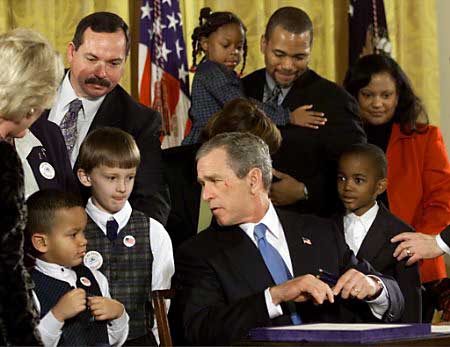
And another (in fairness he did not get the chance to be dictator, but would have):
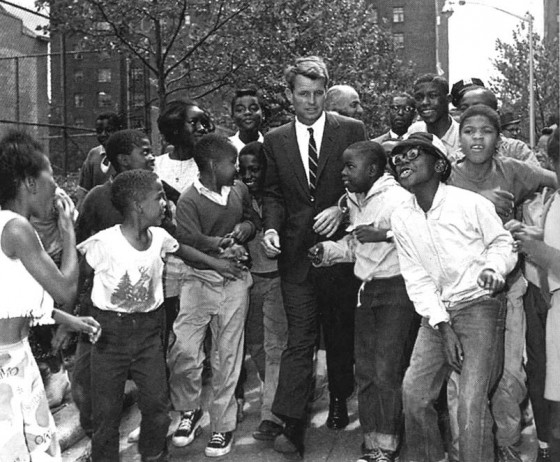
And another:

And another:

Please don’t fall for these things. Guilt by association is not the domain of truth seekers. Besides that, easily disproven assertions weakens your argument and your credibility.
Oh, and that thing about Hitler taking away all the guns in Germany before the Holocaust? You might want to check again. It is not true. And here is a solid explanation of the Hitler “For the first time, a civilized nation has full gun registration” quote. Hint: He did not say it.
When you see an image of a woman who is presented passively, and who demonstrates no other attributes aside from her physical or sexual being, that’s objectification.
Naomi Rockler-Gladen, from her article “Media Objectification of Women“
A year or so ago I removed all my domain registration accounts from Godaddy.com. It was the first hosting company I ever used because it was the most well known due to their heavy advertising.
Gradually though, something began to gnaw at me about their ads. For years companies have used sensuality to sell everything from beer (remember the Swedish Bikini Team?) to burgers (the current Hardee’s middle-school mentality). Go Daddy was doing the same thing. It was like they were afraid most people could not conceive of domain space in the same way they could a hamburger. The result was skin tight leather, lots of cleavage and scant information about how to reserve mywebsite.com.
The movement to liberate women from the supposed shackles of male oppression in the U.S. celebrated the right of women to assert themselves, to use their feminine wiles to their lasting advantage. “If you have it, flaunt it,” was expressed by more than one approving feminist.
But a not-so-funny thing happened on the way to, or perhaps as a result of liberation: objectification.
One end of liberation has clearly been a loss of respect. Men have certainly lost respect for women, but women have also lost respect for themselves. When primary expressions of liberation include women making objects out of themselves someone needs to ask, “Is this all there is?”

A mild depiction of media objectification of women. [Image credit]
Objectification takes place when a pimp beats a women into submission and lies repeatedly to keep her there, so he can sell her for profit. She is not feminine, she is not human, she is an object to be traded. Objectification takes place when a professional rapist humiliates, assaults and violates an eight-year old girl in some dank Indian brothel until her spirit is broken. She is not feminine, she is not human, she is an object to be rented. Objectification takes place when twenty adult males file in to rape that same girl on Monday, twenty more on Tuesday and another twenty day after day until emotionally she is destroyed, mentally she is decimated and physically she is diseased. Then, like an object, she is thrown onto the streets.
In India, a 23-year-old student takes a bus home from a movie and is gang-raped and assaulted so viciously that she dies two weeks later.
In Liberia, in West Africa, an aid group called More Than Me rescues a 10-year-old orphan who has been trading oral sex for clean water to survive.
In Steubenville, Ohio, high school football players are accused of repeatedly raping an unconscious 16-year-old girl who was either drunk or rendered helpless by a date-rape drug and was apparently lugged like a sack of potatoes from party to party.
And in Washington, our members of Congress show their concern for sexual violence by failing to renew the Violence Against Women Act, a landmark law first passed in 1994 that has now expired.
Most do not see most objectification for what it is. However, the attitude is the same even if the end result is not. That we oft mistake it for beauty speaks as poorly on the viewer as on the victimized.
In January 2012 Kent Meuller posted “Marketing and our Messed Up Priorities: How We Got it Wrong with GoDaddy” on his blog at Inkling Media. Part of his argument against objectification included this story from a girl who worked for a short time at a Hooters restaurant. She said,
A restaurant like that makes it appear okay to objectify women in a sexual state and a sexual state only. I’m an attractive girl carrying your food wearing a tank top showing off my [breasts] and booty shorts. On top of this, we were encouraged to flirt and ‘tease’ our customers in order to not only get bigger tips, but continue business. Even worse, people bring their CHILDREN in there…we had a birthday party for an 8 or 9 year old. I mean, they have a kids menu!
I was embarrassed by my job so much that I didnt tell my family thats where I worked. At that time, I was also suffering from the affects of bulimia and anorexia, so I think obviously it had a negative effect on that as well.
I felt like a stripper with clothes on, basically. Innapropriate is not even the word to use with some patrons. They feel it is okay to brush against your butt, stare down your shirt, but the uniforms encourage that, so in return, the restaurant is basically encouraging it.
Being asked on a date is one thing, but being solicited for sex, is another. If a patron was very rude or inappropriate, they would be asked to leave [by management], but butt taps, etc, were not punishable. “Just let it go,” was a normal response.
It absolutely was my choice to work there, and it gave me a better understanding of self worth and what our society has done to women.
When a society allows, yea encourages, objectification of a class that class loses their innate humanity. It is not possible to see people as humans created in God’s image and as objects at the same time.
Objectification and exploitation can only be stopped by men, because in almost every case men are the end users. Men fill the brothels, men descend upon the Super Bowl host city to pay for the opportunity to exploit women and girls for the night, men fly into cities like Atlanta, Georgia to attend “parties” where they’ve paid for the opportunity to rape girls, many of them drugged into compliance. Men pimp, men coerce, men kidnap, and even when women are in the line of exploitation it is often because they have victimized previously. Men can stop this. Men must.
The differences between the woman in the revealing swimwear, drunken coeds on Girls Gone Wild, a prostitute, a stripper or a sexually exploited child are only in the extremes and opportunities. The mindset is the same. Objects have no opinion, no right of refusal, no humanity, no femininity. Like a tire or a piece of lumber they are only good for as long as needed, then discarded. Human waste.
Christian husbands are instructed to
love your wives, just as Christ loved the church and gave Himself for her to make her holy, cleansing her with the washing of water by the word. He did this to present the church to Himself i splendor, without spot or wrinkle or anything like that, but holy and blameless. In the same way, husbands are to love their wives as their own bodies. He who loves his wife loves himself. (Ephesians 5:25-28, New Testament, HCSB)
Far from objectifying my wife, or allowing others to do it, my responsibility as a husband is to prevent such a thing.
I was amazed to read last year a Christian man on social media excited because he could not wait to get to the beach to see his wife in her hot new bikini. What kind of attempt is this to inspire Christlikeness? Unless they were heading to a private beach, then he encouraged her to be the object of other men’s lust. Human? Feminine? Objectified.
Recognition and rejection of the objectifying mindset is also something we must teach our children. Our daughters need to learn the God given gifts of femininity and mystique (think Ruth) and our sons the view of Jesus toward those He died to redeem.
If you want to stop prostitution, the sex trade, manipulative advertising, exploitive movies and television, then refuse to participate in objectification at any level. The money flow will cease when all humans are treated as created in God’s image, marred as it may be. And, when money can no longer be made, it will stop.
If only our president was moved to compassion over the plight of unborn children as he was after the tragedy at Sandy Hook. He has never been more eloquent. If only…

But when it comes to the most defenseless of all, our president is double-minded at best. Which is more defenseless, a six year old in a classroom facing a gunman or a child still attached to the mother confined by the walls of the womb facing a medical technician with dismemberment in mind? If a child in a classroom is defenseless against a madman, how much more so a unborn child against calm, methodical, professional annihilation?
Mr. President, get your thinking in order. A double minded man is unstable in all his ways (James 1:8).
(HT: Justin Taylor)
Newsnippets, January 12, 2013
From Women Under Siege Syria: Member of opposition group confesses to rape on state TV
Syria Online TV, a state-owned news source, posted a video to YouTube on December 10, 2012, that features a confession of rape from a member of an opposition group referred to as “Abdulhadi’s gang.” The speaker is introduced as Mahmoud al-Akkari, born in 1978 in Talbiseh, a suburb of Homs. He says that he, Abdulhadi al-Akkari—to whom his relationship is not specified—and Sheikh Zakariyya al-Dakka agreed to join ongoing Talbiseh protests. He then proceeds to describe the range of crimes he and “Abdulhadi’s gang” allegedly committed, including the kidnapping of “five girls from different neighborhoods.” He goes on to say that the group “took them to the farm, where they raped and murdered them.” He does not specify where this farm is located.
From Slate: Mr. Schmidt goes to Pyongyang
On Monday, Google Chairman Eric Schmidt arrived in North Korea, a country that is almost completely cut off from the Internet. Schmidt, who is traveling with former New Mexico Gov. Bill Richardson, is part of what has been termed a private humanitarian mission. The State Department has nonetheless expressed dissatisfaction, saying that the timing of the visit is not “particularly helpful.”
[…]
But if the timing is bad for traditional diplomacy, then what about digital diplomacy? Digital diplomacy entails leveraging new connection technologies to shape international relations. The beauty of this concept is that it doesn’t have to be strictly between one government and another. It can be conducted by technology companies, NGOs, or even ordinary citizens. A visit to North Korea by the chairman of Google, even in his “private” capacity, seems to fall into this category. The trip might even indirectly further one of the State Department’s key goals, which is to promote the “freedom to connect.”
From The Guardian: U.S. attacks counter productive, former Obama security advisor claims
In his study, Boyle said Obama pledged to end the “war on terror” and to restore respect for the rule of law in US counter-terrorism policies.”Instead, he has been just as ruthless and indifferent to the rule of law as his predecessor … while President Bush issued a call to arms to defend ‘civilisation’ against the threat of terrorism, President Obama has waged his war on terror in the shadows, using drone strikes, special operations and sophisticated surveillance to fight a brutal covert war against al-Qaida and other Islamist networks.”
Boyle, who teaches at La Salle University, Philadelphia, said the government claim that drones were an effective tool that minimised civilian casualties was “based on a highly selective and partial reading of the evidence”.
He argues one of the reasons why the US has been “so successful in spinning the number of civilian casualties” is that it has reportedly adopted a controversial method for counting them: all military-age men in a strike zone are classed as militants unless clear evidence emerges to the contrary.
From the Japan Times: U.S. imagination goes wild regarding Iranian ‘threat’
When compounded with the other imagined threats of Hezbollah and Hamas, all with sinister agendas, then the time is right for Americans to return to their homes, bolt their doors and squat in shelters awaiting further instructions, for evidently, “The Iranians are coming.”
It is as comical as it is untrue. But “The Countering Iran in the Western Hemisphere Act,” which as of Dec. 28 is an official U.S. law, is not meant to be amusing. It is riddled with half-truths, but mostly complete and utter lies.
From the BBC: French forces continue to launch air strikes against Islamist militants in Mali
[Jean-Yves Le Drian, French Defense] minister said Paris had decided to act urgently to stop the Islamist offensive, which threatened to create “a terrorist state at the doorstep of France and Europe”.
He also revealed that a French pilot was killed in Friday’s fighting – during an air raid to support Mali’s ground troops in the battle for Konna.
“During this intense combat, one of our pilots… was fatally wounded,” the minister said.
Speaking on Friday, French President Francois Hollande said the intervention complied with international law and had been agreed with Malian interim President Dioncounda Traore.
It would last “as long as necessary”, Mr Hollande said.
From CNN Asia: Study finds the world wastes half its food
Up to half of the world’s food is wasted, according to a new report that found production inefficiencies in developing countries and market and consumer waste in more advanced societies.
The British-based independent Institution of Mechanical Engineerssaid about 4.4 billion tons of food is produced annually and roughly half of it is never eaten.
Some of it is lost to inefficient harvesting, storage and transportation, while the rest is wasted by markets or consumers. The group also said food waste also impacts land, energy and water use.
“This level of wastage is a tragedy that cannot continue if we are to succeed in the challenge of sustainably meeting our future food demands,” the group said in its report.
From Popehat: All you ever wanted to know about the “trillion dollar coin”
As keen observers of the national conversation know, deep thinkers have floated the idea of minting a trillion dollar coin for deposit into the United States treasury to cure the nation’s deficit. This bold plan, endorsed by luminaries including New York Congressman Jerrold Nadler, Nobel laureate economist Paul Krugman, and Kai Ryssdal, host of public radio’s award-winning Marketplace program, has the potential to solve America’s fiscal crisis overnight, with no partisan bickering and no repercussions for world currency markets.
But can the coin (or sixteen of the coins, to be precise) be struck?
For the answer to this question, we turned to legal, numismatic, and political experts. Their answers were discouraging.
From The Edge of the Inside: Thoughts from the Brent Musburger/Kathleen Webb discussion
When Christians claim human beings are made in the Image of God, then it stands that to consider the identity of one human as derivative through another is objectification at best, and idolatry at worst. The philosophical turn that suggests we shift the subject helps us open up the possibilities that are other people. Or, when we work to recognize the other, other persons as human subjects, we open up the possibility of both deeper and challenging relationships. If I cannot, or will not, objectify you then I must be ready for you. And that means I must be ready to get outside of my expectations bound up in my former objectification of you as a human being and realize there might be something for me to learn, experience, and grow from rather than use our relationship built on the object I made of you.
From the Washington Times: No assault weapon ban coming, NRA confidently predicts
One day after gun ownership groups met with Vice President Joseph R. Biden as part of his ongoing talks on gun violence prevention, the president of the National Rifle Association predicted that Congress will not pass a ban on military-style, so-called “assault weapons” in the wake of the school shootings last month in Newtown, Conn.
“I do not think that there’s going to be a ban on so-called assault weapons passed by the Congress,” David Keene said Friday on NBC’s “Today” show.
For more than a year Google has been working toward an initiative to begin attributing content to the original authors. This is a very beneficial step to assist content producers. It seems to me to be a protection against the practice of “scraping” in which the contents of a post are lifted from the base html and reposted on another site.
As Brian Clark at Copyblogger.com has noticed about Google authorship:
Google made talented writers more important with the Panda and Penguin updates. Instead of weak content and “unnatural” link building, now sites need strong content that attracts links organically.
But it hasn’t stopped there. Now who creates the content, and who does the linking out matters – which is why Google wants to know who you are via your Google+ authorship profile. What’s been dubbed Author Rank has the potential to be the biggest algorithmic signal for SEO since the hyperlink itself.The days of lame anonymous content are over. Even better, rock star writers with demonstrated success and strong social followings will command the highest compensation and equity positions.
Think about that.
Here’s how Google itself describes the benefit:
The name of the writer can be used to influence the ranking of web search results by indicating the writer responsible for a particular content piece … Assuming that a given writer has a high reputational score, representing an established reputation for authoring valuable content, then additional content authored and signed by that writer will be promoted relative to unsigned content or content from less reputable writers in search results.
Google Authorship is linked to your Google+ profile and verifies you and the author of content you produce. Your G+ profile appears in some search results. See the screenshot below for an example.
The word on the street is Google authorship will be combined with Google’s Page Rank as a means of better reporting search results. This is important for blog owners and contributing writers to collaborative websites. When you are searched by name or name and a topic (“I can’t remember the website, but the guy was something “Duren” and the article was about social justice.”) verified authorship can help in that kind of search.
Also, as you gain influence on certain subjects, you will rise in search results on those subjects.
So, how does one become a verified Google author? Here are two ways, one of which is very simple. The second requires more effort but worked better for me.
First, you must have a Google+ account. This is a closed eco-system, so a Facebook account alone will not work with it. Make sure you have a headshot as your photo, not a mountain range or a picture of Foghorn Leghorn.
With a G+ account you should be able to verify authorship by using your email address. Go to plus.google.com/authorship and follow the directions. You will receive an email from Google. Click on the included link and verification should take place.
Please note: You must have an email that matches the top level domain of your website. In other words, if your website is ireallylikegoogleplus.com you must have an email on that domain like mail@ireallylikegoogleplus.com or jedimaster@ireallylikegoogleplus.com. A Yahoo or Hotmail address will not suffice. (Gmail used in conjunction with a POP3 mail account worked for me.)
One thing of note: I tried the email registration method a week ago and received a response email from Google. Subsequently my Google+ account indicated the email was verified. However, I never received any indication from Google that authorship had been verified. When I used the step below my Google Authorship status was verified in a matter of hours.
The graphic below is a screen grab from this page. Follow the directions step-by-step. The link on step on was place on the “About” page of my blog. I chose to use “Google+” as the hyperlink word rather than “Google.”

After completing this process you should receive an email confirmation from Google. It took several hours for me to receive the email. (If you need further information, this article by Rick DeJarnette breaks the process down even more.)
I would suggest additionally to add to your G+ profile any other social media accounts that use the same name you are attempting to register with Google Authorship. I registered my Twitter, Facebook, LinkedIn, Flickr and Myspace accounts.
What are your thoughts on Google authorship? How did the registration attempt work for you? Anyone become a verified author using only the email confirmation method?
December brought another frustrating, heartbreaking story of a multiple pastors guilty of sexual sins ranging from adultery to child molestation to rape. The influence of two successive pastors at one church were the focal point of a lengthy essay in Chicago Magazine. Entitled, “Let Us Prey: Big Trouble at First Baptist Church,” writer Bryan Smith chronicles both accusations and admissions of Jack Hyles and Jack Schaap, both former pastors at the storied and fabled First Baptist Church of Hammond, Indiana.
[Former pastor, Jack] Schaap is not simply one of those rogue evangelists who thunders against the evils of forbidden sex while indulging in it himself. According to dozens of current and former church members, religion experts, and historians interviewed by Chicago—plus a review of thousands of pages of court documents—he is part of what some call a deeply embedded culture of misogyny and sexual and physical abuse at one of the nation’s largest churches. Multiple websites tracking the First Baptist Church of Hammond have identified more than a dozen men with ties to the church—many of whom graduated from its college, Hyles-Anderson, or its annual Pastors’ Schools—who fanned out around the country, preaching at their own churches and racking up a string of arrests and civil lawsuits, including physical abuse of minors, sexual molestation, and rape.
The article also recounts some of the extreme teachings of the leadership, in particular the immensely influential former pastor Jack Hyles.
Virtually no one would marry without Hyles’s blessing, several former church members say. He soon took it upon himself to arrange marriages. According to Kaifetz, “When a guy like Hyles says, ‘This is God’s will for your life,’ you just say, ‘Well, I guess it is.’ ”
One area in which Hyles—a father of four—exerted particular control was child rearing. In this, his views were severe unto merciless. Using biblical passages as justification, Hyles preached that spanking was more than tolerable; it was a sacred duty. In his 1979 book How to Rear Infants, he wrote: “The parent who spanks his child keeps him from going to hell.”
Spanking “should be deliberate and last at least ten or fifteen minutes,” he continued. The blows “should be painful and should last . . . until the child is crying, not tears of anger but tears of a broken will.” They should “leave stripes” if need be. The age at which such punishment should begin? Infancy.
Several people who grew up at First Baptist recall that parents took the instruction to heart. “Beatings would last endlessly, it seemed,” says Mary Jo McGuire, 45, a corporate trainer in Colorado whose father was a deacon in the church. As a seven-year-old, she “used to count the lashes as a way to cope through the searing pain.” McGuire’s younger sister, Sherri Munger, told me she once received more than 300 lashes from a thick leather belt. When authorities were called, McGuire says, Hyles told the girls’ parents how to avoid arrest.
“What was going on [at First Baptist] was kind of like a process of hollowing out the followers and repopulating them with yourself,” says Schaap’s former editor. “[Hyles] took your voice, he took your beliefs, he took your likes and dislikes and opinions, and he gave you his own. But in the process of hollowing you out, he made you very weak.”
In her first one-on-one interview about the church, Hyles’s middle daughter, Linda Murphrey, a motivational speaker and coach in Southern California, remembers his followers as “zombies” who were “willing to believe and obey whatever he said.”
Some of my earliest memories of church harken to the influence of Jack Hyles and others in the “Independent Baptist” church movement. Sometime in my late elementary school years our church, under the leadership of a new, dynamic pastor, left our denomination and became independent. Hyles was among the most influential leaders of that movement. FBC Hammond was synonymous with the movement and Hyles with its theology. We heard a steady diet of short-hair and long skirts. Sometime after our family left they actually installed a sign forbidding any woman from entering the buildings if she was wearing pants.
On of the unmistakeable tenets of the Independent Baptist theology was that of extreme pastoral authority. This was taught as “touch not God’s anointed,” based on a verse from the Old Testament (Psalm 105:15). Pastors, we learned, if not explicitly then implicitly, were awaiting a vacancy in the Trinity.
It is with great sorrow I note how the abuse of this scripture has led to the kind of sinfulness recorded above. Unless your pastor is currently the king of Israel, that verse–indeed, that concept–does not apply. And if he is the king of Israel, he’d better be Jesus Christ.
The idea of “touch not God’s anointed” has been wielded like a light saber by many a pastor both in sinful power grabbing and in honest efforts to live according to God’s plan for His church. The Bible does teach us to learn from–even submit to–those in spiritual authority (Hebrews 13:7 & 17), but warns those leaders as well (1 Peter 5). The New Testament qualifications placed on church leadership are designed to prevent the very abuses we see all to often.
There are a few things that should send up all kinds of red flags should you see them in the pastor of your church:
1. Any claim to divine power or authority. Contrary to the “Lord’s anointed” teaching and those scary dying deacon stories the traveling evangelist told you, pastors are people, too. This is not to say we should disrespect them; we should not. Even when they do and stay dumb things. It does mean, however, that they are not God-like. The New Testament does not speak of church leaders in the same way David talked about king Saul. Pastors fill a divinely established office, but they are not divine, inerrant or infallible.
2. An insistence on unquestioning support. While some pastors act as if high school boys need more accountability than anyone else, the truth is pastors need as much accountability as anyone. Pastors need more than one person who will ask them hard questions, force them to rest, ensure they are spending enough time with their spouse, and that their own time in prayer and the Word is not suffering. Any pastor who demands or expects unflinching support has replaced God with his own ego, and is leading himself and the church down a destructive path. Such a demand often arises from his own irrational fears or sinful desires but, rather than doing the painful work of humble self-examination efforts are made to squelch any questions.
3. Excusing sin at the leadership level. In these church there is almost an obvious and ongoing double standard between the top pastor, the other leaders and the rest of the people. Those comprising the “inner circle” are often beyond criticism, having any transgression short of murder swept over the rug. This behavior has been seen in other places besides FBC Hammond.
4. Preaching the same things over and over. Preaching the whole counsel of God takes a lot of work. Avoiding the comfortable ruts of routine comes from immersing one’s heart and mind in the Word of God. Pastors who refuse accountability will soon find themselves preaching what they know. It’s all they can do. When pastors do not study, they do not learn, they are not changed. They have nothing to give. The same jokes, stories, verses and “hobby-horses” are signs of an inner breakdown.
5. A seeming obsession with a single subject matter. The Bible instructs us, “Out of the abundance of the heart the mouth speaks.” A video of Jack Schaap simulating masturbation during a youth sermons can be found online. It is so graphic even the Chicago Magazine writer was nonplussed about it. When a “man of God” refuses correction from those around him, he has already refused correction from God’s word. At that point the mind overflows with garbage. It might be sex, materialism or power, but that which is inhabiting the pastor’s heart will make its way out.
Perhaps, rather than looking for verses like “touch not God’s anointed,” pastors should look at verses addressed to their Old Testament counterparts. Today’s pastors are not equivalent to the kings of Israel. They would more likely be related to the priests as those tasked with spiritual oversight. Why are verses like Jeremiah 2:8 not referenced by more pastors:
The priests did not say, ‘Where is the LORD?’ And those who handle the law did not know Me; The rulers also transgressed against Me; The prophets prophesied by Baal, And walked afterthings that do not profit.
Or maybe Jeremiah 5:31:
The prophets prophesy falsely, And the priests rule by their ownpower; And My people love to have it so. But what will you do in the end?
(It’s worth noting the attitude of the people. They “love” their wayward prophets and priests.)
Jeremiah was not alone. Hear Ezekiel:
Her priests have violated My law and profaned My holy things; they have not distinguished between the holy and unholy, nor have they made known the difference between the unclean and the clean; and they have hidden their eyes from My Sabbaths, so that I am profaned among them.
Then this from Hosea (6:9):
As bands of robbers lie in wait for a man, So the company of priests murder on the way to Shechem; Surely they commit lewdness.
Now, I’m not saying there is a direct parallel from the New Testament pastor to the Old Testament priest or prophet. But, the roles do seem to be more closely related than that of pastor and king.
Those whose eyes are opened to the truth and attempt to leave spiritually abusive situation are often shamed and shunned. There is a biblical role for both, but it has nothing to do with power-hungry, sex-crazed pastors retaining manipulative control. If you are in one of these situations, then run with all of your might. All pastors do not exhibit cult-leaders like qualities, and all churches are not peopled by the blind and confused. For your own spiritual safety and maturity, find a church that reflects the life and teachings of Jesus, especially amongst its leadership.

here is another test.
In the book of Hebrews, the eleventh chapter is called the Hall of Faith, and great heroes in the Bible—Noah, Abraham, Moses, Gideon, and David — are all listed there. Then there is this comment, “By faith the prostitute Rahab, because she welcomed the spies, was not killed.” The writer does not mention anybody else’s occupation — not David the king, or Samuel the priest, or Abraham the ranche
Test test test
here is another test.
In the book of Hebrews, the eleventh chapter is called the Hall of Faith, and great heroes in the Bible—Noah, Abraham, Moses, Gideon, and David — are all listed there. Then there is this comment, “By faith the prostitute Rahab, because she welcomed the spies, was not killed.” The writer does not mention anybody else’s occupation — not David the king, or Samuel the priest, or Abraham the rancher, or Gideon the judge. Why Rahab’s? Grace. The same Jesus who was a magnet for sexual sinners who had flunked marriage was the same Jesus who redefined what a marriage could be. “Husbands, love your wives, just as Christ loved the church and gave himself up for her.” More marriages have been performed, more wedding vows have been made, more nuptial blessings have been asked in his name than any other.
All quotes taken from Chapter 11: The Truly Old-Fashioned Marriage.
Click below to order from Amazon.com.
Circa 2006 blogging was all the rage. You could head over to Blogger.com, Typepad.com or WordPress.com, sign up and join in the burgeoning movement. Books were already being written about this new version of the printing press. “Official” news sources worried over losing readership to blogs. Real news stories–not just opinion pieces and rants–were regularly broken by bloggers.
Eventually mainstream media outlets threw in their respective towels and joined the fun. Many major news organizations now have a blog section to their main websites. CNN and the Washington Post are two featuring multiple blogs.
With the advent of Facebook and Twitter blogs and blogging seemed to take a lesser role in the social media space. The ease of connecting with so many friends and family (Facebook) and the brevity of microblogging (Twitter) caused many to lose interest in the longer form writing of the blog. Or maybe it was just a bum-rush to the new trend.
After this interlude blogging is making somewhat of a comeback. I’ve seen a number of new blogs started in the last few months by my friends, while others are resurrecting dormant blogs with new material.
If you do not have a blog, should you start one? If you have a dead blog should you breath into it the breath of life in 2013? I think the answer to both questions is an unequivocal “yes” and here are eight reasons why:
1. Blogs are searchable. For all the fun and benefit of other social media, nothing is more searchable than blog content. When using a search engine like Bing or Google to find content, you will notice that Tweets and Facebook status updates do not lead the way. Blogs and websites do. This means your blogged thoughts will be searchable to people all over the world
2. Blogs allow for fuller development of ideas. As much as I love tweeting there is a limit to how much one can develop and express a distinct philosophy of government or religious belief in 140 characters. Even if you choose the terrible multi-tweet method (1/6, 2/6, etc) the fulness of a blog post cannot be captured.
3. Thought leaders depend on blogs for idea sharing. Seth Godin, Thom Rainer, John Maxwell, Tom Peters, and Mary Jo Asmus are not feeding the flock, as it were, on Facebook. While some will give pithy saying in other social media, their blogs are where ideas are shared in full.
4. Blogging hones the craft of writing. A goal of 2-3 posts per week forces you to give thought and effort to writing. The more you write, the better you tend to get. (Especially if you ask for feedback.)
5. Blogging helps release your creative side. Through this practice I have uncovered a desire to be a better, more creative writer. I am not looking to conquer the world of science fiction or fantasy, but I do want better turns of phrase. I want to be more precise, to be more descriptive. I want my writing to be memorable. I doubt I would ever have written a book had I not blogged first.
6. Connection with people of like interests. “Mommy bloggers,” “Foodies” and political junkies are examples of this. Blogging allows you to connect with other people who have the same interests as you.
7. To make money. Most bloggers do not make money. Many will make less than $100 during the entire life of their blog. If you intend to blog for money, be prepared to put in many, many hours of content creation and link building. Only a few make it to the rarified air of living from blog advertising, but that does not mean you cannot! Google offers advertising based on ad clicks. Beacon Ads pairs websites with advertisers who pay a flat rate based on traffic. Commission Junction represents many, many advertisers. Amazon.com has a fantastic affiliate program.
8. Educating yourself and others. Blogging provides the opportunity to learn. If you write about news related topics–whether firsthand reporting or opinion–you will need to study, gather facts, double check information, write, and, sometimes, provide corrections. Information you post will be learned by others. It can be a great process.
The books below will be helpful if you are interested in more information. You will get the same low Amazon.com price and I get a small commission.
Everywhere you turn people are talking about social media. Whether Facebook, Twitter, Google +, Pinterest, Path or any of the others, these services are now foundational to the social landscape. Facebook claims over 1 billion users worldwide, while Twitter claims some 200 million. I read just today that Google +, which is sometimes scorned, claims more than 100 million unique users a month. Not too shabby.
A primary reason social media has taken of is the breadth of usability. Do you want to reconnect with old friends? You can. Create work relationships? You can. Report breaking news? You can. Let complete strangers have the recipe you tried for dinner (and your opinion of it)? You can. Build your business, run a sales campaign, complain about bad service, call out someone in front of God and everybody, compliment your spouse publicly, show photos of Junior’s first haircut?
Test, test, test.
All that and more.
Ultimately social media is about influence. What you write can influence the decision of one or many. Where you shop, your thoughts on the crab legs at your local restaurant, the traffic heading to the big game. Your comments on these sometimes mundane events may affect anyone or everyone who sees them.
With that in mind, here are a few books on the subject of social media. Most are in some way related to business, but even those refer to principles of influence that could benefit a casual blogger, for instance.
The title of each is a link to Amazon.com. All purchases help support this blog, though you pay the same low price.
Renegades Write the Rules: How the Digital Royalty Use Social Media to Innovate
If an earlier adopter or power user of social media exists than Amy Jo Martin, let them speak now. A former employee of the NBA’s Phoenix Suns, this self-proclaimed “renegade” is responsible for bringing Shaquille O’Neal, Dwayne “The Rock” Johnson, and UFC guy into the fold of social media users. This easy to read and understand book is filled with personal stories and helpful hints.
Platform: Get Noticed in a Noisy World
There are few if any CEOs who have the blogging inluence to match, much less surpass, that of former Thomas Nelson CEO, Michael Hyatt. This is the thought leaders’s blog that is read by other thought leaders. His book, Platform, made the NYT Bestseller List almost before it was released. It is a thorough manual for building an influential presence (platform) in a world filled with competing voices.
Socialnomics: How Social Media Transforms the Way We Live and Do Business
Now in its secon edition…
I received this book free as a Klout perk. Schaefer uses Klout as an example of return on influence. Positing a thesis that social media is still too new to worry about return on investment, he offers ideas to help understand return on influence instead.
A huge name in social media and marketing is Lee Odden. In Optimize he shows how and why your social media, online content and search engine optimization can work together to increase you brand’s visibility and, ultimately, your bottom line.
PyroMarketing: The Four-Step Strategy to Ignite Customer Evangelists and Keep Them for Life
Recommended by my co-worker, John Cade, Pyromarketing looks at marketing efforts through the scientific filter of what makes and fuels fire.
Test test test
here is another test.
In the book of Hebrews, the eleventh chapter is called the Hall of Faith, and great heroes in the Bible—Noah, Abraham, Moses, Gideon, and David — are all listed there. Then there is this comment, “By faith the prostitute Rahab, because she welcomed the spies, was not killed.” The writer does not mention anybody else’s occupation — not David the king, or Samuel the priest, or Abraham the rancher, or Gideon the judge. Why Rahab’s? Grace. The same Jesus who was a magnet for sexual sinners who had flunked marriage was the same Jesus who redefined what a marriage could be. “Husbands, love your wives, just as Christ loved the church and gave himself up for her.” More marriages have been performed, more wedding vows have been made, more nuptial blessings have been asked in his name than any other.
All quotes taken from Chapter 11: The Truly Old-Fashioned Marriage.
Click below to order from Amazon.com.
Everywhere you turn people are talking about social media. Whether Facebook, Twitter, Google +, Pinterest, Path or any of the others, these services are now foundational to the social landscape. Facebook claims over 1 billion users worldwide, while Twitter claims some 200 million. I read just today that Google +, which is sometimes scorned, claims more than 100 million unique users a month. Not too shabby.
A primary reason social media has taken of is the breadth of usability. Do you want to reconnect with old friends? You can. Create work relationships? You can. Report breaking news? You can. Let complete strangers have the recipe you tried for dinner (and your opinion of it)? You can. Build your business, run a sales campaign, complain about bad service, call out someone in front of God and everybody, compliment your spouse publicly, show photos of Junior’s first haircut?
Test, test, test.
All that and more.
Ultimately social media is about influence. What you write can influence the decision of one or many. Where you shop, your thoughts on the crab legs at your local restaurant, the traffic heading to the big game. Your comments on these sometimes mundane events may affect anyone or everyone who sees them.
With that in mind, here are a few books on the subject of social media. Most are in some way related to business, but even those refer to principles of influence that could benefit a casual blogger, for instance.
The title of each is a link to Amazon.com. All purchases help support this blog, though you pay the same low price.
Renegades Write the Rules: How the Digital Royalty Use Social Media to Innovate
If an earlier adopter or power user of social media exists than Amy Jo Martin, let them speak now. A former employee of the NBA’s Phoenix Suns, this self-proclaimed “renegade” is responsible for bringing Shaquille O’Neal, Dwayne “The Rock” Johnson, and UFC guy into the fold of social media users. This easy to read and understand book is filled with personal stories and helpful hints.
Platform: Get Noticed in a Noisy World
There are few if any CEOs who have the blogging inluence to match, much less surpass, that of former Thomas Nelson CEO, Michael Hyatt. This is the thought leaders’s blog that is read by other thought leaders. His book, Platform, made the NYT Bestseller List almost before it was released. It is a thorough manual for building an influential presence (platform) in a world filled with competing voices.
Socialnomics: How Social Media Transforms the Way We Live and Do Business
Now in its secon edition…
I received this book free as a Klout perk. Schaefer uses Klout as an example of return on influence. Positing a thesis that social media is still too new to worry about return on investment, he offers ideas to help understand return on influence instead.
A huge name in social media and marketing is Lee Odden. In Optimize he shows how and why your social media, online content and search engine optimization can work together to increase you brand’s visibility and, ultimately, your bottom line.
PyroMarketing: The Four-Step Strategy to Ignite Customer Evangelists and Keep Them for Life
Recommended by my co-worker, John Cade, Pyromarketing looks at marketing efforts through the scientific filter of what makes and fuels fire.
The real story of the Syrian civil war
We watched the TV, fascinated.
We had been in Maraa for days, waiting for a driver who would take us further into the interior of the country. Not a single government soldier had been seen in this small city north of Aleppo in quite a while. Not even the artillery cannons in Aleppo were capable of reaching the town. Someone called an acquaintance living near the cultural center, and learned that everything was quiet there too. And the multi-story apartment buildings? There aren’t any in Maraa.
The entire report, several minutes long and related in a breathless tone, was fiction. This time we ourselves were witnesses and knew the truth.
More Pakistani aid workers murdered
Six women and a man, working for a health and education charity, have been shot dead in a drive-by shooting after they left a community centre in northwest Pakistan, police say.
The victims of Tuesday’s attack were all Pakistanis attached to the community centre in a Swabi village.
2012 was not a good year for FOX News
In a discussion of the role of women in the military, Fox News contributor Liz Trotta expressed an opinion about new rules from the Pentagon that would permit women to serve closer to the front lines. Trotta’s take on this centered on the problems faced by servicewomen who are sexually assaulted by fellow soldiers whom she regards as whiners because they won’t shut up and accept the fact that if they work closely with men they should expect to be assaulted. And if that weren’t bad enough, Trotta went on to complain about the expensive military bureaucracy set up to “support women in the military who are now being raped too much.” I would really like to know precisely how much rape is acceptable before it crosses Trotta’s line. Is there any context in which she might have meant that that isn’t unfathomably repulsive?
Pope Benedict XVI condemns “unregulated capitalism” for contributing to world tension
The Pope also thanked the world’s peacemakers and said humanity had “an innate vocation for peace”
[…]
He deplored “hotbeds of tension and conflict caused by growing instances of inequality between rich and poor”.
Those “hotbeds” also grew out of “the prevalence of a selfish and individualistic mindset which also finds expression in an unregulated financial capitalism”, as well as “various forms of terrorism and crime”, he said.
Settlers leave illegal West Bank outpost ahead of eviction
The unauthorized West Bank outpost of Oz Tzion was nearly empty on Saturday night, after the 200 or so young people who came on Friday with the intention of stopping the community’s evacuation by the Israel Defense Forces left voluntarily.
The few permanent residents of the outpost still remain in the site situated between Jerusalem and Ramallah, near the Givat Assaf outpost. Its founder is Daniela Weiss, the former head of the Kedumim Local Council. It includes a few wooden structures, which the IDF says it will demolish at a time it sees fit.
Why mostly men protesting rape in India?
There are women out on the streets, some from India’s long-suppressed women’s movement, to fight for stronger rape laws and other legal protections. But those women risk being groped by fellow protesters or shouted down. And the men on these same streets seem to be operating just as much from a revenge instinct as from any desire for meaningful social, political and legal changes.
A plea to report violence-related statistics thoroughly and honestly from AmidsTheNoise
Since the opening of Les Miserables on Christmas day, I have read no shortage of reviews from the professional critic and lay person alike. People on social media have talked about weeping and wailing, taking boxes of tissue, it being the best movie they have ever seen and the like. Viewers and reviewers seem to fall into one of these categories: 1) those who are admitted fans who think the movie version is the greatest thing ever filmed, 2) those who are admitted fans who think it was ok, but well short of the greatest thing ever filmed, 3) those who are not fans and did not care for it, and 4) those who are not fans and really do not get it.
If you are in the first three groups well and good. In this post I want to address the fourth group because I have sympathy for them. I’m guessing it would be like coming into the 14th episode of the fifth season of Lost or any episode of Dr. Who. Here is a summary that might help if you are unfamiliar with Les Miserables but intend to see the movie.

Cosette (Isabelle Allen) and Jean Valjean (Hugh Jackman) in the 2012 movie musical Les Miserables
It is estimated that only five people have ever read Les Mis in its entirety. It is the literary equivalent of a Claxton fruitcake. One of the five is Trevin Wax. Two of the others are Alain Boubill and Claude-Michel Schonberg. Or, maybe one of them read it and summarized it for the other.
Regardless, these two had the idea that a story about an escaped convict, a dogged police officer, a bunch of hookers, street people, an orphan, a love-triangle and French social unrest–all based on a million page novel–would make a bang-up musical.
Against all odds they were right. Les Miserables has truly become a worldwide phenomenon. The musical, as well as the current movie, are “sung-through” meaning that the entirety of the dialogue, save a hundred words or so, are rendered in song. The story is related in sweeping anthems, solos, duets, trios and heart breaking soliloquies.
Contains spoilers
Les Mis centers around a man named Jean Valjean. (For all you Duck Dynasty fans it is not “Gene Valgene.” It is pronounced something like “zhan valzhan.”) He is serving a 19 year prison sentence for stealing a loaf of bread in an attempt to feed his starving relatives. Police inspector Javert dutifully reminds Valjean he was sentenced to five years for stealing the bread and 14 years for trying to escape.
What a relief.
At the end of the 19 years he is issued a “yellow-ticket of leave,” which is basically a parole card. After a futile attempt to find work, Valjean takes refuge in the home of a priest whom he promptly relieves of the church’s silver place settings. The priest forgives Valjean and claims him for God. After a heartfelt soul searching, a contrite Valjean repents and vows to be a changed man.
The problem is Valjean feels himself so changed that he is no longer Jean Valjean and will begin a new life, complete with running away from his parole and parole office, Javert. Javert does not overlook such an act, nor believe such a conversion.
Years later we find Valjean, using the assumed name Monsieur Madeleine, in another town, a successful business man who is currently mayor. He has found wealth and success in the days of social upheaval, a time not unlike Dickens’ A Tale of Two Cities or A Christmas Carol. Owing to bad timing and a misunderstanding a factory woman, Fantine–an employee of Valjean’s–is fired and due to the failed economy must turn to prostitution to support her daughter.
Valjean later realizes what has happened and tries to make amends, but Fantine has become ill and will not escape death. Out of a sense of guilt and responsibility he promises to find her daughter, Cosette, and raise her as his own. This he does after paying off the French innkeeper and his wife, the Thenardiers, two wretched people so crooked they probably had to be screwed into their caskets. These are they to whom Fantine had naively entrusted the welfare of Cosette.
Valjean returns to Paris (I think) to raise Cosette in anonymity. Years later they find themselves caught up in the June Rebellion (apparently these things were monthly) when a student rebel named Marius spies Cosette, finds out where she lives and pursues a forbidden relationship–forbidden by Valjean who does not trust anyone else to protect her.
A would-be love triangle is formed between Marius, Cosette and Eponine the daughter of the Thenardiers who is the same age as Cosette, now a young adult. Eponine’s love for Marius is unrequited as he sees her, basically, as one of the guys. Nonetheless her love is real and is demonstrated as she rescues Cosette from a band of robbers led by the former innkeeper, Msr. Thenardier, and rescues Marius twice. The second time is at a barricade when Eponine takes a bullet intended for Marius.
When the French army finally breaks through the barricade all of the student revolutionaries are killed with the exception of Marius. Vajean, who has joined the students, steals away the unconscious Marius and carries him through the vile sewers of Paris to freedom. Later, after recovering from his wounds, Marius returns to the cafe where the revolution had been planned. There he sings a song of remembrance that is powerful and touching.
The movie draws to a close with Valjean in old age near death. Marius and Cosette, who have just married, track him down in hiding in time to see him a final time. He joins Fantine in heaven, along with, it would seem, everyone who fought with the students in the revolt. Or opposed the king. Or drank an espresso.
The eschatology is a little sketchy, okay?
Maybe some of you are wondering, “You’ve got to be kidding me. People who have already seen this in live musical theater are shelling out more bucks to see a movie musical two hours and 40 minutes long??” Indeed. And many will more than once.
Here’s why: The music, almost to a song, is exceptional. Lyrically intelligent, insightful and melodic. People can and do sing these songs and listen to them over and over.
The story, though filled with enough characters to give the casting director a 9 month migraine, has powerful, clear themes. Mercy, redemption, justice, law, revenge, love, sacrifice. Seriously, we may not always want to give mercy but who among us does not want to receive it? Do we not admire those who give their lives for others? The New Testament in the Bible says there is no greater sign of love. A clearer picture of grace is not to be found.
Unlike many stories, the themes are not merely present they are embodied. Valjean is the embodiment of the mercy and grace of God. It so affects his life that it ultimately affects all of those around him. Javert is the embodiment of legalism, the idea that you can earn your way into God’s grace. As it does with us, it leads him to ultimate frustration as he can neither forgive Valjean nor accept God’s forgiveness. (His role is substantial and recurring, though I barely mentioned him above.) The Thenardiers are the embodiment of wickedness. There is nothing honest nor admirable about them. The songs of which they are a part are bawdy and ribald. Fantine is the embodiment of the person who receives the worst of life. She is the recipient of judgment on sins she did not commit. Her life is the one where people ask, “Where was God for her?” She asks the same question. Marius and Cosette are the embodiment of love. Eponine is the embodiment of one who give all for nothing in return. The revolutionary students, though not claiming a biblical mandate, are the embodiment of those who would seek justice in an unjust world.
The themes are universal and undeniably Christian.
As for the movie itself, I thought it incredibly powerful. Parts are hard to watch (Fantine’s descent into prostitution set to the garish faces of another bawdy song, “Lovely Ladies,” for example), but are reminders of the hell on earth people live through each and every day. And that in real life.
If you are wondering about taking children, I would not take children under middle school. There are a few gutter scenes you might want them to avoid. And, I’ll never look at Santa Claus the same way again.
The January 2013 edition of One Minute Book Reviews includes Blood Brothers, by Elias Chacour, Ordinary Injustice, by Amy Bach, and The Insanity of God, by Nik Ripken.

Blood Brothers, by Elias Chacour, book review.
The one book you must read to be fully informed about the Palestinian-Israeli conflict. Chacour was a 9-year old Palestinian Christian when the his generational homeland became the destination of world Jewry. This is a firsthand account of dispossession, murder, terrorism, political scheming, ministry, forgiveness, and the hand of God. He recounts how his hometown of Biram was completely destroyed by the Israeli military on Christmas day 1951, for no other reason than disallowing the rightful owners back home. He ministers to Palestinians and Jews alike to this day, as he writes:
Before me stood my two commitments–one to God and one to my people. They were inextricably bound together. And suddenly, I knew I would rather be on God’s side which is stronger than human might.
Then I knew where I should be–not living in comfort, but back in the place where villages and churches were being reunited, where schools and community centers and spirits were being built up, where, amid the terrible noise of violence I could hear the whispers of the Man of Galilee, saying, “Behold, I make all things new.”
Ordinary Injustice: How America Holds Court, by Amy Bach, book review.
Bach, an attorney with the New York Bar and a journalist, spent eight years observing, interviewing and writing about the legal system in the United States. Drawing from experiences in Georgia, Mississippi, New York and Chicago, she looks at over-zealous prosecutors, over-worked public defenders, wrongful convictions, lack of prosecution, and judicial improprieties. This fascinating look inside our legal system, is at the same time extremely disheartening. According to Bach problems known, but accepted at every turn, regularly bring injustice to defendants across the nation. That this is quite unremarkable is the problem. The injustice in our justice system is quite ordinary. For instance in Coweta County, GA:
The Southern Center…charged that over a two-and-a-half-year period, more than half of the poor people found guilty in felony cases had pleaded to crimes without a lawyer present.
And, after discussing Quitman County, MS:
Prosecutor’s decisions are not transparent, except in those major trials, that make it to court. Prosecutors are not accountable and rarely have to justify their actions or identify the facts that contributed to them. With too little oversight on potentially momentous decisions that are made behind closed doors, prosecutors have no incentive to be neutral, fair, or to seek justice.
The Insanity of God, by Nik Ripken, book review
I’ve nearly finished The Insanity of God and recommend it for anyone who struggles with the big question: “Where is God in the midst of evil and suffering?” From the publisher’s summary:
The Insanity of God is the personal and lifelong journey of an ordinary couple from rural Kentucky who thought they were going on just your ordinary missionary pilgrimage, but discovered it would be anything but. After spending over six hard years doing relief work in Somalia, and experiencing life where it looked like God had turned away completely and He was clueless about the tragedies of life, the couple had a crisis of faith and left Africa asking God, “Does the gospel work anywhere when it is really a hard place? It sure didn’t work in Somalia.
How does faith survive, let alone flourish in a place like the Middle East? How can Good truly overcome such evil? How do you maintain hope when all is darkness around you? How can we say “greater is He that is in me than he that is in the world” when it may not be visibly true in that place at that time? How does anyone live an abundant, victorious Christian life in our world’s toughest places? Can Christianity even work outside of Western, dressed-up, ordered nations? If so, how?
The Insanity of God tells a story—a remarkable and unique story to be sure, yet at heart a very human story—of the Ripkens’ own spiritual and emotional odyssey. The gripping, narrative account of a personal pilgrimage into some of the toughest places on earth, combined with sobering and insightful stories of the remarkable people of faith Nik and Ruth encountered on their journeys, will serve as a powerful course of revelation, growth, and challenge for anyone who wants to know whether God truly is enough.
By ordering through the Amazon.com links below you help support this blog. You pay the same low price and I get a small commission.
In a day when fewer people have a biblical understanding of marriage than ever before these reminders are apropos. Marriage is not simply a social arrangement as we in the West have come to understand it. It is not merely a means by which the state garners more little potential taxpayers or soldiers. It is not a man and woman who decide to live together. It is not two people of the same sex who decide to unite and call it “marriage.”
It is a holy institution that has probably endured as much violence from Christ’s followers as from Christ’s enemies. Yet, it remains what it is.
The following quotes are from the book, Who is This Man: The Unpredictable Impact of the Inescapable Jesus by John Ortberg. I highly recommend it.
In the ancient world, sexuality was celebrated as a means of procreation and as an appetite to be gratified, much like appetites for food and drink. Greek physicians often diagnosed women with “hysteria,” which comes from the Greek word for “uterus,” a condition they said was caused by a wandering uterus. They said hysteria could be cured by intercourse. The Roman physician Rufus prescribed sex to adolescents as a cure for melancholia, epilepsy, and headaches. One imagines he had a thriving practice.
[…]
The gods had little to say about marriage. The rules for a public cult in Pergamum demanded a day’s interval after sex with one’s wife but two days after sex with someone else’s wife. Zeus’s sexual history (one writer describes him as “the ultimate player”) did not suggest that restraint was an Olympian virtue. The silence of the gods about sex also led to a very different world of sexuality and children. Particularly in Greek culture, sexual relationships between adult men and younger boys, often between ages twelve and sixteen, were taken for granted. The Roman emperor Commodus is said to have had three hundred young boys available for sex. The Christian writer Tatian said that Romans “consider pederasty to be particularly privileged and try to round up herds of boys like herds of grazing mares.”
[…]
Slave girls were made available for sexual purposes at the decision of the paterfamilias. Freeborn girls were often married by their families as early as possible: A study based on inscriptions indicated that 20 percent of pagan girls were married before the age of thirteen (in the Christian community it was about a third of that)
[…]Marriage, Jesus was saying, is not at its heart just an economic or social institution. It is a God-directed covenant that reflects the human capacity for self-transcendence and community. It is a joining of spirit and flesh. It does not serve the state; it precedes the state.
[…]
Jesus connects marriage to creation. In Genesis God is making creation good by separating: he separates the light from the darkness, the dry land from the sea, the heavens from the earth. But now, with the man and the woman, he takes what was separate and joins them. And so Jesus says what God has joined let man not separate.
[…]
Walter Wangerin wrote, “Marriage begins with a promise.” A man and a woman stand in a church or a chapel or a backyard before each other, before witnesses, and before almighty God. They make a vow. They say a promise. They give their word. That’s what a marriage is built on. A promise freely offered, fully embraced, joyfully witnessed, painstakingly kept —that’s what makes a marriage. Sometimes people will say: “I don’t need a piece of paper.” It was never about the paper. In Jesus’ day they didn’t have paper. It’s about the promise: “as long as we both shall live.”
[…]
In the ancient world, one’s primary loyalty was to parents. But the man and the woman are to leave their parents to create a new primary loyalty—a union, and their union with each other is to be expressed through sexual intimacy, one flesh. In other words, sex is kind of a sacrament. It is an outward sign that points to an inward reality, to a spiritual state.
[…]
In a broader way, something like this went on in the ancient world. For Greco-Roman culture, the idea of reserving sexual intimacy wasn’t quaint and old-fashioned; it was new and revolutionary. As a whole, it never did get established terribly well. And to this day, no one I know doesn’t struggle with it. But the framework that Jesus taught—the idea that marriage is a covenant relationship between and man and a woman, that sex has a spiritual component, that fidelity is a quality to be prized in men as well as women, that children are to be protected rather than exploited sexually — would come to shape our world.
[…]
In the book of Hebrews, the eleventh chapter is called the Hall of Faith, and great heroes in the Bible—Noah, Abraham, Moses, Gideon, and David — are all listed there. Then there is this comment, “By faith the prostitute Rahab, because she welcomed the spies, was not killed.” The writer does not mention anybody else’s occupation — not David the king, or Samuel the priest, or Abraham the rancher, or Gideon the judge. Why Rahab’s? Grace. The same Jesus who was a magnet for sexual sinners who had flunked marriage was the same Jesus who redefined what a marriage could be. “Husbands, love your wives, just as Christ loved the church and gave himself up for her.” More marriages have been performed, more wedding vows have been made, more nuptial blessings have been asked in his name than any other.
All quotes taken from Chapter 11: The Truly Old-Fashioned Marriage.
Click below to order from Amazon.com.
The January 2013 edition of One Minute Book Reviews includes Blood Brothers, by Elias Chacour, Ordinary Injustice, by Amy Bach, and The Insanity of God, by Nik Ripken.
Blood Brothers, by Elias Chacour, book review.
The one book you must read to be fully informed about the Palestinian-Israeli conflict. Chacour was a 9-year old Palestinian Christian when the his generational homeland became the destination of a world-wide Jewish immigration. This is a firsthand account of dispossession, murder, terrorism, political scheming, ministry, forgiveness, and the hand of God. He recounts how his hometown of Biram was completely destroyed by the Israeli military on Christmas day 1951, for no other reason than disallowing the rightful owners back home. Chacour ministers to Palestinians and Jews alike to this day, as he writes:
Before me stood my two commitments–one to God and one to my people. They were inextricably bound together. And suddenly, I knew I would rather be on God’s side which is stronger than human might.
Then I knew where I should be–not living in comfort, but back in the place where villages and churches were being reunited, where schools and community centers and spirits were being built up, where, amid the terrible noise of violence I could hear the whispers of the Man of Galilee, saying, “Behold, I make all things new.”
Ordinary Injustice: How America Holds Court, by Amy Bach, book review.
Bach, an attorney with the New York Bar and a journalist, spent eight years observing, interviewing and writing about the legal system in the United States. Drawing from experiences in Georgia, Mississippi, New York and Chicago, she examines over-zealous prosecutors, over-worked public defenders, wrongful convictions, lack of prosecution, and judicial improprieties. This fascinating look inside our legal system is at the same time extremely disheartening. According to Bach problems are known, but accepted at every turn, regularly bringing injustice to defendants across the nation. That this is quite unremarkable is the problem. The injustice in our justice system is quite ordinary. For instance in Coweta County, GA:
The Southern Center…charged that over a two-and-a-half-year period, more than half of the poor people found guilty in felony cases had pleaded to crimes without a lawyer present.
And, after discussing Quitman County, MS:
Prosecutor’s decisions are not transparent, except in those major trials, that make it to court. Prosecutors are not accountable and rarely have to justify their actions or identify the facts that contributed to them. With too little oversight on potentially momentous decisions that are made behind closed doors, prosecutors have no incentive to be neutral, fair, or to seek justice.
The Insanity of God, by Nik Ripken, book review
I’ve nearly finished The Insanity of God and recommend it for anyone who struggles with the big question: “Where is God in the midst of evil and suffering?” From the publisher’s summary:
“The Insanity of God” is the personal and lifelong journey of an ordinary couple from rural Kentucky who thought they were going on just your ordinary missionary pilgrimage, but discovered it would be anything but. After spending over six hard years doing relief work in Somalia, and experiencing life where it looked like God had turned away completely and He was clueless about the tragedies of life, the couple had a crisis of faith and left Africa asking God, “Does the gospel work anywhere when it is really a hard place? It sure didn’t work in Somalia.
How does faith survive, let alone flourish in a place like the Middle East? How can Good truly overcome such evil? How do you maintain hope when all is darkness around you? How can we say “greater is He that is in me than he that is in the world” when it may not be visibly true in that place at that time? How does anyone live an abundant, victorious Christian life in our world’s toughest places? Can Christianity even work outside of Western, dressed-up, ordered nations? If so, how?
“The Insanity of God” tells a story—a remarkable and unique story to be sure, yet at heart a very human story—of the Ripkens’ own spiritual and emotional odyssey. The gripping, narrative account of a personal pilgrimage into some of the toughest places on earth, combined with sobering and insightful stories of the remarkable people of faith Nik and Ruth encountered on their journeys, will serve as a powerful course of revelation, growth, and challenge for anyone who wants to know whether God truly is enough.
By ordering through the Amazon.com links below you help support this blog. You pay the same low price and I get a small commission.
That would be last year, not this year…yet. But, I am expecting great, aren’t you??
For all readers of Kingdom in the Midst: please accept this great big “THANK YOU” for frequenting this blog in 2012. After an off year in 2011 (which saw a mere 22 posts), this blog was sort of resurrected in January of last year. Last year there were 233 posts on Kingdom in the Midst with many thousands of page views and visitors. My visitor numbers were skewed lower than my analytics recorded as I did not get re-started until the middle January. Another reason is my stat counter inexplicably stopped working for about six weeks at one point. That’s my story and I’m sticking with it.
Overall, I’m very happy with last year and hopefully will provide meaningful content and host helpful conversations in 2013. On that note, some of you may have noticed I have installed a new commenting system called Disqus (pronounced “Disqus”). After trying Facebook comments for a while, and doing a brief trial of Livefyre comment service, I settled on Disqus. This is the same commenting system used by sites like NPR, Fast Company, CNN, The ATLANTIC, The Telegraph, Time.com and more. Having a Disqus account is not necessary to comment. You can comment using your Facebook, Google+ or Twitter accounts or just with your name and email (in normal WordPress style). Disqus, however, allows you to see your comments from various sites on your Disqus dashboard. The account is free.
No matter you login method, I invite your comments and conversation.
Maintaining consist posting is always a challenge. Now that I’m in a routine of sorts I hope to pass 250 posts in 2013. A continued focus on justice issues and exploring the multifaceted relationships between Christ’s followers and culture is another goal. I also hope to critique those areas of government that seem to contravene a Kingdom mentality. Book, music and movie reviews will continue, but I’ll also begin to do monthly “One Minute Reviews” of 3-5 books in a single post. I hope this will offset my tendency toward writing essay length reviews.
Last year was the first year I attempted social sharing on a large scale. In my earliest blogging days, “social sharing” consisted of word of mouth or sending a link via email. I’m very appreciative for everyone who has shared my writing via social media. I had several posts that were shared hundreds of times. Please continue when I write something worth sharing! And, if you have not already, do not forget to “like” Kingdom in the Midst on Facebook. (It’s simple to click “Like” in the sidebar widget.)
As always thank you for reading and recommending. Thank you for all who have supported Kingdom in the Midst in 2012. And remember you support this blog when you start your Amazon.com purchase by using the search box in my sidebar.
Here’s to a God honoring 2013.
Are you ready?
aslanfoai anfoe ow anonowiej fjao aagobjoeiowna;we
madmonvoie nvoeipiaosp noenpvieois naoinovneons mmonvoei sdipsovine n’albeljs o hoanve power to the peopl e where vier ht yaydyyd
andof o cucucso uonsonosol t hthsieisl lllxid eneoss ciessnodees.
ssoncdeos slsle sjvjo tsonso emesl.
Fa la la la la, la la la la…
I love the season of Christmas, the giving and receiving of gifts, the awareness in society that things should be different than they are even if many cannot say why. I love spending time with family. I love having time off work. I love the food, mostly baked goodies, around every turn.
Perhaps because I am human I can at least imagine the idea of dying for another. I have run such scenarios over in my mind many times.
Perhaps because I know people who have lost children I can at least imagine the pain of having a child die.
But, being holy, omnipotent, and distinct from an entire universe I had created, I cannot imagine. Creating a race upon whom I could bestow love and grace then for those beings turn against me, I cannot imagine. Then leaving aside my privilege, my throne, my universal vantage point, my safety, to become one of the created race as an infant, I cannot imagine. There just is no point of reference for it.
Think for a moment about that. Unlimited power traded for powerlessness. Eyes that oversaw all of creation, now fuzzy, blurry and unfocused. Hands that could weigh the world, barely large enough to wrap around his mother’s finger. The king of angels born in a nondescript, unknown Jewish stall.
The incarnation is the greatest miracle of all. Josh Howerton calls the Incarnation “by far – the most shocking, glorious, mysterious miracle in Redemptive History.” I agree.
We are always warned to not lose Christ in the trappings of Christmas. Let that warning sink in deeply.
Now allow me to wish you a “merry Christmas.” And, rejoice over what that means.
Thank you for your faithful reading of my blog. I will be taking the rest of the year off from writing and doing very little other social media, so Happy New Year as well.
War must be, while we defend our lives against a destroyer who would devour all; but I do not love the bright sword for its sharpness, nor the arrow for its swiftness, nor the warrior for his glory. I love only that which they defend.
J.R.R. Tolkien, The Two Towers
Of all the promises of Christmas one seemingly stirs our hearts above all others: that the Prince of Peace has come. The Old Testament prophet Isaiah, in one of the earliest writings about the Advent of the Messiah, indicated He would be “named Wonderful Counselor, Eternal Father, Mighty God, Prince of Peace” (9:6).
Most people would readily acknowledge such a hope has yet to be realized.

Iraqi soldiers exiting Iraqi air force helicopter [Image credit]
Following the mass murder in Newtown, Connecticut last week our thoughts again turned to violence. Twenty children killed before they could even reach the prime of life, whatever that is. Correlations were made to abortion, and, in the view of this writer, rightfully so.
By no measure of divine justice will violence outside the womb outweigh violence inside it.
Childhelp.org reports five U.S. children die each day as a direct result of abuse while 6 million are abused and/or neglected annually. That equates to another Sandy Hook every four days.
According to the International Center for Assault Prevention more than “40 million children below the age of 15 are subjected to child abuse each year” (2001). In addition the World Health Organization estimates that 150 million girls and 73 million boys under 18 experienced forced sexual intercourse or other forms of sexual violence during 2002.
What about war? Statistics on war deaths are varied and cover different periods of time, but this site lists conflicts since the American Civil War:
1860-65: USA civil war (628,000)
1886-1908: Belgium-Congo Free State (8 million)
1898: USA-Spain & Philippines (220,000)
1899-02: British-Boer war (100,000)
1899-03: Colombian civil war (120,000)
1899-02: Philippines vs USA (20,000)
1900-01: Boxer rebels against Russia, Britain, France, Japan, USA against rebels (35,000)
1903: Ottomans vs Macedonian rebels (20,000)
1904: Germany vs Namibia (65,000)
1904-05: Japan vs Russia (150,000)
1910-20: Mexican revolution (250,000)
1911: Chinese Revolution (2.4 million)
1911-12: Italian-Ottoman war (20,000)
1912-13: Balkan wars (150,000)
1915: the Ottoman empire slaughters Armenians (1.2 million)
1915-20: the Ottoman empire slaughters 500,000 Assyrians
1916-23: the Ottoman empire slaughters 350,000 Greek Pontians and 480,000 Anatolian Greeks
1914-18: World War I (20 million)
1916: Kyrgyz revolt against Russia (120,000)
1917-21: Soviet revolution (5 million)
1917-19: Greece vs Turkey (45,000)
1919-21: Poland vs Soviet Union (27,000)
1928-37: Chinese civil war (2 million)
1931: Japanese Manchurian War (1.1 million)
1932-33: Soviet Union vs Ukraine (10 million)
1932: “La Matanza” in El Salvador (30,000)
1932-35: “Guerra del Chaco” between Bolivia and Paraguay (117.500)
1934: Mao’s Long March (170,000)
1936: Italy’s invasion of Ethiopia (200,000)
1936-37: Stalin’s purges (13 million)
1936-39: Spanish civil war (600,000)
1937-45: Japanese invasion of China (500,000)
1939-45: World War II (55 million) including holocaust and Chinese revolution
1946-49: Chinese civil war (1.2 million)
1946-49: Greek civil war (50,000)
1946-54: France-Vietnam war (600,000)
1947: Partition of India and Pakistan (1 million)
1947: Taiwan’s uprising against the Kuomintang (30,000)
1948-1958: Colombian civil war (250,000)
1948-1973: Arab-Israeli wars (70,000)
1949-: Indian Muslims vs Hindus (20,000)
1949-50: Mainland China vs Tibet (1,200,000)
1950-53: Korean war (3 million)
1952-59: Kenya’s Mau Mau insurrection (20,000)
1954-62: French-Algerian war (368,000)
1958-61: Mao’s “Great Leap Forward” (38 million)
1960-96: Guatemala’s civil war (200,000)
1961-98: Indonesia vs West Papua/Irian (100,000)
1961-2003: Kurds vs Iraq (180,000)
1962-75: Mozambique Frelimo vs Portugal (10,000)
1962-75: Angolan FNLA & MPLA vs Portugal (50,000)
1964-73: USA-Vietnam war (3 million)
1965: second India-Pakistan war over Kashmir
1965-66: Indonesian civil war (250,000)
1966-69: Mao’s “Cultural Revolution” (11 million)
1966-: Colombia’s civil war (31,000)
1967-70: Nigeria-Biafra civil war (800,000)
1968-80: Rhodesia’s civil war (?)
1969-: Philippines vs the communist Bagong Hukbong Bayan/ New People’s Army (40,000)
1969-79: Idi Amin, Uganda (300,000)
1969-02: IRA – Norther Ireland’s civil war (2,000)
1969-79: Francisco Macias Nguema, Equatorial Guinea (50,000)
1971: Pakistan-Bangladesh civil war (500,000)
1972-: Philippines vs Muslim separatists (Moro Islamic Liberation Front, etc) (150,000)
1972: Burundi’s civil war (300,000)
1972-79: Rhodesia/Zimbabwe’s civil war (30,000)
1974-91: Ethiopian civil war (1,000,000)
1975-78: Menghitsu, Ethiopia (1.5 million)
1975-79: Khmer Rouge, Cambodia (1.7 million)
1975-89: Boat people, Vietnam (250,000)
1975-87: civil war in Lebanon (130,000)
1975-87: Laos’ civil war (184,000)
1975-2002: Angolan civil war (500,000)
1976-83: Argentina’s military regime (20,000)
1976-93: Mozambique’s civil war (900,000)
1976-98: Indonesia-East Timor civil war (600,000)
1976-2005: Indonesia-Aceh (GAM) civil war (12,000)
1977-92: El Salvador’s civil war (75,000)
1979: Vietnam-China war (30,000)
1979-88: the Soviet Union invades Afghanistan (1.3 million)
1980-88: Iraq-Iran war (435,000)
1980-92: Sendero Luminoso – Peru’s civil war (69,000)
1984-: Kurds vs Turkey (35,000)
1981-90: Nicaragua vs Contras (60,000)
1982-90: Hissene Habre, Chad (40,000)
1983-: Sri Lanka’s civil war (70,000)
1983-2002: Sudanese civil war (2 million)
1986-: Indian Kashmir’s civil war (60,000)
1987-: Palestinian Intifada (4,500)
1988-2001: Afghanistan civil war (400,000)
1988-2004: Somalia’s civil war (550,000)
1989-: Liberian civil war (220,000)
1989-: Uganda vs Lord’s Resistance Army (30,000)
1991: Gulf War – large coalition against Iraq to liberate Kuwait (85,000)
1991-97: Congo’s civil war (800,000)
1991-2000: Sierra Leone’s civil war (200,000)
1991-2009: Russia-Chechnya civil war (200,000)
1991-94: Armenia-Azerbaijan war (35,000)
1992-96: Tajikstan’s civil war war (50,000)
1992-96: Yugoslavian wars (260,000)
1992-99: Algerian civil war (150,000)
1993-97: Congo Brazzaville’s civil war (100,000)
1993-2005: Burundi’s civil war (200,000)
1994: Rwanda’s civil war (900,000)
1995-: Pakistani Sunnis vs Shiites (1,300)
1995-: Maoist rebellion in Nepal (12,000)
1998-: Congo/Zaire’s war – Rwanda and Uganda vs Zimbabwe, Angola and Namibia (3.8 million)
1998-2000: Ethiopia-Eritrea war (75,000)
1999: Kosovo’s liberation war – NATO vs Serbia (2,000)
2001-: Afghanistan’s liberation war – USA & UK vs Taliban (40,000)
2002-: Cote d’Ivoire’s civil war (1,000)
2003-11: Second Iraq-USA war – USA, UK and Australia vs Saddam Hussein and subsequent civil war (160,000)
2003-09: Sudan vs JEM/Darfur (300,000)
2004-: Thailand vs Muslim separatists (3,700)
2007-: Pakistan vs PAkistani Taliban (38,000)
2012-: Syria’s civil war (14,000)
(Estimates are near 100,000,000 direct war deaths, government sponsored deaths and civilian casualties in the 20th century.)
Malcolm X is quoted saying, “Sometimes you have to pick the gun up to put the Gun down.” He might, on occasion, be sadly accurate. The Bible does say to live peacefully with everyone as much as it depends on us. That is to say Christ’s followers should view the sword as the very last resort.
God’s people, who are encouraged to be “peace makers,” should, more than most, long for the re-appearing of the Prince of Peace. We should be wary of those who would rush to war, the first to weary of war itself, and aware of the toll violence–in all its forms–takes on men, women, boys and girls the world over in every generation. Even when war is absolutely necessary we should be the first to critique its excesses and encourage its end. Until the Prince of Peace shall come.
Monday night we were blessed to see and hear Andrew Peterson and friends at the Ryman Theater in Nashville performing Behold the Lamb of God. One of Peterson’s friends who he’s “known for many, many years” is Matthew Perryman Jones. Jones, an accomplished musician in his own right, sang a couple of songs on his own and participated in the larger BTLOG performance.

One of the songs Perryman Jones did was ‘Waking the Dead’ from his project Land of the Living. You can listen to it below. The entire project is very good and can be purchased through the Amazon link.
After giving it a listen, tell me in the comments other artists you think Matthew Perryman Jones resembles stylistically.
The Daily Beast thinks so.
The well known site asked its readers to weigh-in on the issue. Gun owners and non-owners alike responded with over 600 reasonable comments (DB discarded an unknown number considered “misguided attempts at humor—from both sides of the fence. Others were downright puerile”).
Comments included:
If this anywhere resembles a cross-section it appears most Americans are not opposed to gun ownership, but support more restrictions than are currently in place.Readers from rural areas said that they own guns for practical concerns, like personal safety in homes located far from law enforcement, or as a necessary tool for their livelihoods.
“We target shoot. We live in a rural area with livestock,” LP from Colorado said. “We have to be able to defend ourselves from aggressive wildlife, put an animal out of its misery if it is severely injured, and defend ourselves in our isolated environment. People are responsible with their guns here.”
A respondent from New Mexico said he or she owns a “.22 pistol to shoot rattlesnakes only in my yard.”
Hunters, not surprisingly, represented a good number of gun owners who responded to our survey. “I grew up in a family that hunted and fished,” said Jeff from Minnesota. “However, I do believe that private ownership of semi-automatic and automatic guns and handguns should be totally prohibited. I am perfectly willing to give up all of my guns for the greater good.”
A third group of gun owners was made up of hobbyists. An anonymous reader from Minnesota wrote that he or she owns a gun “because the hunting and shooting culture I grew up in taught me to respect life, my elders, and firearms. The relationship between me and my father that developed out of firearms and hunting is incredibly meaningful and the most positive one in my life.”
[…]
“Shooting sports are fun, and legitimate,” Andy from Texas wrote of why he chooses not to own a gun. “But the anxieties of the self-defense crowd are just too much for me. I refuse to believe there are that many bogeymen in the world.”
“I don’t need one today, but would want the option to buy one if I change my mind. I could agree with special, renewable permits/licenses and required annual safety training for owners,” wrote one anonymous reader.
Other respondents wrote that they see no need to put the fearsome power of a firearm in the hands of civilians, outside of controlled circumstances like hunting. Christina from California wrote that “the purpose of a gun is to kill someone or something. God is the judge of people’s actions, not me. You don’t need an assault weapon to kill a deer or pheasant. If your life feels threatened, you are in the wrong place.”
“I have curious kids,” wrote Matt from Maryland in a post that summed up many respondents’ feelings about the unreliable hands even a legally purchased weapon might fall in to. “I might lose my job or my wife and have a nervous breakdown.”
I was raised in a gun owning family and am a gun owner. My wife and kids are familiar with firearm use. They will soon become even more proficient.
Personally, I have never seen or felt the need for owning a hundred round ammo drum. I do not know of anyone who hunts with them either. It is true assault-style rifles are not used for hunting quail; but neither are .22s or a .40 Glock. And neither is a chef’s knife or a baseball bat.
I have been to firing ranges with and without someone in charge. Danger never felt near even though every other person was unknown to me. Pay attention when the range is hot and keep your gun pointed toward your target. I have been hunting when the person who knew the least about what was going on was me. Made it through.
I’ve known of one person who was killed because he did not unload his gun before he started to clean it. If fell off the table, discharged and fatally wounded him. I also read of a woman who turned around in her kitchen while holding a knife and fatally wounded a family member. I went to the home of a man whose car had slid of the jack stands and crushed him to death in his own yard. Accidents do happen and they involve guns, knives, cars, rocks, construction, the old and the young.
People even die having sex. I’ll move to Canada when someone tries to outlaw that.
If you are a complete pacifist and refuse to engage violence in any way, then it really should not matter to you whether I choose to defend myself with a firearm, a length of 2×4 or 3 feet of tire chain. I respect your right to allow yourself to be killed. I even respect your right to allow your family to be brutalized while you do nothing. I will defend mine with every ounce of strength and by all available means. Defending the defenseless is not only about abortion.
(As an aside, it amuses me when people decry gun ownership, yet when faced with violence themselves, call the police who come to the rescue…with billy-clubs, pistols, body armor and, if need be, assault weapons. As an aside within an aside, it is a little-known fact that a large number of accidental shootings come from…wait for it…the police shooting themselves and each other. Also, waiting for the police is not recommended in the face of evil people with guns. Check these interesting stats.)
As I perceive the issue of guns, a few things jump out to me. First, if there is a problem with mentally imbalanced people going on rampages it could be a different discussion than the gun discussion. Frankly, we cannot say of every person who goes on a rampage they are mentally challenged or emotionally damaged. This is the easy, lazy way out and is an insult to the millions of mentally challenge or depressed people who never commit a crime.
That said, if weapons that allow for mass or spree murders are falling into the hands of the mentally ill tightening a few processes is the least we can do to protect our friends, family and ourselves until we can get the other issues in society addressed. As a gun owner I confess it makes little sense that I must pass an eye test every time a driver’s license renewal is needed, but have to pass a range test only once.
Second, while the Second Amendment provides the right to keep and bear (“carry”) arms, it does not necessitate the right to own any armament the mind of man can create. I’m not in favor of my next door neighbor having a cache of white phosphorous rounds in his basement. Even if we are attacked by aliens. (Anyone whose ever seen Independence Day knows we need a nerdy code-writer before any weapons will do any good anyway.)
The flip side of this is the musket argument, and that being a poorly conceived one. The 2nd was written during a time that our arms were equal to or superior to those of our enemies. That they were single shot rifles and manual reloads is completely irrelevant. If the constitution was being written today with the same intent we still would be addressing a situation where our choices should be what allows for practical defensibility. As weapons became more advanced–and that before the NRA–the 2nd Amendment was not modified.
Third, the problem of evil is real. Demonic possession is real. The hearts of people are blackened with hurt, hate, cruelty and violence. I do not expect our congress to engage this part of the conversation, but followers of Christ must do so. We cannot legislate away evil but we can recognize and give ministry to those who are being overcome by it. Jesus changes hearts and lives.
Fourth, lawbreakers do not need permission or permits. One reason we have drive-by shooting deaths is gangsters are apparently bad shots while in moving vehicles. Why should they not be? When you are under-aged, have an illegal firearm, and are intending to kill people, you cannot exactly go to a range and practice. (“Hey Harold, how much to access the urban setting firing range for some practice today? Could you set some cardboard kid cutouts on front porches and such? I hit too many last time.”)
Many gun deaths are a result of not one, but a large number of accumulated broken laws. Though an old axiom, “If guns are outlawed only outlaws will have guns,” is very true. Gun crime is again on the rise in England where citizens do not own or carry. Things have degenerated in some areas to the point *gasp* the police have once again started packing.
In a free country law abiding people should be able to defend themselves against aggression, point for point. Those who abide by the law should never be faced with defending themselves against a 9MM using a rolled up magazine. I’m not Jason Bourne. Neither is anyone I know.
Will we be able to have a rational discourse on this? Given that my definition of rational my differ from yours and everyone else’s?
 Over the weekend the iconic and well known comedy program, Saturday Night Live, used their “cold opening” in a memorable way. Rather than a sketch The New York Children’s Chorus sang two verses of Silent Night. It was poignant, well performed, and touching. Kudos to the SNL gang for sensitivity during a trying time.
Interestingly, the second verse brought substantially changed lyrics. Rather than “Christ our Savior is born, Christ our Savior is born” the singers repeated the phrase “sleep in heavenly peace” from the first verse.
Thought this is a day of pluralism I will not speculate as to why the lyrics were changed or who was behind it. But, it does substantially change the meaning of the song. Silent Night is not a generic holiday song like Santa Claus and Popcorn. It remembers the incarnation–the entrance of God Almighty into this world as a human. That is worth the specific lyrics the author intended.
(Apologies to Jay Sanders.)
 From my friends Rick and Christie Garret at Grace Church in Orlando, FL. Starring Hannah Kate and B.G. (not the BeeGees, sorry, Sonya).
BTW, click on the video to start. And, have I mentioned that FB video feature pretty much stinks? I hope it will play for you. If not, go here.
Each year Hobby Lobby releases original artwork for certain holidays. From the mid-1990s until the mid-2000s these were published in major newspapers on Christmas and Easter. In 2006 Independence Day was added.
Especially in regard to the first two I always thought this was a great example of missional activity by corporate ownership. Run your business well, honor God with your income, and speak the gospel into culture as you can.
Below is the Christmas art from 2004. I remember seeing this for the first time. It was arresting.

The 2004 Christmas art from Hobby Lobby [Original]
I realize this may not be art in the classic sense. Da Vinci probably will not be brought to mind. But…
Most Christmas art focuses on Jesus and Mary. Even the recent postage stamps I purchased were Madonna and Child. At best you might get the “holy family” as all three are at the manger.
In this picture, though, the manger is secondary. The cattle may be lowing, but they are more doing what animals do when humans are around: sleeping or watching. The only thing better would have been a big cow with hay protruding from both sides of her mouth. Even Mary is asleep. After all, that is what women do after childbirth if they have a chance.
The scene is thus reframed as son and dad.
Often, I think, Joseph is not given enough credit. He stood with Mary when harsh rumors must have been swirling. We know the rumors of Mary’s sexual impurity were whispered about for years since even after Jesus was an adult He was still thought of by some as “one born from sexual immorality.”
Joseph was obedient to a heavenly vision that may not have made any more sense than how he must have felt when Mary first told him about Gabriel’s annunciation. “Joe, you might want to sit down for a second…”
He was a faithful provider for his family and, as was custom, taught his oldest, albeit adopted, son the trade of being a carpenter. At various times in his life Jesus was called both “the son of the carpenter” and “the carpenter from Nazareth.”
Joseph was a faithful Jew talking Jesus to Jerusalem for the feast. And like any other dad he lost his Son for a couple of days on the return and never missed him.
Men often get a bad rap in our culture. But there is hardly a dad at all who cannot identify with this scene. A young mom resting while first-time dad holds his squirming, stretching, sniffling, yawning, peeing, pooping, crying bundle of wonder.
And in this crowded stall a young Jewish dad held the greatest Wonder of all.
(You can see all Hobby Lobby holiday art here.)
In the first two installments of this series we looked at some of the history of the Conflict between Israel and the Palestinian people. We also considered the current condition of Palestinians who are in Gaza and the West Bank. Those and this post are aiming to consider not whether Israel is always right or wrong, not whether the Palestinian people are completely without fault. I accept there is fault on all sides.
The purpose in this exercise is to consider whether Bible believers must support any action taken by the government of Israel. To put it in the form of a question, must followers of Christ affirm every political or military action taken by national Israel? Or, can the actions of Israel be critiqued biblically just like every other geo-political entity on Earth, including the United States?
The uniqueness of Israel throughout biblical history can hardly be overstated. Birthed from the beyond-her-prime-wife of a former pagan, Abram (then, Abraham), the descendants of Jacob (then, Israel) were the apple of God’s eye. Chosen to be a light to the nations and form the cultural cradle for the Savior of the world, God’s people–His wife–were unique among all ancient people.
With that privilege was a responsibility they often shirked in favor of more attractive, available, temporal gods, even those “requiring” acts of adherence the true God expressly forbade. A cycle of obedience, sin, enslavement and deliverance became the title page, closing comments and every chapter of the chosen nation. This lasted for centuries.
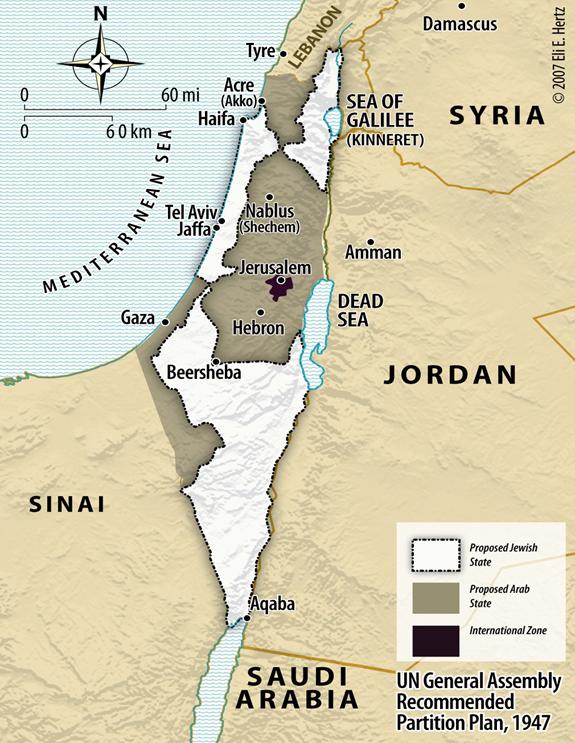
The New Testament narrative opens with Israel enduring the occupation of a foreign army. That idea about carrying a cloak two miles after being asked to carry it only one? It was related to the occupying Roman army. That centurion at the foot of the cross? A member of the occupying Roman army. Even Jesus crucifixion needed the approval of the Roman procurator, Pontius Pilate. Israel had a measure of freedom, but the Jews were not free people.
Enter the Messiah, meek and lowly and riding on a donkey. Instead of a chariot, a four legged beast of burden. Rather than a cannonade, followers waved palm branches. Replacing the shout of the conqueror, we hear, “Hosanna! Blessed is He who comes in the name of The Lord!” Substituted for a victory over Rome was a mysterious kingdom “not of this world.”
There was nothing humanly militaristic about the coming of Christ. It was completely upside down from the expectation of His day.
When His disciples tried to pin Him down on Israel’s return to power, He shrugged off their concerns insisting that God knew, it was in His control and that was all that mattered. Then He went back to heaven and we have been awaiting His return ever since.
Before Jesus left, however, He pulled off a pretty major celestial coup de tat. Eternal, you could say. He destroyed death, and him who had previously held the power of death–Satan–dishing him a mortal blow, from the cross no less. Jesus most significant point of defeat was only apparent defeat. Turns out it was actual victory over sin, death and hell. Immediate, progressive and ultimate.
By this victory Jesus instituted a different group, called the church. His words were that the church would be of His own construction, empowered by His Spirit, commissioned to carry the gospel to all nations. In other words, the church–which would be transnational, transcultural, transgenerational, and timeless–would assume the assignment that once belonged to national Israel. An assignment they finally and thoroughly rejected with the cry, “Let the blood of this man be on us and our children!”
All the descriptions bestowed upon Israel in the Old Testament–chosen, washed, righteous, holy–were bestowed upon Christ’s followers in the New Testament. Additionally, the book of Hebrews makes it clear the priesthood unique to Old Testament Israel (still functioning at the time of Christ) was inferior to the new priesthood Jesus Himself introduced and headed. This was and is a priesthood inclusive of all believers.
I do not plan to argue the Replacement view of Israel and the church. These thoughts are being introduced primarily to demonstrate our dominant, accepted view is not the only biblical way of viewing Israel’s role in modern times.
For the sake of argument, though, let’s assume pre-tribulation, pre-mill, dispensational theology is correct. Let’s assume the church will be raptured at some point and God’s gospel spreading work will return to national Israel.
Would this mean the current government of Israel is beyond criticism and critique? I submit it does not.
If Christ followers do not demand from Israel the same justice we demand for Israel, we are being hypocritical. This hypocrisy will not only be tragic it will be noticeable. We will appear double-minded and unstable because we will be double-minded and unstable. The church does not receive its instruction from the descendants of Abraham; she receives instruction from the God of Abraham.
The history of the Old Testament is a chronicle of the critique and rebuke of Israel’s sinful behavior. Why should we believe this to have changed in an era when Israel has rejected her Messiah? The church is to be the voice of God’s kingdom, the light of truth to the world! Shall we hush our mouths from witness to His truth and justice simply because Israel would be rebuked?
Such biblically warranted correction is not bruising the apple of God’s eye; if anything, it is polishing it.
In the first part of this series we considered a little of the history of modern Palestine. A few things were noted most evangelicals may not know including a position in the Israeli government since pre-1948: that the Palestinians should be dispossessed.
If you have not read the above I encourage you to do so before continuing. Some context will be helpful. For reasons probably obvious let me state I am not against Israel, their right to exist as a sovereign nation, nor their right to self-defense. If my posts seem one sided it is due to my effort in providing needed balance within the evangelical community. In most cases I am not reiterating that which is commonly accepted as true; those arguments have been made many times. I also do not defend terroristic or militaristic threats from either side.

Hatred flows both ways in this struggle. Much is made about Hamas’ platform that Israel should not exist, but little is made of Israel’s ongoing desire (and forced effort) to occupy as much of Palestine as possible. Remember the King-Crane commission found a mindset among the Jews to completely dispossess the non-Jewish residents of Palestine. This matched the desire of many in the Arab nations to have neither the Jews in Palestine nor the displaced Palestinians in their own country (though thousands ended up inside those borders anyway).
So what is really going on in Gaza? This from Diane Buttu, a Canadian attorney who has counseled both the PLO and Mahmoud Abbas:
Today, the people of Gaza suffer from a brutal blockade that has lasted for more than 6 years and isolation that has lasted for more than 20 years. Israel strictly controls imports into Gaza and exports are virtually non-existent. Palestinian life is so controlled by Israel that the Israeli government even sets policies on the minimum number of calories needed to prevent malnutrition. Access to the sea – one of their main sources of livelihood – is strictly curtailed and the water of the Gaza Strip is barely drinkable, with less than 5 per cent of their water supply fit for human consumption.
This via Wikileaks and published in the Israeli newspaper, Haaretz:
“As part of their overall embargo plan against Gaza, Israeli officials have confirmed to (U.S. embassy economic officers) on multiple occasions that they intend to keep the Gazan economy on the brink of collapse without quite pushing it over the edge,” one of the cables read.
Israel wanted the coastal territory’s economy “functioning at the lowest level possible consistent with avoiding a humanitarian crisis”, according to the Nov. 3, 2008 cable.
Note two of the objectives: to regulate the amount of food–down to the number of calories residents received–to avoid an official humanitarian crisis (ie, Darfur), and keep the economy on the brink of collapse. Note the source of the economic warfare is not a shrieking Palestinian terrorist, but an official diplomatic cable.
Water is needed for any people to survive as we all know. Prolific author and M.I.T. professor, Noam Chomsky, wrote in a November 9, 2012 article,
Sitting in a hotel near the shore, one can hear the machine-gun fire of Israeli gunboats driving fishermen out of Gaza’s territorial waters and toward land, forcing them to fish in waters that are heavily polluted because of U.S.-Israeli refusal to allow reconstruction of the sewage and power systems they destroyed.
The Oslo Accords laid plans for two desalination plants, a necessity in this arid region. One, an advanced facility, was built: in Israel. The second one is in Khan Yunis, in the south of Gaza. The engineer in charge at Khan Yunis explained that this plant was designed so that it can’t use seawater, but must rely on underground water, a cheaper process that further degrades the meager aquifer, guaranteeing severe problems in the future.
The water supply is still severely limited. The U.N. Relief and Works Agency (UNRWA), which cares for refugees but not other Gazans, recently released a report warning that damage to the aquifer may soon become “irreversible,” and that without quick remedial action, Gaza may cease to be a “livable place” by 2020.
Writing in the Boston Globe last week, Sara Roy addressed the issues of arable land and fishing, both of which have been curtailed by Israel’s government:
Gaza’s economic decline is seen in the near collapse of its agricultural sector. One factor is the destruction of around 7,800 acres of agricultural land during Cast Lead. Consequently, approximately one-third of Gaza’s total arable land is out of production. Furthermore, Israeli-imposed buffer zones — areas of restricted access — now absorb nearly 14 percent of Gaza’s total land and at least 48 percent of total arable land.
Similarly, the sea buffer zone covers 85 percent of the maritime area promised to Palestinians in the Oslo Accords, reducing 20 nautical miles to three, where waters are fouled by sewage flows in excess of 23 million gallons daily.
And it is not limited to Gaza. According to Pakistani reporter M. AQavi, writing in the Tribune, dispossession is still taking place in East Jerusalem. From March of this year, he writes,
Sheikh Jarrah, an Arab neighbourhood in East Jerusalem, is across the road from the American Colony Hotel where Mr Tony Blair and his staff have their offices. It is also one of the sites where a Jewish Settlers’ organisation is planning to build a 200 unit Settlement in place of the existing Arab housing.
Arab homes are being forcibly occupied by Settlers and their Arab occupants thrown out on the street…A Mr Al Kurd, who is one of the evicted Arabs, stands out and of course a swarm of children from the neighbourhood also gather around. The routine is to gather around the Sheikh Jarrah mosque holding banners in Hebrew, Arabic and English and clutching Palestinian flags. After 15 minutes or so, we march to visit each occupied house in turn, to remind the new occupants they are living in someone else’s house. Each occupied house is guarded by border police, video monitors, and at one of the houses I notice barbed wire as well. On the way back from visiting the last occupied house I see male members of a Settler family heading home for the Sabbath, all dressed in fine traditional dress with circular fir hats and all that.
In the last few days, a Israeli government official, in response to the U.N. granting non-member observer status to Palestine, confirmed “a report that Israeli Prime Minister Benjamin Netanyahu had decided build the 3,000 units in response to the Palestinians success at the UN…’It’s true – in (east) Jerusalem and the West Bank,’ without saying exactly where.”
In Israel possession continues to be 10/10ths of the law and dispossession is the means of keeping it.
After 6+ decades of dissension there is no end of examples, but Bob Roberts, Jr. can summarize the situation better than I. Theologian, missiologist, pastor and statesman, Roberts has friends in both Israel and among the Palestinians. He has been on the ground there. He is aware of the dire situation in Gaza. This is an excerpt from his blog on November 17, 2012. All emphasis is mine.:
First, each side overwhelmingly in every survey done wants a two state solution. From Jewish & Palestinian college students, cabbies, men, women, faith leaders, and yes – even governmental leaders on each side, I’ve heard the same thing.
[…]
Second, as one Palestinian scholar told me – the biggest problem is they are both “victim” cultures. The Jewish statement “never again” causes overreach on the part of the Jews in how they can be heavy handed with the Palestinians. The displacement of millions of Palestinians having been driven from their homeland after centuries and millennia prevents them from thinking about moving forward with where things are versus what they wish they could go back to.
[…]
Third, not just during this current crisis – but everyone who has been living in bunkers with sirens for the past 60+ years – this has got to be incredibly destabilizing for people as individuals and culture in general. Gaza is the most densely populated places in the world. Putting a wall around it with automatic movement operated machine guns, mines and trying to cut the people off from the world and daily necessities is a recipe for an explosion. People when forced to live in that animal environment become animals. Frankly, I’m amazed there hasn’t been more conflict – if it was Texas, speaking as a Texan – I assure you there would be. Ever heard of the Alamo?
[…]
Let’s be clear, there are Palestinian terrorist [sic] that don’t want to compromise, respect Israel, her right to exist and would circumvent any movement towards peace – this cannot be. Let’s be equally clear, it isn’t a fence or a barrier – it is a 30 foot concrete wall, with machine gun towers pointing down on the people that has been built around Palestinians in Gaza, Bethlehem, Ramallah, other cities – putting entire populations of millions in virtual “prison” – this is simply unsustainable.
I have thought often about the scenario Roberts references in his “Remember the Alamo?” statement. Unless you literally move to flatten every structure in Gaza and commit genocide on this race of people, the increases in pressure will result in eruptions. Whether a masked Hamas terrorist, a teenager throwing rocks or a kid making obscene gestures, there will be a response. And we should not be surprised when there is.
Much ado has been made over the graduated introduction of Obamacare in the last year, including an unknown impact on taxes beginning January 1, 2013. In the recent election Republican Mitt Romney made the repeal of the heath care legislation a major point of his campaign as had other GOP contenders.
Christians and Christian business owners from across various denominations have complained that certain requirements of the Affordable Care Act are in violation of their First Amendment free exercise of religion. Specifically, requirements that birth control–even so-called “morning after” or “week after” abortion causing drugs–must be covered by insurance regardless of the beliefs of the business owners.
As it turns out, most Americans prefer Obamacare to the first amendment.
From a LifeWay News article by Russ Rankin:
NASHVILLE, Tenn. — The majority of adults in America believe businesses and organizations, even those with conflicting religious principles, should be required to provide coverage of contraception and birth control for their employees, according to a recent survey by LifeWay Research.
At issue is a mandate under the Health and Human Services’ Affordable Care Act (a.k.a. “ObamaCare”), which requires the coverage, even if it violates the employer’s religious convictions.
Dozens of organizations – predominately faith-based hospitals and charities, as well as business owners with religious objections – have filed suit claiming the HHS mandate violates the Constitution under the First Amendment Free Exercise of Religion Clause and the federal Religious Freedom Restoration Act (RFRA).
According to the LifeWay Research survey, nearly two-thirds (63 percent) of American adults agree businesses should be required to provide their employees with free contraception and birth control, even if it runs counter to the owners’ religious principles. Twenty-eight percent disagree and 10 percent selected “Don’t Know.”
The opinions change somewhat when taking into consideration religious affiliation of the organization. Fifty-three percent agree Catholic and other religious schools, hospitals, and charities should be required to provide the coverage, while 33 percent disagree.
In considering whether nonprofits should be required to provide the coverage, 56 percent of adults agree and 32 percent disagree they should be required to follow the mandate even if it goes against their religious beliefs.
“It is easy for Americans to desire to protect the freedoms of individuals over unnamed business entities,” said Ed Stetzer, president of LifeWay Research. “However, such generalizations may overlook the fact that more than 90 percent of businesses with employees are family businesses. Recent lawsuits contend that the religious freedoms of these families conflict with healthcare choices desired by individuals.”
On Nov. 16, a federal court ruled in favor of faith-based Tyndale House Publishers, which filed a health care lawsuit against the government to halt enforcement of the mandate on the grounds of religious conviction.
However, three days later another court ruled against the suit brought by the Christian owners of the Hobby Lobby retail stores, stating the owners’ beliefs were only “indirectly” burdened by the mandate’s requirement that they provide free coverage contraception and birth control in Hobby Lobby’s self-funded insurance plan. Hobby Lobby, which filed an appeal of the judgment, faces fines of more than $1.3 million per day.
Stetzer clarified the wording of the LifeWay Research poll, which asks about “contraception” and not specifically “abortifacient contraception,” a main point in the Hobby Lobby suit. Abortifacient contraception includes “the morning-after pill,” which induces abortion of a fertilized embryo.
“We chose the wording to reflect what is widely reported in the news as a ‘contraception mandate,’” Stetzer said. “Catholic organizations were quick to point out the conflict of the mandate with the religious teachings of the Catholic church, but the details of this mandate concern many other religious groups whose religious beliefs specifically oppose abortifacient contraception. At this point, however, the vast majority of news reports describe this as a contraception issue and the majority of Americans are not supportive of companies, nonprofits or Catholic charities opting out.”
While the Supreme Court of the United States upheld most of the Affordable Care Act in a 5-4 vote last summer, the Court on Nov. 26 granted a rehearing to Liberty University in Lynchburg, Va., specifically on the issue of abortifacient contraception.
In a press release from the Liberty Counsel, Matt Staver, dean of Liberty University’s law school, said, “Congress exceeded its power by forcing every employer to provide federally mandated insurance. But even more shocking is the abortion mandate, which collides with religious freedom and the rights of conscience.”
Demographically, responses to the LifeWay Research poll show Americans who never attend religious services are more likely to “Strongly Agree” (45 percent) nonprofits, Catholic and other religious schools, charities and hospitals should be forced to follow the mandate. The percentage rises to 55 percent when considering businesses in general.
The survey shows women are more likely than men to “Strongly Agree” that all three organizational categories: businesses (48 percent vs. 37 percent); nonprofits (37 percent vs. 29 percent); Catholic and religious schools, hospitals and charities (36 percent vs. 26 percent) should provide the coverage.
Younger Americans are the least likely (less than 10 percent) to “Strongly Disagree” with businesses and organizations being required to follow the mandate.
“The religious freedom that the United States pioneered is not a freedom of belief, but a freedom to practice that faith,” said Stetzer. “The American public appears unaware or unconcerned that some religious organizations and family businesses indicate fear of losing the freedom to practice their faith under the new healthcare regulations.”
Methodology: The online survey of 1,191 adult Americans was conducted Nov. 14-16, 2012. A sample of an online panel representing the adult population of the United States was invited to participate. The sample provides 95 percent confidence that the sampling error does not exceed +2.9 percent. Margins of error are higher in subgroups.
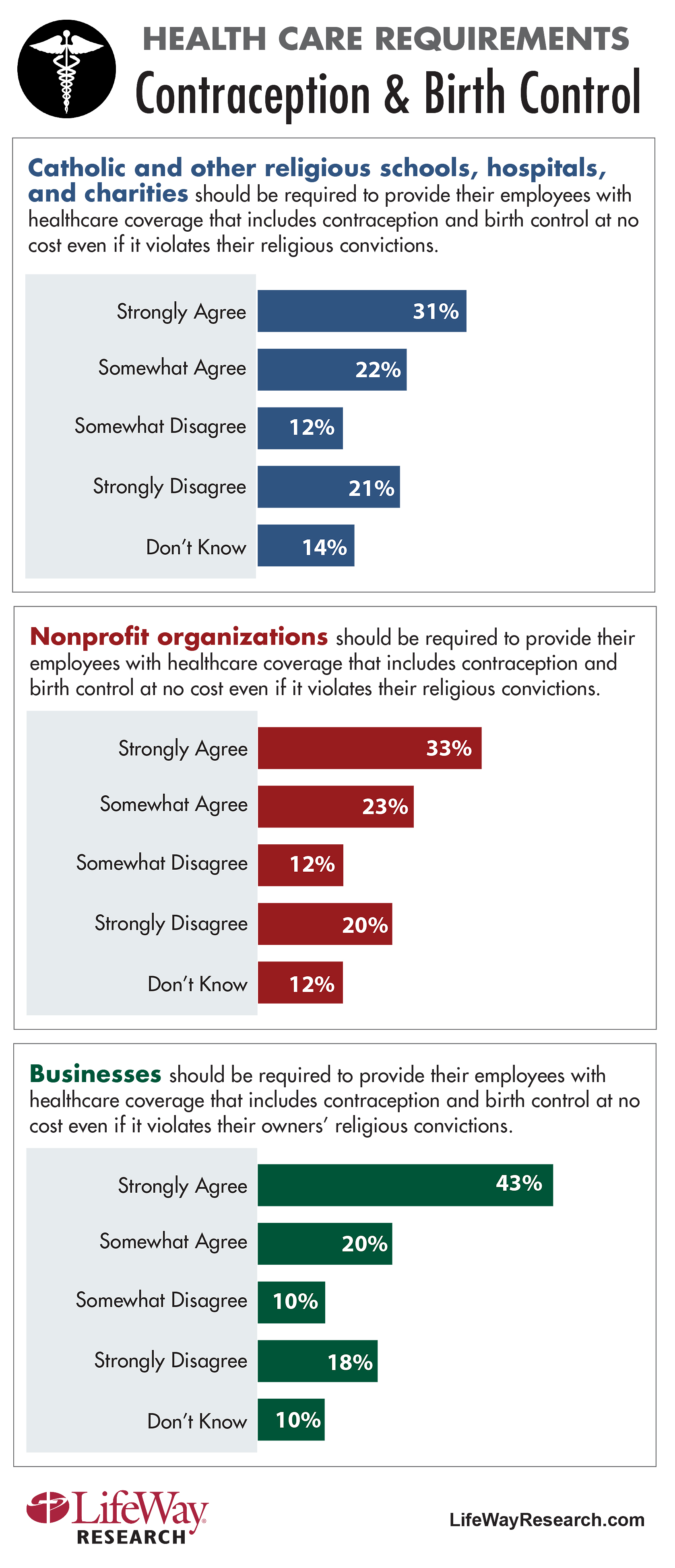
Anyone within 500 miles of a television or the Internet last week could scarcely have missed the near warlike conditions between Israel and Hamas in the Middle East. Following a continuous storm of unguided missiles from inside the Gaza strip, primarily into southern Israel, the lone democracy in the Middle East fired back with tanks, gunships, artillery and guided munitions. A ground invasion was a very real possibility before a cease fire was reached
One count (subject to change if more wounded Palestinians die) is 130 Palestinians killed and five Israelis dead. Many additional Palestinians were injured, while a handful of Israelis were also hurt.
This serves not to minimize the damage of either side, but the simple facts are more Palestinians than Israelis were both killed and injured. This includes damage and loss of life from the many, many rockets fired leading up to this conflict.
The narrative in the West is almost always the same. Indeed, there is virtually no deviation: Palestinians elected Hamas to govern them, Hamas conducts random attacks on Israel using rockets smuggled into Gaza (usually) procured from an enemy of Israel such as Iran, Israel shows great restraint in not answering every attack, Israel is forced to finally defend herself with force. This force is always overwhelming and disproportional in type of weapons used, amount of damage caused, amount of combatant lives lost, and amount of civilian life lost.
Among some conservative Evangelicals the narrative is even more pronounced as it is founded on a specific biblical interpretation. Books and sermons by Joel LaHagee have all but instilled this view as a test of orthodoxy this amongst many of them. Consequently it is held, based on specific interpretations of biblical prophecy, that Israel has a God given right to all of the land of Palestine including Gaza and the West Bank. (More on this in Part 3.)

A portion of the Israeli constructed wall confining Gaza. [Image credit]
(Another fantastic image of the Gaza wall is here. )
Through my years in church, which are more by far than my years in the Kingdom, I was taught the year 1948 saw the fig tree bud which was an answer–in our day–to Bible prophecy. The date was May 14 the exact date Israel’s fledgling government declared independence. The land was theirs and they were back in it.
While told of Israel’s “miraculous” victories in the 1948 War and the Six Day War, rarely, if ever, were the former inhabitants of the land we call Palestine mentioned in any way other than haters of Israel. The story of Abraham, Isaac and Ishmael was constantly called to mind. “We can expect nothing but warfare because that is what the Bible promised, but we most surely should pray for the peace of Jerusalem.”
Left to our own research efforts was understanding the carving up of the Ottoman Empire after World War 1 which led to the geographic creations of Syria, Lebanon, Transjordan, Iraq and Palestine, as mandates of England or France. Barely mentioned were the divisions–often conflicting–within the movement known as Zionism which led the political charge for a Jewish homeland. Left unmentioned was the dispossession that took place as tens of thousands of Jewish families immigrated to Palestine. As British historian Peter Mansfield notes regarding the findings of the King-Crane commission,
the Zionist programmes would have to be greatly modified if the promises of the Balfour Declaration to protect the rights of the non-Jews in Palestine were to be upheld. After discussion with Zionist leaders in Jerusalem, they had no doubt that the Zionists looked forward ‘to a practically complete dispossession of the present non-Jewish inhabitants of Palestine. [Emphasis added] “A History of the Middle East,” p. 180-181
A number of years ago a very pro-Israel acquaintance recommended a book by Elias Chacour entitled, Blood Brothers. It chronicles Chacour’s years growing up in Palestine, living through the dispossession mentioned above. As a youth he was witness to Palestinian land owners, orchard and grove owners, whose houses, lands and agricultural products were taken from them by force. This often happened at the point of a gun by Zionists intent of removing Palestinians by force or “asking” them to leave. Orchards owned by Chacour’s family were occupied by military forces then sold to an investor.
The dispossession–over a space of years–of some 700,000 Palestinians created a humanitarian crisis that continues nearly unabated until this day. Thousands and thousands of the early refugees were either absorbed into surrounding countries, or fitted into camps in those countries. Tens of thousands were gathered into Gaza (the biblical home of the Philistines) to endure restrictions they have now faced to varying degrees for many decades.
Little known to American evangelicals is the Zionist leadership never intended for a two state solution even though both Jews and non-Jews had lived peacefully in Palestine. Even before May 14, 1948, future prime minister David Ben-Gurion and others planned to drive the non-Jewish residents completely out of Palestine. United States diplomat and future ambassador to Lebanon, Robert McClintock, underscored president Truman’s concern when Israel refused to accept a truce in early 1948.
The Jewish Agency refusal exposes its aim to set up its separate state by force of arms–the military action after May 15 will be conducted by the Haganah [the unofficial Jewish army] with the help of the [Jewish] terrorist organizations, the Irgun and LEHI, [and] the UN will face a distorted situation. The Jews will be the real aggressors against the Arabs, but will claim they are only defending the borders of the state, decided upon [by the UN]. “How Israel Was Won,” Baylis Thomas, p. 69, 70. [Emphasis added]
Another future prime minister, Golda Meir, secretively secured a non-agression pact with Transjordan that Israel never intended to keep and, as night follows day, they violated. In 1976 the Koenig Memorandum reiterated the goal to “examine the possibility of diluting existing Arab population concentrations.” During the conflagration last week Gilad Sharon wrote in the Jerusalem Post:
There is no justification for the State of Gaza being able to shoot at our towns with impunity. We need to flatten entire neighborhoods in Gaza. Flatten all of Gaza. The Americans didn’t stop with Hiroshima – the Japanese weren’t surrendering fast enough, so they hit Nagasaki, too.
It does not take much history to see Israel began with a plan of territorial expansion, implemented it and have always kept it in mind.
This is not in any way to insinuate that terroristic activity should be without account. The Palestinian Liberation Organization, Fatah, and Hamas have done all within their power to wreak havoc on Israel. There has been a significant amount of push and push-back throughout this uneasy existence. However, Yasir Arafat was only a schoolboy when the dispossession began. His Fatah movement (which merged with the PLO) was not formed until years after Israel declared statehood. Hamas, in its nascent form, was shepherded along by Israel. From the WSJ in 2009 (“How Israel Helped to Spawn Hamas”):
Surveying the wreckage of a neighbor’s bungalow hit by a Palestinian rocket, retired Israeli official Avner Cohen traces the missile’s trajectory back to an “enormous, stupid mistake” made 30 years ago.
“Hamas, to my great regret, is Israel’s creation,” says Mr. Cohen, a Tunisian-born Jew who worked in Gaza for more than two decades. Responsible for religious affairs in the region until 1994, Mr. Cohen watched the Islamist movement take shape, muscle aside secular Palestinian rivals and then morph into what is today Hamas, a militant group that is sworn to Israel’s destruction.
Instead of trying to curb Gaza’s Islamists from the outset, says Mr. Cohen, Israel for years tolerated and, in some cases, encouraged them as a counterweight to the secular nationalists of the Palestine Liberation Organization and its dominant faction, Yasser Arafat’s Fatah. Israel cooperated with a crippled, half-blind cleric named Sheikh Ahmed Yassin, even as he was laying the foundations for what would become Hamas. Sheikh Yassin continues to inspire militants today; during the recent war in Gaza, Hamas fighters confronted Israeli troops with “Yassins,” primitive rocket-propelled grenades named in honor of the cleric.
Hamas, then, is to Israel what Al Queda is to the United States. And, like our son has turned against the father–complete with retaliation–the same thing has been played out between Israel and Hamas over and over in Gaza.
It bears asserting my purpose in this series is not to absolve Hamas from guilt or blame the government of Israel for every death in the region. Hamas, Fatah and the Palestinian Authority have had their own problems. My hope is to provide, perhaps, some balance to how the situation is viewed especially as it relates to some Christians in America who think all actions of national Israel are beyond any and all criticism. In the Middle East, as in all cases, we need to look for the truth with eyes wide open.
Part two will cover the ongoing situation in Gaza, while part three will suggest how Christ followers might react to the situation there.
Folks, this ain’t normal is the eighth book by the self-proclaimed “lunatic farmer” from Swoope, Virginia, Joel Salatin. Salatin, on his Polyface Farms, raises and sells “salad bar beef, pigerator pork, pastured poultry,” turkey, rabbits, eggs and more, has become a living legend in the local/organic food world. His self-published You Can Farm: The Entrepreneur’s Guide to Start and Succeed in a Farming Enterprise still sells thousands of copies annually after more than a decade in print.
Less a book Folks is more a bound collection of essays (with a couple of screeds thrown in for good measure). As a result one fair criticism of the book is there are repetitive areas, as if after writing the collection Salatin was too tired to read back through it and the editor was not paid to do so. Nonetheless, there is a wealth of good information here.

Joel Salatin [Image credit]
If you do not think this is so, try and buy a gallon of raw milk at your local grocery store. (You can decide for yourself whether raw milk is good for you and your family; what you cannot decide is to go to Kroger or Publix and buy it.)
To read Salatin is to be bombarded with a wide-ranging case of common sense. Does it really make sense that people can bring untested, ungraded food, cooked in unsanitized home kitchens to a church pot-luck where everyone can eat it, but to sell that same food for a penny is against the law? Does it really make sense that the same milk our grandparents drank as kids (unadulterated, straight from the cow or goat) is more “dangerous” than 20 ounces of soda or a can of Red Bull?
Is it honoring to God for cows to be crammed into industrial feed-lots where close quartered disease is rampant, more and newer anti-biotics are necessary to fight those diseases, and toxic manure lagoons are needed to hold all the urine and excrement? It is not an example of extreme hubris that chickens are raised in such close proximity their beaks need to be removed to keep them from killing and eating each other?
Are food consumers the beneficiaries when the food chain is increasingly controlled by a corrupt, multiple-fined company like Monsanto–the Planned Parenthood of the food industry–whose greed is exceeded only by the shamelessness with which they advance it? Are American citizens the beneficiaries of a farming system where so much corn is grown that the only way most corn farmers can stay in business is thanks to U.S. government subsidies for ever acre of corn they grow?
Salatin peppers Folks, this ain’t normal with a dozen or two recommendations of books (some of which likely for the basis of his essays). The titles read like a veritable library of clean eating and healthy living advice. Though not footnoted the pages are influenced by tomes like Four-Season Harvest, Nourishing Traditions, The Omnivore’s Dilemma, Radical Homemakers, Fast Food Nation, Pottenger’s Prophecy, An Agricultural Testament, and, my favorite, Holy Sh*t: Managing Manure to Save Mankind. He is no slouch when it comes to reading, and it shows.
Consumers of Salatin’s previous “how-to” style books will be bereft of 1-2-3s and ABCs here. See this more as a collection of philosophical wisdom as to the “why” undergirding the “how.”
Is it convincing? Yes. Maddening? At times. Enlightening? Beyond belief. Worth your time? Without a doubt.
This 11 minute video by Michael Pollan features his time spent at Polyface and the genius of Salatin on display there. Be sure and check out the books below the video.
Most people who know me are aware that I supported retiring Texas congressman Ron Paul for president. I did so in 2008 and 2012. All except those who have died in the mean time also know that he did not win, unless you count those eleven congressional terms.
Yesterday Ron Paul gave a final speech in the House chamber. Like most of his speeches it was a bit rambling, sounding warning bells on economic concerns, the gold standard of money, an overextended military and liberty. From his remarks:
In many ways, according to conventional wisdom, my off-and-on career in Congress, from 1976 to 2012, accomplished very little. No named legislation, no named federal buildings or highways—thank goodness. In spite of my efforts, the government has grown exponentially, taxes remain excessive, and the prolific increase of incomprehensible regulations continues. Wars are constant and pursued without Congressional declaration, deficits rise to the sky, poverty is rampant and dependency on the federal government is now worse than any time in our history.
All this with minimal concerns for the deficits and unfunded liabilities that common sense tells us cannot go on much longer. A grand, but never mentioned, bipartisan agreement allows for the well-kept secret that keeps the spending going. One side doesn’t give up one penny on military spending, the other side doesn’t give up one penny on welfare spending, while both sides support the bailouts and subsidies for the banking and corporate elite. And the spending continues as the economy weakens and the downward spiral continues. As the government continues fiddling around, our liberties and our wealth burn in the flames of a foreign policy that makes us less safe.
Through the campaigns Paul supporters (excepting a few flamers and morons) were a thoughtful and cogent–if not an odd–mix. It is safe to say no other single candidate in the last two elections has attracted such a wide variety in his or her base. Only Barack Obama’s supporters could touch Dr. Paul’s for passion.
In an insightful article entitled, “Who Killed Rudy Guiliani?”, W. James Antle III asserts that Ron Paul has restored the soul of conservatism’s future. In my way of thinking this would make Paul the true and better William F. Buckley, Jr. Writes Antle:
When Ron Paul leaves office in January, he will have been more successful than many of the legislators who spent decades maligning him. Paul’s ideas have gradually gone from marginal to mainstream, and his record shows how much even a single determined man of principle can do to change a movement. In foreign policy especially, the Texas congressman leaves behind a new generation of leaders, both libertarian and conservative, who challenge the disastrous bipartisan consensus.
Conor Friedersdorf chose not to actually engage the content of the speech, but, while questioning some of the questions posed by Paul, had to admit “the United States – and especially its most unjustly treated citizens – would be better off if more legislators were grappling with them.” Ron Paul asked,
-Why are sick people who use medical marijuana put in prison?
-Why does the federal government restrict the drinking of raw milk?
-Why can’t Americans manufacturer rope and other products from hemp?
-Why are Americans not allowed to use gold and silver as legal tender as mandated by the Constitution?
-Why is Germany concerned enough to consider repatriating their gold held by the FED for her in New York? Is it that the trust in the U.S. and dollar supremacy beginning to wane?
-Why do our political leaders believe it’s unnecessary to thoroughly audit our own gold?
-Why can’t Americans decide which type of light bulbs they can buy?
-Why is the TSA permitted to abuse the rights of any American traveling by air?
-Why should there be mandatory sentences–even up to life for crimes without victims–as our drug laws require?
-Why have we allowed the federal government to regulate commodes in our homes?
-Why is it political suicide for anyone to criticize AIPAC ?
-Why haven’t we given up on the drug war since it’s an obvious failure and violates the people’s rights? Has nobody noticed that the authorities can’t even keep drugs out of the prisons? How can making our entire society a prison solve the problem?
-Why do we sacrifice so much getting needlessly involved in border disputes and civil strife around the world and ignore the root cause of the most deadly border in the world-the one between Mexico and the US?
-Why does Congress willingly give up its prerogatives to the Executive Branch?
-Why does changing the party in power never change policy? Could it be that the views of both parties are essentially the same?
-Why did the big banks, the large corporations, and foreign banks and foreign central banks get bailed out in 2008 and the middle class lost their jobs and their homes?
-Why do so many in the government and the federal officials believe that creating money out of thin air creates wealth?
-Why do so many accept the deeply flawed principle that government bureaucrats and politicians can protect us from ourselves without totally destroying the principle of liberty?
-Why can’t people understand that war always destroys wealth and liberty?
-Why is there so little concern for the Executive Order that gives the President authority to establish a “kill list,” including American citizens, of those targeted for assassination?
-Why is patriotism thought to be blind loyalty to the government and the politicians who run it, rather than loyalty to the principles of liberty and support for the people? Real patriotism is a willingness to challenge the government when it’s wrong.
-Why is it is claimed that if people won’t or can’t take care of their own needs, that people in government can do it for them?
-Why did we ever give the government a safe haven for initiating violence against the people?
-Why do some members defend free markets, but not civil liberties?
-Why do some members defend civil liberties but not free markets? Aren’t they the same?
-Why don’t more defend both economic liberty and personal liberty?
-Why are there not more individuals who seek to intellectually influence others to bring about positive changes than those who seek power to force others to obey their commands?
-Why does the use of religion to support a social gospel and preemptive wars, both of which requires authoritarians to use violence, or the threat of violence, go unchallenged? Aggression and forced redistribution of wealth has nothing to do with the teachings of the world’s great religions.
-Why do we allow the government and the Federal Reserve to disseminate false information dealing with both economic and foreign policy?
-Why is democracy held in such high esteem when it’s the enemy of the minority and makes all rights relative to the dictates of the majority?
-Why should anyone be surprised that Congress has no credibility, since there’s such a disconnect between what politicians say and what they do?
A commenter at the Los Angeles Times derisively exclaimed: “Ron Paul; the answer to a question nobody asked.”
That may well be true. But maybe the problem is the wrong questions were asked over and over while the right ones were ignored.

Ron Paul speaks to a packed house at Texas A&M University
For me it was never about him winning. Though they are loathe to admit it history has already taught McCain and Romney supporters they were not about winning either. They could win neither the political nor idealogical campaigns.
For me it was about the conversation itself. Nothing is changed until the conversations is changed. McCain did not try to change the conversation unless you want to count from bad to worse. One hundred years in Iraq, an entirely new wing of government to deal with mortgages, and more military intervention. This was not upward movement; this was accelerated depreciation of ideas.
Romney could have changed the conversation several dozen times with only himself doing the talking. But, as the election demonstrated, people were too uncertain which Romney asked for their vote. In the end Romney was too much like Obama-lite to change the conversation. Romney was like Obama in an echo chamber on foreign policy, could not chart a believable path on domestic policy, and found a pretty much deaf ears on social policy.
Think about what we never heard from the top two in 2012 that Ron Paul talked about every chance he got: abuses by the Federal Reserve bank that both destroy the poor and middle class and allow for endless wars and interventions, a failed “War” on Drugs that has created an America with about as many people through prison and probation as the Gulags at their depths of depraved darkness, assassinations of American citizens without due process, abuses of government power through the Patriot Act, abuses of executive power through Executive Orders (aka “presidential directives”), the dangers of indefinite detention, and on and on we could go.
Ron Paul’s insistence that we adhere to the constitution was not only refreshing, for some people it was eye-opening and for others it was an absolute epiphany. Someone running for president acknowledging the power of the president is limited and war should be declared by Congress. Gasp! He showed a person did not have to be a card carrying member of the ACLU to care about civil liberties since civil liberties are constitutional, not preferential. He showed why and how it could and should be so.
Mitt Romney was not able to generate a single idea in his entire campaign that will still be talked about in another month. Ron Paul’s ideas have already spawned two movements, one official (the “Tea Party”) the other not (the Liberty Movement), created a trio of best selling books, contributed to a number of others being elected to congress, and drawn regular crowds of two to ten thousand people of all ages and socio-economic backgrounds.
For one, I’m thankful to have lived in the era when Ron Paul gained a national stage. He will never be elected again, and never be president. But while Barack Obama has found success with, “Ask what your country can do for you,” Ron Paul’s ideas are the ones whose time has come.
And, if those who call themselves conservative would stop merely adopting and modifying the thinking of the Left, they might just find these ideas unstoppable.
The BBC’s Web site said its director of news, Helen Boaden, and her deputy, Stephen Mitchell, had “stepped aside,” the latest moves since a flagship current affairs program, “Newsnight,” wrongly implicated a former Conservative Party politician, Alistair McAlpine, in accusations of sexual abuse at a children’s home in North Wales in the 1970s and 1980s.
A separate internal inquiry is investigating an earlier incident one year ago when “Newsnight” canceled a program concerning allegations of sexual abuse by Jimmy Savile, a longtime BBC television host who died last year at age 84.
WASHINGTON MONTHLY: Conservative changes of heart might speed prison reform…
Skeptics might conclude that conservatives are only rethinking criminal justice because lockups have become too expensive. But whether prison costs too much depends on what you think of incarceration’s benefits. Change is coming to criminal justice because an alliance of evangelicals and libertarians have put those benefits on trial. Discovering that the nation’s prison growth is morally objectionable by their own, conservative standards, they are beginning to attack it—and may succeed where liberals, working the issue on their own, have, so far, failed.
SPIEGEL: Former Obama staffer says president has mandate to break gridlock and raise taxes…
What he really ran on was refocusing the country on investing in the middle class, and that required higher taxes and fairer taxes on the wealthy. A majority of Americans and clearly a strong majority in the Electoral College voted for that. So I think he has the leverage and the clout to proceed with demanding that the Republicans accept that.
CNN: North Korea still working on missile program…
Undeterred by the embarrassment of a failed rocket launch earlier this year, North Korea appears to be pressing ahead with the development of long-range missiles, according to an analysis of satellite images by a U.S. academic website.
Drawing on commercial satellite imagery, the website 38 North suggests that the reclusive North Korean regime has carried out at least two tests of large rocket motors at the Sohae Satellite Launch Station on the country’s west coast since April.
JAPAN TIMES: Japan sees Subaru sales down in China…
The president of Fuji Heavy Industries Ltd., the maker of Subaru cars, said Tuesday its auto sales in China will remain sluggish for some time amid the anti-Japan sentiment.
“The situation (in China) is quite severe. . . . I am sure (sales) will recover in the future, but it’s going to be hard for the time being,” Yasuyuki Yoshinaga told a news conference as the automaker announced the launch in Japan of its fully remodeled Forester sport utility vehicle.
NATION PAKISTAN: Prime Minister believes the country needs a softer image portrayed…
Prime Minister Raja Pervez Ashraf has said that our true face is not being shown to the world which is a peaceful and loving nation.
“In fact‚ we do possess the values of help‚ sympathy and love and we hold on to these values‚” said the PM.
He said that while addressing a collective wedding ceremony, organized by the Ameer Begum Welfare Trust here. The premier lauded the trust for its service to the society. He said “the trust is a beacon for us today.”
The prime minister said “we can remove most of the illnesses that beset us today through our values.”
In the past few weeks the complementarian-egalitarian debate has again featured prominently in the blogosphere. Perhaps it is time for a little context.
From Allison Dinoia Newcombe at the Huffington Post:
Last week, I visited the spot where a young girl was brutally murdered, set on fire and burned to death in the middle of the street in Los Angeles. I have searched to find answers about her plight, but to no avail; this story barely made local news. She was just 17 years old.
[…]
Every single day, girls in Los Angeles are kidnapped and coerced by traffickers and pimps into a life of sexual slavery and violence. The average age of entry into this life is 12 years old — the age of a child in seventh grade. There are hundreds of children affected by this crisis in LA alone. Alarmingly, yet not surprisingly, estimates consistently show over 70 percent of the children victimized through sex trafficking are foster children. Traffickers know that foster kids are an abused and vulnerable population, and that these girls are desperate for the love and attention that they did not receive from their own families. Lacking the necessary relationships and support, coupled with likely sexual and physical abuse at a young age, these girls are particularly at risk for the organized and pre-meditated tactics of traffickers.Child sex trafficking, though largely unheard of and often misunderstood, is in fact a domestic crisis. It has become one of the most common organized crimes in the country, third only after the sale of illegal drugs and arms. Gangs, which have been entrenched in Los Angeles neighborhoods for many years, are increasingly becoming involved in child sex trafficking. Gang members have learned that, unlike drugs or weaponry, a young girl’s body is a “commodity” that can be sold time after time. An added benefit for traffickers is the decreased risk: when selling girls, the primary risk falls on the child being sold, who is standing alone on the street, not on the trafficker who is safely out of sight. And while a child is not of age to consent to sex, they can be arrested and charged with the crime of prostitution due to legal loopholes. Just last week I observed a court hearing where a 12-year-old was being charged with the crime of prostitution. Likely pre-menstrual, still with a childish look in her eyes, she sat in court in an orange jumpsuit, with tears streaming down her cheeks, while the judge explained the charges.
Do not miss it: a 17 year old girl, set afire and burned to death in the middle of a street in Los Angeles, California, USA.
Do not miss it: a 12-year old girl, likely brutalized and trafficked by a gang, arrested and charged with prostitution by cops and D.A.s who should know better. With tears on her face she sits in front of a judge who may be too uncaring to set aside unjust laws. Or possibly hindered by a legislature too stupid to change them.
From a Reuters report entitled, “Syrian forces use sexual violence against men, women, children”:
[Human Rights Watch] said many of the assaults were in circumstances in which commanding officers knew or should have known the crimes, such as electric shocks to genitalia, were taking place.
In another face-to-face interview a woman from the Karm al-Zeitoun neighborhood of Homs city which was overrun by Assad’s troops said she heard security forces and shabiha militia rape her neighbors while she hid in her apartment in March.
“I could hear one girl fighting with one of (the men)… She pushed him and he shot her in the head,” HRW quoted the woman as saying. She said three girls, the youngest aged 12, were then raped. After the men left the woman went next door.
“The scene on the inside was unreal. The 12-year-old was lying on the ground, blood to her knees… More than one person had raped the 12-year-old… She was torn the length of a forefinger. I will never go back there. It comes to me. I see it in my dreams and I just cry.”
Some interviewees told HRW that victims did not want their families to know about the assault because of fear or shame. In one case, HRW said a female rape victim was willing to be interviewed but her husband forbade it.
Do not miss it: a 12-year old girl gang-raped in an apartment. Brutalized emotionally, psychologically and physically with body ripped as if she had endured a traumatic childbirth.
In fact here’s an entire website dedicated to tragedies being endured by women in Syria: Women Under Siege: Documenting Sexualized Violence in Syria. Recent entries included, “Woman tells Brandeis students Assad soldiers raped her,” “Man reports Republican Guards raped woman, killed men, in Douma apartment building,” “Former officer describes being ordered to rape in Homs,” and more.
Or this from the Chattanooga Times Free Press, September 2012:
Note to parents: Go check your kid’s cellphone. Or Facebook. Just check. Just … check.
Back in April 2010, one mother did just that. Her daughter was 14 at the time, right in the thick of middle school. Should be texting about cute boys or Hannah Montana or pre-algebra problems.
Instead, here’s what showed up in her sent texts.
“Cud u use a condom this time. I’m still not on birth control pills yet.”
You’d freak, right? Ready to wring the neck of some punk seventh-grader? Mom found more texts, all involving a caller known as “Greg.” Police traced the texts back to a cellphone number. Turned out Greg hadn’t been in middle school since the 1970s.
He’s Greg Austin, a 46-year-old Ooltewah father of three and former president of CTC Technologies in Chattanooga.
Earlier this year, he pleaded guilty to two charges of statutory rape: having sex with two middle-schoolers in a $45-per-night motel.
Want to know where he is today?
Not in jail.
Thanks to sentencing reform and the fact Austin had no prior record, he received six months of jail, followed by 18 months’ probation and registration as a sex offender.
Even though he pleaded guilty to statutory rape of two girls barely old enough to see a PG-13 movie.
Know how many days in jail he has served for that crime?
“Zero,” said his attorney, Bryan Hoss.
Two middle school girls manipulated into sex–raped–by a man old enough to be their Dad. Probably, he was fantasizing that he was.
Or consider these statistics from Forbes:
–One in every four women have experienced severe physical violence by a current or former spouse, boyfriend, or girlfriend.
–Stalkers victimize approximately 5.2 million women each year in the U.S, with domestic violence-related stalking the most common type of stalking and often the most dangerous.
–One in ten 9th-12th grade students (mail and female) were physically hurt on purpose by a boyfriend or girlfriend in 2009 alone.
–One in five women have been raped in their lifetimes, and nearly 1.3 million women in the U.S. are raped every year.
–The statistics are sobering – even more so with our understanding that these types of crimes are often the most underreported. Many victims suffer in silence without confiding in family and friends, much less reaching out for help from hospitals, rape crisis centers, shelters, or even the police.
According to the newly released documentary, The Invisible War, which gathered its statistics from the United States government, a female soldier in combat zones is more likely to be raped by a fellow soldier than killed by enemy fire; over 20% of female veterans have been sexually assaulted while serving in the US army; of 3,192 sexual-assault reports in 2011 only 191 members of the military were convicted at courts martial. Further, as reported by ABC News,
As terrible as the rape was, the repercussions were almost as horrendous — [single] women were accused of adultery (if the perpetrator happened to be married) or “conduct unbecoming an officer.”
They lost rank, they were accused of having “set up the men.” When one of the women reported a rape — the third that week in one particular unit — she was asked, “You girls think this is a game; are you all in cahoots?”Cori Cioca, formerly of the United States Coast Guard, alleges assault and rape by a superior officer [Image credit]
[…]
A Navy study conducted anonymously reported that 15 percent of incoming recruits had attempted or committed rape before entering the military, twice the percentage of an equivalent civilian population. Women who’ve been raped in the military have a higher PTSD rate than men in combat. In 2010, there were 2,617 military victims (women and men), but that represented only about 14% of the estimated number of victims; 86% did not report they had been sexually assaulted.
Until early 2012 military regulations required rapes be reported to one’s supervising officer. It was all to common, in cases where the victim was female, for that officer to be her rapist.
If you have not seen The Invisible War check out iTunes, Amazon.com, Vudu.com or the website above.
While on the subject of the military do not forget the fastest growing segment of the homeless population is women, many of them veterans.
Native American women? How about this?
The official number is bad enough: One in three American Indian women have experienced rape or attempted rape, a rate more than twice the national average. But it gets worse: One survey finds that in some rural villages, the rate of sexual violence is as much as 12 times the national rate, and interviews by the New York Times found that sexual assault is so common that few, if any, Native American women living on tribal reservations escape it.
The Times article relays wrenching stories (the 19-year-old rape victim who never received a return phone call from tribal police), offers more heartbreaking statistics (just 10% of sex assaults on reservations are reported, and arrests are made in just 13% of those cases), and details the myriad problems contributing to the tragic situation: isolated villages; alcohol abuse and a breakdown of the family structure; a lack of sexual assault training.
Look at this picture of Tarana Akbari, a young Afghani girl. She survived a suicide bomber’s attack that claimed seven members of her family and injured nine of her other relatives. This is anger. This is hurt. This is the face of one suffering inexplicable injustice. This is real; not manufactured. Complementarian vs egalitarian? It does not even get into the ballpark.
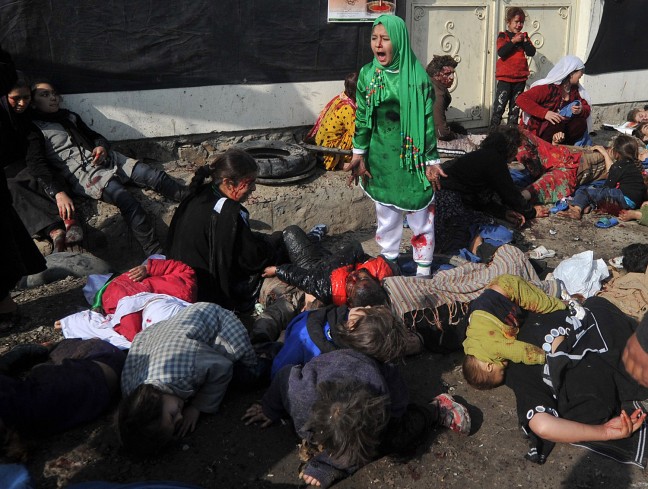
An egalitarian friend of mine read this yesterday to provide feedback. She wrote back:
Feminist and womanist theologians in the Third World have long accused white Western feminists of focusing on semantics and meaningless symbols (like female language for God) instead of doing real things to help real women suffering all over the world.
Now, go ahead and tell me how wrong it was that you did not get to teach that Sunday School class because there were men in it. Tell me how some couple is in sin because she cuts the grass and he vacuums the house rather than holding traditional gender roles. Tell me how debates about semantics and theology even come close to the tragedies endured by women–from those born to those unborn–on whom Satanic war has been waged since the Garden of Eden.
I wonder if these victims of inhuman barbarity wake up each day frustrated because they were not allowed to speak at a panel discussion, did not have their CV considered by a pastor search team, or thinking their dad was too patriarchal. Think about these stories when you are trying to decide whether a women testifying in church can speak behind the pulpit or must stand on the floor so as not to be confused with the preacher.
Tell me instead how unborn girls have a right to live. Tell me 12 year olds have a right to not be sexually brutalized 70 or more times a week. Tell me how women have a right not to be raped by soldiers or law enforcement officers. Tell me teenage girls should not be shot for wanting an education. Tell me seventeen year olds should not be burned to death in the street.
Tell me the gospel matters for more than discussion, debate and division. Tell me these women matter more than the luxury we have for endless disagreements.
If they do matter then why do we not redeem the time in a way reflecting it?
Below is a brief TED Talk called, “Every 15 Seconds.” It was presented by Matt Friedman at TEDxSanJoaquin. The title refers to the frequency people around the globe are sold into some kind of human slavery. Women, girls, men, and boys.
Listen to him talk about professional rapists. Do not even try to hold your anger.
I have never been on food stamps. Sonya, my wife, was raised in a family that has never been on food stamps.
A while back I was underemployed for a period of almost two years. My income was drastically reduced. Twice during that time we strongly considered at least applying for food stamps (now called SNAP–Supplemental Nutrition Assistance Program). The second time I had already found the office address for making the trip to apply. Both times we decided not to apply. We do not have the experience of being looked at with disdain by other shoppers who wonder if we are lazy, criminal, or “just poor.” Or those other shoppers who examine the groceries of such folks for any non-generic items.

We did enough research to know the stamps have been traded for reloadable cards. Rather than a book of tear off sheets, recipients pay just like using a debit card. Folks around the check-out line who are not paying attention may not even realize the difference.
Which brings me to a story of Sonya yesterday at our local Aldi grocery store (a story she did not want to to relate, but here we are).
The lady in front of Sonya, whose groceries were being scanned, was old enough to be in the social security range. Sonya watched as they removed item after item from her order, rerunning her card to no avail. Soon it became clear the woman did not have any money on her card.
It was about this time Sonya realized she was trying to pay with her SNAP card. She heard the customer and cashier discussing what day of the month and that the card should already have been refilled for use. It dawned on the lady trying to buy the groceries that no matter how many groceries were removed she could not pay for what was left.
As Sonya watched these events unfold the Holy Spirit prompted her to include the lady’s purchase in our own. So she said to the cashier, “I’ll get hers. Just include it with my groceries.”
After the expected quizzical looks from customer and cashier, the customer expressed her profound appreciation. After the transaction was completed she and Sonya hugged several times, near tears. Sonya said, “God will meet your needs and He’ll meet ours.” About then the cashier let loose with “That’s right! Amen!” and a small revival was had in the grocery story.
As they were getting ready to leave the lady then asked, “Where do you go to church?” After Sonya told her, she said, “Well, I was about to invite you to mine.”
I relate this story primarily to highlight generosity and the blessing of following God. But there is another component.
When talking about the poor we often hear the argument, “It is not the responsibility of the government to help the poor. It is the responsibility of the church.” It sounds good, right? It sounds right, right?
But is not the church (or churches) made up of people? Of we who claim the name of Jesus? How much helping of the poor do we really do? If all income taxes were to fall away overnight, would Christ followers increase their offerings or increase their possessions? Would we buy pants, shirts, gloves, and food for those in need, or empty our own closets of perfectly good threads to make room for armloads from our favorite clothier?
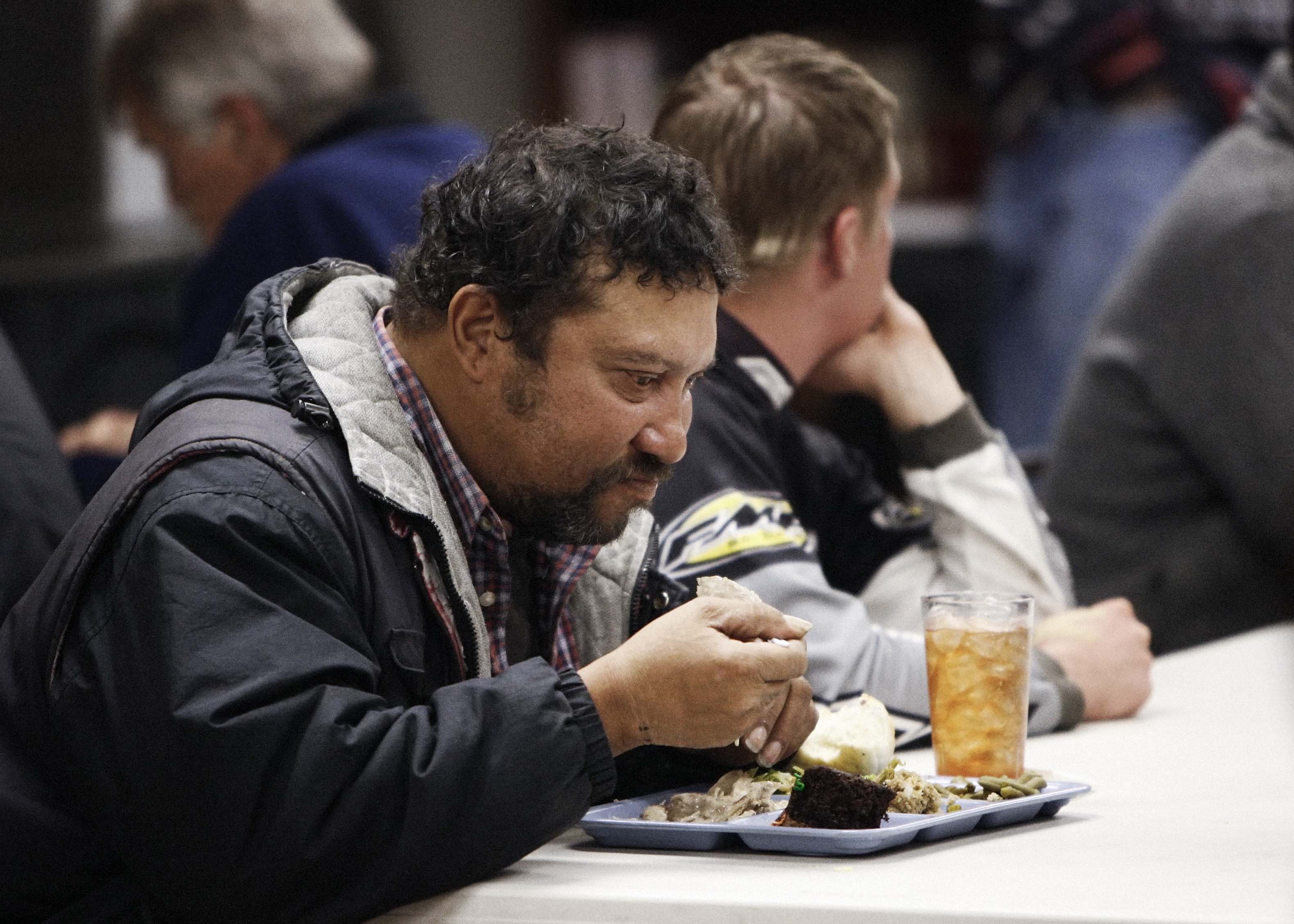
Would we feed the hungry and homeless? [Image credit]
Would churches reallocate their budgetary funds away from buildings and property that house the faithful once or twice a week to construct, fund, and staff shelters for the long-term and transitional homeless? Organize and provide job training or job opportunities? You know, the stuff some say the government should be doing?
If churches were suddenly awash in cash from generous members would they join together with other churches to supplement the food needs in their community, or just hire additional staff to do the ministry the members should already be doing?
In short, would we “do justice,” or merely do business as usual?
Support this blog! Even $1 is helpful. No PayPal account necessary.
“It is well that war is so terrible otherwise we would grow too fond of it.”
Robert E. Lee
“I hate war as only a soldier who has lived it can, only as one who has seen its brutality, its futility, its stupidity.”
Dwight D. Eisenhower
My son Timothy alerted me last week to this blog, the LiveJournal of Ilya Plekhanov, editor of military and literary almanac, The Art of War. These sites are in Russian some of which Chrome will translate into English. (See also Plekhanov on the Russian edition of Forbes.) All of the photos below are from the collection on the LiveJournal blog.
While viewing the photos I was reminded of the hell of war. I also question why so many who follow Christ seem given over to it, at times with virtual bloodlust. For people who follow the Prince of Peace, who often made fun of the “peace-niks” of the 60s, we should be reminded yet again that Jesus words, “There will be wars and rumors of wars,” was not intended to be a foreign policy statement.
What questions should Kingdom residents ask? Is the violence in Syria merely a civil war? How are we involved behind the scenes? Is this all about installing a democracy friendly to U.S. interests? Passive toward Israel?
How many of the people in the pictures below do not or did not know Christ? How many have never or had never heard a clear presentation of the gospel? How many are now or soon will be in a Christ-less eternity?
In the below photo gallery, compiled during October and the first of November 2012, the struggles of Syria are chronicled. There is a warning before the more graphic ones. But I encourage you to look unless you absolutely cannot. Be reminded. War is hell. People die. Eternity never ends.
When is it worth it? When is it not?
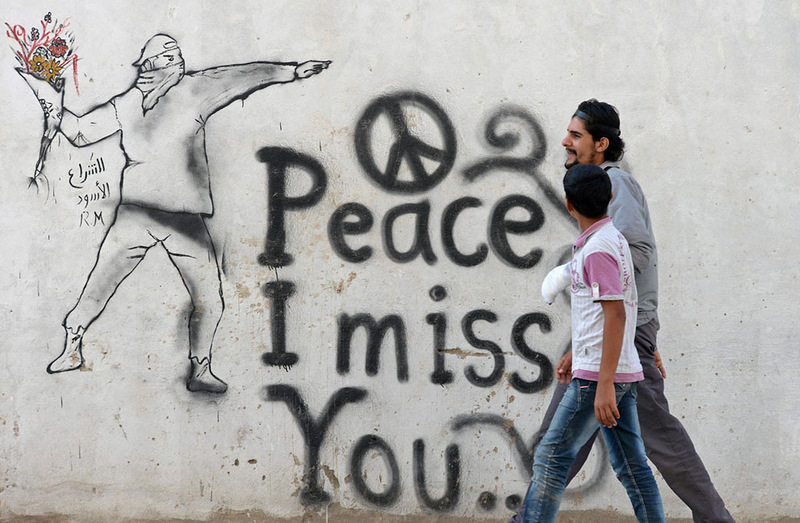
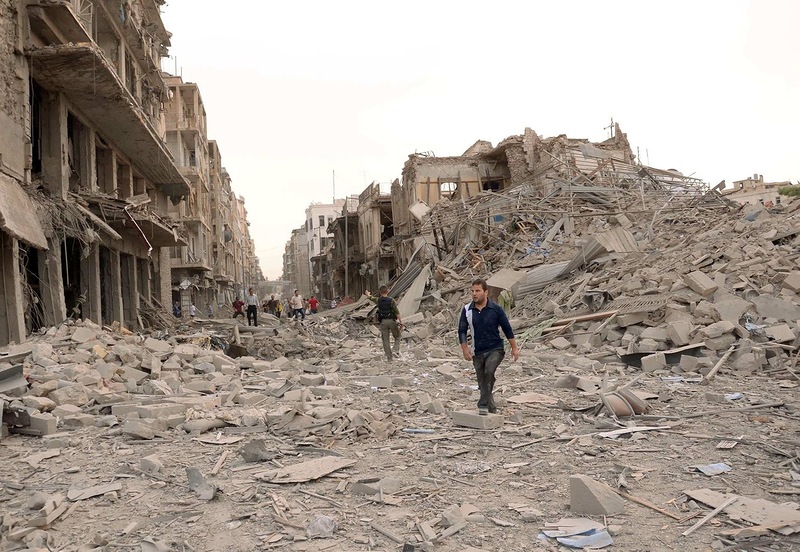

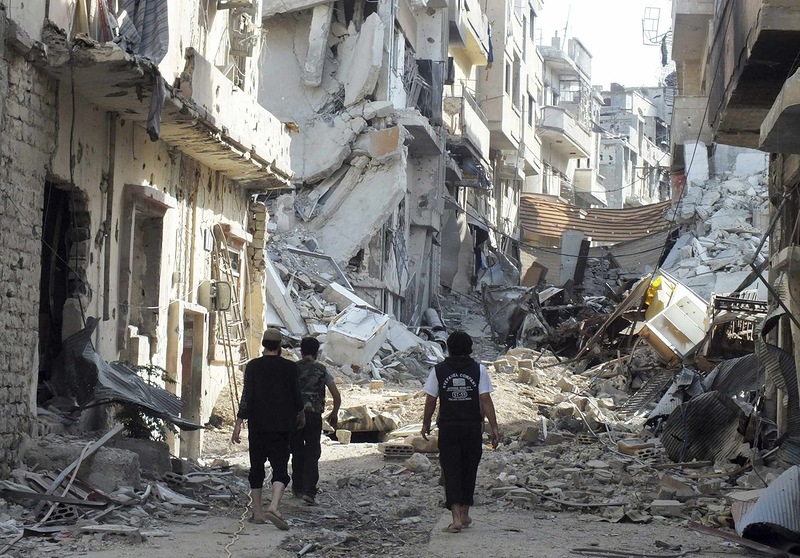















WARNING: THE FOLLOWING PHOTOS INCLUDE SCENES OF INDIVIDUAL VIOLENCE, BLOOD AND SOME GORE
Two men with guns accost an apparently unarmed man.

The unarmed man appears to be attempting evasive action.
The unarmed man lies dead from a bullet to the head.

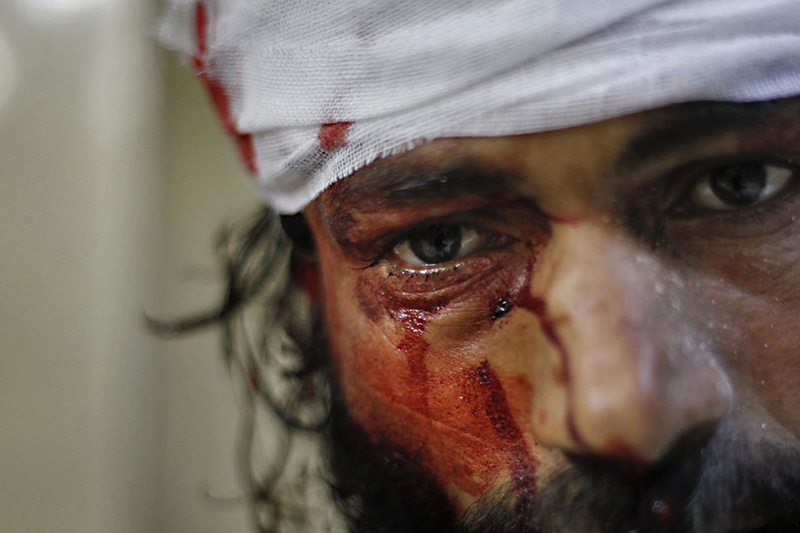
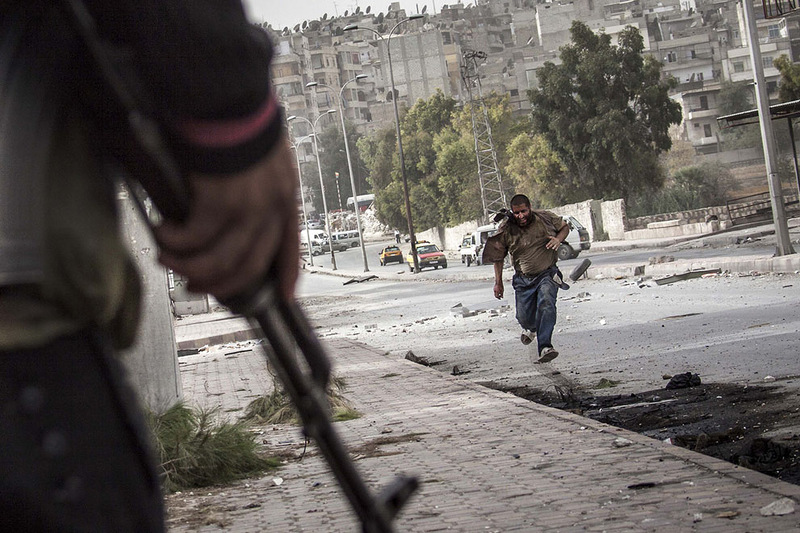
A man appears to be running for cover.

Apparently the man has been wounded.
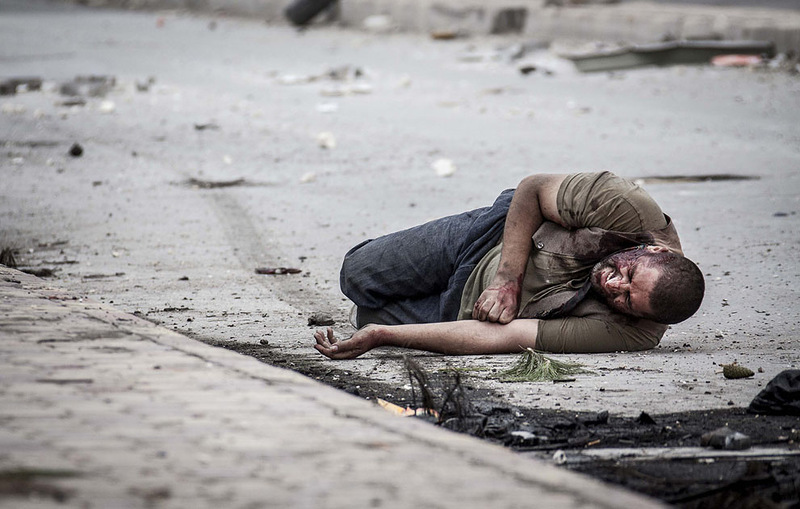
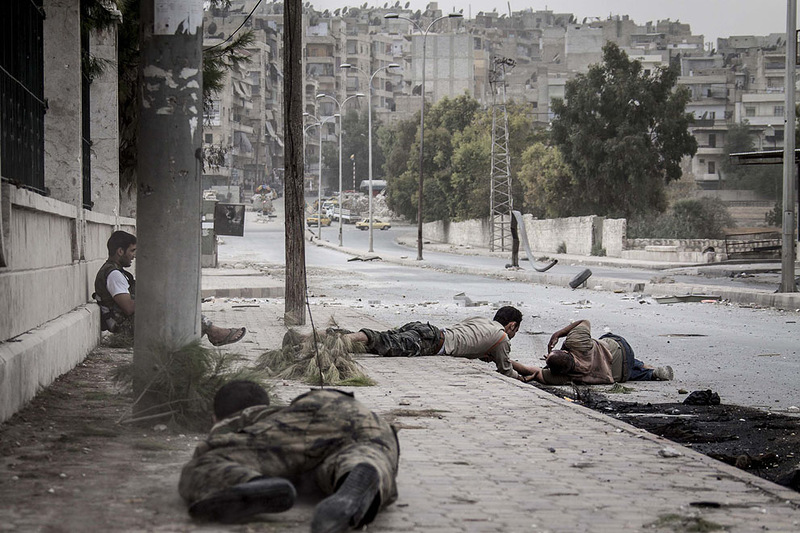
As someone extends help to the man in the street, I wondered if the man laying wounded or dead on the sidewalk is the man who was in the foreground in the first picture of this series.


People are people. Nobody wants their child to die.
Before the election much hubbub was made about the numbers of people being added as recipients to the SNAP (food stamp) program. Some wondered at the possibility of those being bought votes. In the form of a question, did the Obama administration recruit people to the assistance program to ensure a re-election victory? In the mean time, people wondered, were we being bled dry be a bunch of lazy, shiftless, good for nothings who are just taking advantage of the governmental teat?
According to the Wall Street Journal the average food stamp family in 2010 had $731 per month in gross income. They received just $287 per month from SNAP. The Journal also reported
Nearly 21% of households on food stamps also received Supplemental Security Income, assistance for the aged and blind. Some 21.4% received Social Security benefits. Just 8% of households also received Temporary Assistance for Needy Families, the cash welfare program.
But some 20% of households had no cash income of any kind last year, up from 15% in 2007, the year the recession began, and up from 7% in 1990.
That’s partly because most household heads who were receiving food stamps were also out of work. Just 21.8% of them had jobs in 2010, while 19.8% were jobless and looking for work.
More than half of household heads who received food stamps, 51.1%, weren’t in the labor force and weren’t searching for work. Labor-force dropouts have been a particular concern for economists, who worry their lost potential damages economic output. Those who drop out of the work force often turn to other government programs, such as Social Security disability, which is costly.
[…]
Just 6.7% of households who received food stamps were getting jobless benefits.
Nearly half of all food-stamp recipients, 47%, were children under the age of 18. Another 8% of recipients were age 60 or older.
Whites made up the largest share of food stamp households, 35.7%. Some 22% of households receiving food stamps were counted as African American and 10% were Hispanic.
U.S. born citizens made up the majority, 94%, of food stamp households.
While it is true SNAP users have increased dramatically under the Obama administration a substantial increase had already begun under the Bush 43 administration. The extent of the economic downturn between the fall of 2007 and 2011 would likely have seen a continued increase if there had been a third Bush term. (Only Clinton at -8.2% and Reagan at -2.4% have overseen declines in the last eight presidencies.)
So what about the votes? Below are four national county maps. The first is voting by county for the 2008 election. Then the amount of county-by-county increase in food stamps recipients between 2007-2009. Beneath that is the percentage of residents on food stamps in each county nationally in 2009. Finally, a county-by-county voting map of the 2012 election.
I am neither a cartographer, a politician nor the son of either. However, it looks like an awful lot of counties with high concentrations of food stamp recipients voted Red (ie, GOP). It is true that the highest numbers of recipients are in Blue (Dem) areas, but I think it is too strong a suggestion to say all food stamp recipients voted Democratic. It is also too strong to say Obama carried the day because of that vote. Since 18M people been added since Obama took office and he won by less than 3M votes, and since he garnered 9M more votes in 2008, it seems hard to argue that SNAP recipients contributed meaningfully to his victory.



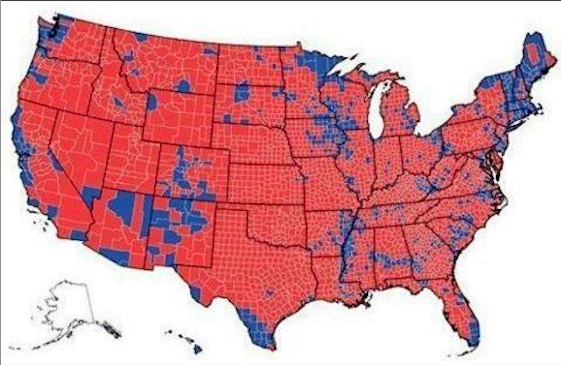
Thoughts?
A new long trailer has been released for the soon to be released cinematic musical version of Les Miserables.

A scene from Les Miserables [Image credit]
Christmas Day.
(HT: Steve McCoy)

Conservative radio theater host, Rush Limbaugh [Image credit]
The losers, according to Friedersdorf, were the “rank-and-file” conservatives who took Limbaugh, Hannity, et al, as authoritative and truthful casting a wary eye at all other outlets.
From the article:
Barack Obama just trounced a Republican opponent for the second time. But unlike 4 years ago, when most conservatives saw it coming, Tuesday’s result was, for them, an unpleasant surprise. So many on the right had predicted a Mitt Romney victory, or even a blowout — Dick Morris, George Will, and Michael Barone all predicted the GOP would break 300 electoral votes. Joe Scarborough scoffed at the notion that the election was anything other than a toss-up. Peggy Noonan insisted that those predicting an Obama victory were ignoring the world around them. Even Karl Rove, supposed political genius, missed the bulls-eye. These voices drove the coverage on Fox News, talk radio, the Drudge Report, and conservative blogs.
Those audiences were misinformed.
Outside the conservative media, the narrative was completely different. Its driving force was Nate Silver, whose performance forecasting Election ’08 gave him credibility as he daily explained why his model showed President Obama enjoyed a very good chance of being reelected. Other experts echoed his findings. Readers of The New York Times, The Atlantic, and other “mainstream media” sites besides knew the expert predictions, which have been largely born out. The conclusions of experts are not sacrosanct. But Silver’s expertise was always a better bet than relying on ideological hacks like Morris or the anecdotal impressions of Noonan. Sure, Silver could’ve wound up wrong, but people who rejected the possibility of his being right?
They were operating at a self-imposed information disadvantage.
[…]
You haven’t just been misinformed about the horse race. Since the very beginning of the election cycle, conservative media has been failing you. With a few exceptions, they haven’t tried to rigorously tell you the truth, or even to bring you intellectually honest opinion. What they’ve done instead helps to explain why the right failed to triumph in a very winnable election.
Why do you keep putting up with it?
Conservatives were at a disadvantage because Romney supporters like Jennifer Rubin and Hugh Hewitt saw it as their duty to spin constantly for their favored candidate rather than being frank about his strengths and weaknesses. What conservative Washington Post readers got, when they traded in Dave Weigel for Rubin, was a lot more hackery and a lot less informed about the presidential election.
Conservatives were at an information disadvantage because so many right-leaning outlets wasted time on stories the rest of America dismissed as nonsense. World Net Daily brought you Birtherism. Forbes brought you Kenyan anti-colonialism. National Review obsessed about an imaginary rejection of American exceptionalism, misrepresenting an Obama quote in the process, and Andy McCarthy was interviewed widely about his theory that Obama, aka Drone Warrior in Chief, allied himself with our Islamist enemy in a “Grand Jihad” against America. Seriously?
Conservatives were at a disadvantage because their information elites pander in the most cynical, self-defeating ways, treating would-be candidates like Sarah Palin and Herman Cain as if they’re plausible presidents, rather than national jokes who’d lose worse than George McGovern.
I encourage you to read the entire piece.
I’m sure some will say, “But what about Benghazi? What about Fast and Furious? What about socialism? What about Obamacare?”
To which I answer, “What about the boy who cried wolf?” As conservative media beats the birther drum, the Obama 2016 drum, and every other drum of suspiciousness, why should conservatives be surprised to find the wolf soundly dismissed even when loudly announced?
Conservative media, like liberal media, does not exist to tell the truth. It exists to relate a narrative. Each narrative fulfills–they hope–two functions: to sell ads and to make money. I really do not see this as cynicism. This is just reality.
The air inside any bubble eventually becomes toxic.
As long as Americans–conservative and liberal, Right and Left–eat pablum like it is a 5-star breakfast and drink muddy water like Italian roast, media sources will be content to serve it up as a never ending feast.

Before you start down that path, understand I am not defending, promoting or worshiping Malcolm X. From his bio on Wikipedia:
Malcolm X ( /ˈmælkəm ˈɛks/; May 19, 1925 – February 21, 1965), born Malcolm Little and also known as El-Hajj Malik El-Shabazz[1] (Arabic: الحاجّ مالك الشباز), was an African-American Muslim minister and human rights activist. To his admirers, he was a courageous advocate for the rights of blacks, a man who indicted white America in the harshest terms for its crimes against black Americans. Detractors accused him of preaching racism, black supremacy, and violence. He has been called one of the greatest and most influential African Americans in history.
Malcom X in 1964
Malcolm X’s father died—killed by white supremacists, it was rumored—when he was young, and at least one of his uncles was lynched. When he was thirteen, his mother was placed in a mental hospital, and he was placed in a series of foster homes. In 1946, at age 20, he went to prison for breaking and entering.In prison Malcolm X became a member of the Nation of Islam and after his parole in 1952 he quickly rose to become one of its leaders. For a dozen years Malcolm X was the public face of the controversial group, but disillusionment with Nation of Islam head Elijah Muhammad led him to leave the Nation in March 1964. After a period of travel in Africa and the Middle East, he returned to the United States, where he founded Muslim Mosque, Inc. and the Organization of Afro-American Unity. In February 1965, less than a year after leaving the Nation of Islam, he was assassinated by three members of the group.
Malcolm X’s expressed beliefs changed substantially over time. As a spokesman for the Nation of Islam he taught black supremacy and advocated separation of black and white Americans—in contrast to the civil rights movement’s emphasis on integration. After breaking with the Nation of Islam in 1964—saying of his association with it, “I was a zombie then … pointed in a certain direction and told to march”—and becoming a Sunni Muslim, he disavowed racism and expressed willingness to work with civil rights leaders, though still emphasizing black self-determination and self-defense.
Below is the audio from a speech to a group of African Americans. Though Malcolm X is deriding them unceasingly for their support of the Democratic party, his observations about party loyalty are true across the board. The last build-up and closing sentence are the stuff of a speaker’s dreams.
If you are heading to the polls today, I encourage you to give a listen to this four minutes and think about how these words apply to what we as a nation continue to experience as a result of blind party loyalty.

Throughout this election season, as in the last one, I have written and discussed here and on Facebook about the need to break the two party, Democrat-Republican dominated political system in the United States. The adversarial aspect of this system has led to a stymied congress, lies, deceit, and an ongoing “lesser of two evils” approach to voting.
 The election tomorrow seems to be potentially as close as any since Bush-Gore in 2000. Some have even speculated of an Electoral College tie between president Barack Obama and Republican challenger Mitt Romney. Some of my friends have made the informed decision not to vote–and have been castigated for it.
The objection I normally face has been that a vote for a third party candidate is a vote for Barack Obama (if the objection is coming from a conservative) or a vote for Mitt Romney (if coming from a liberal). I reject this reductionistic approach as inaccurate and illogical. Others say a vote for a third party candidate is akin to throwing away one’s vote. On the contrary, I say voting for someone who does not best represent your principles and philosophy of government is throwing away your vote.
Considering such dominance from the Democratic and Republican parties when should you vote for a national candidate not among the two major parties?
1. When you would have to violate your conscience to do so. If an issues or issues important to you are ignored by the most well known candidates do not cast a vote for them.
2. If neither candidate has earned your vote. I do not look at my vote as something I give to a candidate. It is something they must earn. If he or she does not earn it, they do not get it.
3. If your state is polling overwhelmingly toward one candidate or the other. My state, Tennessee, has been Republican since before Obama was elected. It is not about to change; polling is not close to the margin of error. Because of the Electoral College, every single vote truly does not matter; only the total number of votes matter. For that reason you can confidently vote for the candidate your prefer with no concern you might rip the space time election continuum.
4. If you consider the lesser of two evils argument to be abhorrent. Some Christians will make the argument that we will never have a perfect candidate, so every choice is a lesser of two evils. I find this to be thoroughly unpersuasive. First because the “two evils” necessarily eliminates other, better choices. Second because the lack of perfection does not equate to evil. (Try that on your wife: “No, she’s not perfect. In fact, you might as well say she’s evil.” Good luck with that one.)
5. If you are more concerned about being the cure than spreading the cancer. Our political system, while functional, spews a dangerous toxicity. Abuses of power, mindless spending and selfish gain seem to be the norm on The Hill.
6. If neither major party candidate even begins to address issues of vital importance to justice. Most on the Right have reduced the idea of justice to abortion, while most on the Left have similarly reduced it to taking care of the poor. Where, in three presidential debates and one vice-presidential debates, were discussions about our unjust justice system, the unjust “War” on Drugs, concerns to address human trafficking, the NDAA, the unjust drone war? They were nowhere to be found. A candidate who thinks these major issues not worth a mention does not even qualify for the office.
Can you think of any other reasons to consider voting for a third (or “minor”) party candidate?
With the election upon us, this graphic proves interesting as to the role social media is playing in the 2012 contest.

The closer the presidential election draws the more attentions return to the issue of abortion. Those on the left cry “women’s rights” while those on the right plead “right to life.” Both sides are passionate, and often enflamed in their attempts to solidify or overturn–respectively–Roe v Wade.
In early September 2012 the Democratic National Convention met in North Carolina. Amidst the debacle over “God” and “Jerusalem” the Democratic Party passed as strong a pro-abortion plank as has been ever hammered into a platform.
In the days following the DNC meeting ABC’s Cokie Roberts said
I think this Democratic Convention was really over-the-top in terms of abortion. Every single speaker talked about abortion. At some point, you start to alienate people. Thirty percent of Democrats are pro-life.
On the same program Roberts challenged Newark, New Jersey mayor Cory Booker
on why the platform committee removed the phrase saying that abortion should be “safe, legal and rare,” which had been in the platform since Bill Clinton ran on that platform in 1992.
Below is the abortion plank from the 2012 Democratic National Platform called Moving America Forward. Read it carefully.
Protecting A Woman’s Right to Choose. The Democratic Party strongly and unequivocally supports Roe v. Wade and a woman’s right to make decisions regarding her pregnancy, including a safe and legal abortion, regardless of ability to pay. We oppose any and all efforts to weaken or undermine that right. Abortion is an intensely personal decision between a woman, her family, her doctor, and her clergy; there is no place for politicians or government to get in the way. We also recognize that health care and education help reduce the number of unintended pregnancies and thereby also reduce the need for abortions. We strongly and unequivocally support a woman’s decision to have a child by providing affordable health care and ensuring the availability of and access to programs that help women during pregnancy and after the birth of a child, including caring adoption programs. (2012 DNC Platform, pg. 18)
Here is the thing implicit in the DNC platform: abortion and adoption are moral equivalents. This is the real issue with abortion and the Democratic National Convention.
That Democrats affirm the legality of abortion from conception to birth for any reason or no reason is self-evident and has been for decades. But it is startling they cannot even bring themselves to recommend adoption over abortion. This is slavish adherence to ideology at the expense of civilized thinking.
Perhaps pro-life Democrats should be added to the endangered species list.
The moral and ethical position of the DNC is abortion = birth = adoption. Whether a woman aborts a child, keeps a child, or gives the child to adoptive parents it is a morally equivalent decision. No recommendation is made for a preferred end. They “strongly and unequivocally support” all options. Dismembering a child in the womb is given no moral difference from one delivered healthy into the arms of its mother.
Author Steven Waldman noticed this very thing,
[T]he 2004 platform said abortion “should be safe, legal and rare” – language that’s [sic] casts abortion reduction as morally preferable, something this platform does not. [Emphasis added.]
Unfortunately, the DNC does seem to have a moral preference in the matter though unstated. This can be derived from the statistics of the DNC’s preferred provider of abortion, pre-natal care and adoption referrals, Planned Parenthood. In 2010 Planned Parenthood (who, as seen above in the Booker link, was a prominent player at the 2012 DNC) reported the following:
Planned Parenthood did 329,445 abortions while it provided prenatal care to 31,098 women (90% less) and referred only 841 women to adoption agencies.
The number of women receiving prenatal care dropped significantly from 2009 to 2010, as the abortion business helped 40,489 women in 2009 — meaning almost 10,000 fewer women received prenatal support from Planned Parenthood last year than the year prior, or a drop of almost 25 percent.
The number of women getting adoption referrals also declined — from a low 977 in 2009 to 841 last year, or a decline of 14 percent.
Examined another way Planned Parenthood does 391 abortions for every adoption referral it makes and almost 11 abortions for every woman it helps with prenatal care.
The direction the DNC has taken this year is indeed tragic. They have increased their strident support for Roe v Wade to a philosophical landfill in which good and evil are comparable. To quote Javert, “The world is inside out. The world is upside down.”
Welcome to the Kingdom in the Midst chat of the Obama-Romney foreign policy debate. As with the previous debates, we are given the illusion of fairness. All third party candidates–even those with a mathematical possibility of winning, on the ballots in 47 or more states–are banned from the Democratic/Republican party controlled spectacle.
Tonight’s debate, moderated by Bob Schieffer, will be held at Lynn University in Boca Raton, FL. The format calls for six 15-minute time segments, each of which will focus on one of the topics listed below. The moderator will open each segment with a question. Each candidate will have two minutes to respond. Following the candidates’ responses, the moderator will use the balance of the 15-minute segment to facilitate a discussion on the topic.
(Seriously? The leader of the free world is being chosen based on two minute answers?? Good grief. No wonder people want to know who Honey Boo Boo endorsed.)

One of the subjects that has not been covered and will not be covered tonight is human trafficking.
America’s role in the world
Our longest war – Afghanistan and Pakistan
Red Lines – Israel and Iran
The Changing Middle East and the New Face of Terrorism – I
The Changing Middle East and the New Face of Terrorism – II
The Rise of China and Tomorrow’s World
The debate will begin at around 9:00pm Eastern Time (8:00CT) and last until around 10:30ET. For a refreshing change, watch the debate on C-Span which seems to be much less shrill than Fox and MSNBC.
RULES FOR THE CHAT
1. Be clear.
2. Stay on topic. Romney/Ryan and Obama/Biden, their policies and performances are inbounds. Their families are not.
3. Try to be concise. If you try to write a novel the comment to which you are responding will be gone.
4. When appropriate use the name of the person to whom you are responding. For instance, “Terminator1: I think you are misinformed.”
5. NO SWEARING. If you cannot express yourself without stooping to gutter language go back to the SPIKE movie you were watching.
6. Please share the post via social sharing buttons at the top. The more the merrier.
7. Have fun!
You can login below under a username and your Facebook or Twitter accounts. The latter two will use your avatar; comments will not post to your timeline or Twitter feed.
Chat is now closed.
On March 17, 2011 at least 42 people were killed by a United States drone strike in northwestern Pakistan. Four have been confirmed as Taliban members, while the others were civilians, including tribal elders who had gathered for an administrative meeting. Reports the Global Post on October 10, 2012:
Opponents take the stance that these strikes are not part of an armed conflict and the rules of war, thus, do not apply. The armed conflict claim is a legal fiction and the United States is cherry picking the legal framework that protects its conduct under the rules of war, thus doing indirectly what they cannot do directly under international human rights laws. Shamsi contends, “I think the key issue here is that the US is claiming that the laws of war apply in places where they absolutely do not apply.”
Contrary to the US stance, this interpretation holds that, regarding Anderson’s explanation, “There is no war going on in a legal sense, and if there is, it is strictly limited to hot battlefields of Afghanistan. [Drone strikes are] governed by standards of international human rights and domestic law, and therefore any killings that take place under the circumstances are not protected by the law of war and instead are just extrajudicial executions, and frankly murder.”
Meanwhile, the CIA wants to up the number of drones that it denies having. Reports Policymic.com:
While the 2012 presidential election racket focuses on gaffes, Romney’s binders, and Big Bird, the CIA and the Pentagon are currently busy finding ways to increase their military power and influence around the globe. According to the Washington Post, CIA Director David Petraeus wants an increased drone fleet to “bolster the agency’s ability to sustain its campaigns of lethal strikes in Pakistan and Yemen and enable it, if directed, to shift aircraft to emerging Al-Qaeda threats in North Africa or other trouble spots.”
In case you miss the significance here, the CIA is running a covert war using a kill list known to exist but which the president denies. Our “intelligence agency” requests even more drones at a time when the international community is already questioning the legality of how we are using them. In America there is little argument that “intelligence agency” = “paramilitary organization.”
Finally, the Daily Mail reports that two specific Americans could be investigated for murder related to their roles in drone strikes.
A damning dossier assembled from exhaustive research into the strikes’ targets sets out in heartbreaking detail the deaths of teachers, students and Pakistani policemen. It also describes how bereaved relatives are forced to gather their loved ones’ dismembered body parts in the aftermath of strikes.
The dossier has been assembled by human rights lawyer Shahzad Akbar, who works for Pakistan’s Foundation for Fundamental Rights and the British human rights charity Reprieve.
Filed in two separate court cases, it is set to trigger a formal murder investigation by police into the roles of two US officials said to have ordered the strikes. They are Jonathan Banks, former head of the Central Intelligence Agency’s Islamabad station, and John A. Rizzo, the CIA’s former chief lawyer.CIA attorney John A. Rizzo [Image credit]
[…]
The plaintiff in the Islamabad case is Karim Khan, 45, a journalist and translator with two masters’ degrees, whose family comes from the village of Machi Khel in the tribal region of North Waziristan.
His eldest son, Zahinullah, 18, and his brother, Asif Iqbal, 35, were killed by a Hellfire missile fired from a Predator drone that struck the family’s guest dining room at about 9.30pm on New Year’s Eve, 2009.
Asif had changed his surname because he loved to recite Iqbal, Pakistan’s national poet, and Mr Khan said: ‘We are an educated family. My uncle is a hospital doctor in Islamabad, and we all work in professions such as teaching.
‘We have never had anything to do with militants or terrorists, and for that reason I always assumed we would be safe.’
History may ultimately adjudge our current drone war on the same level as the secret bombing of Cambodia and Laos during the Vietnam war.
I’ve also written about America’s drone war in these posts:
The Drone War and the kingdom of God
What is the fewest number of states needed to win the presidency? With our electoral college system it might be far fewer than you think.
You may not have misread the title, but you probably did not get the meaning. I do not mean, “The eleven states a candidate must carry to win.” I mean, “Any candidate can win the presidency by carrying only eleven states.”
Your now have the idea.
It is possible to lose the the popular vote and lose 39 of the 50 states, yet still be the president of these United States.
How? The Electoral College.
The Electoral College was approved September 6, 1786, for reasons known only to the members of Skull and Bones and makers of “corn likker.” According to Wikipedia, “Delegates from the small states generally favored the Electoral College out of concern that the large states would otherwise control presidential elections.”
Can you say irony? Smaller states, for purposes of the college, are not determined by size, but by population.
While polls can be a good measure of popular sentiment, they are not sufficient to gage the electoral map. That is why you often hear of “swing states.” These are states candidate X or Y must get to reach the magical 270 electoral votes needed.
You can look elsewhere for more specifics on the electoral college. For now I just wanted to share the eleven states one can win to become president:
California (55 votes)
Texas (38 votes)
Florida (29 votes)
New York (29 votes)
Illinois (20 votes)
Pennsylvania (20 votes)
Ohio (18 votes)
Georgia (16 votes)
Michigan (16 votes)
North Carolina (15 votes)
New Jersey (14 votes)

Electoral College map 2012 [Image credit]
You might be interested to know, based on 2011 data, 177,215,379 people live in those eleven states (total U.S. population 311,591,917). Another way of saying it is around 57% of the United States lives in these eleven states.
Interesting?
About three weeks ago I made a decision to register for a half-marathon to be held in November. I wrote about that here.
For the two people interested in keeping tabs on me or learning something that might help you, here is an update.
I have continued to run one mile as fast as I can about three mornings a week. This remains, for me at least, a difficult run as it has more than 120 feet elevation loss and gain

This is not me. [Image credit]
There is absolutely no proof that it will, however.
On the advice of counsel core strengthening exercises have become part of my routine. Some of them feel kinda weird, but hey, maybe it will work. (Click here to see some suggested exercises from the Mayo Clinic for killing yourself strengthening your core muscles.)
My Saturdays are for longer runs. The past few weeks I have increased from 5.08 to 5.79 to 6.21. I will need to skip a seven miler and go to eight in order to close in on 13 before race day. Positively, though, my pace is staying mostly consistent even when adding length. My last three Saturday runs (in whole miles) are
Distance: 5.08
Splits: 7:23, 8:09, 8:10, 8:15, 7:52Distance: 5.79
Splits: 7:17, 8:10, 7:58, 7:50, 8:00Distance: 6.21
Splits: 7:56, 7:34, 7:53, 8:35, 8:30, 8:35
I went out much too fast on a difficult first mile during the last run, and wound up out of gas. Have to be careful of that on race day to be sure. An 8:00 min pace goal for the race seems within reach.
I would be remiss not to shout out to Adidas for a really good running shoe, the adiZero Sonic 3. I have run with Nike, Fila and Adidas. I much prefer Adidas.
Dear Frank J. Fahrenkopf, Jr. and Michael D. McCurry,
Like many Americans I am interested in the direction of the country. Others have said they are “concerned,” and still others “burdened.” Still others claim this 2012 presidential election is the most important in the history of the republic.

The Denver presidential debate, October 2012 [Image credit]
provide the best possible information to viewers and listeners. Its primary purpose is to sponsor and produce debates for the United States presidential and vice presidential candidates and to undertake research and educational activities relating to the debates.
I am writing this open letter to address some concerns I have, concerns that may be shared by others. It seems these might be addressed through your organization.
Your bi-partisan make-up does not translate to the moderator phase of the debate. This silly idea of an unbiased moderator has created a pill too big for most of America to swallow. Following the most recent debates Jim Lehrer was demonized by the Left for being too passive (milquetoast was used by one liberal communicator), Martha Raddatz was slammed by some conservatives for her repeated interruptions of Paul Ryan, and Candy Crowley has all but admitted to assisting one of the participants, President Obama, by “correcting” Mitt Romney on a point of fact. (This, notes Canadian journalist David Akin, was not within the bounds of her assigment.)
Clearly, you have problems with this debate structure. The October 22 debate, moderated by Bob Scheiffer, holds little promise for a cure.
These debates would be more effective if the moderators were specifically chosen because of their bias or biases. Without a semblance of being non-partisan viewers would be better prepared to anticipate questions and reactions. Informed viewers are not deceived by such a fraudulent presentation, but viewers depending on the debates to fully inform their decisions stand in danger of deception.
No one would consider Sean Hannity or Laura Ingraham unbiased, but as I present it they would need not pretend they are. Rachel Maddow or Chris Matthews? Liberal as they can get, but at least it would be in the open. John Stossel or Neal Boortz as Libertarian leaners would disrupt the narrative major party candidates and the moderators tend to inhabit.
One from the Left, one from the Right, one from the Outside, and, finally, a college level debate professor as moderator. It is interesting these debates feel so much different than educational or philosophical debates. After watching many debates online, I have found the role of the moderator is to read the rules, ring the bell, keep the time, signal transitions, thank the participants and attendees, and announce the end. The moderator should disappear, not take center stage.
Also, at this stage of our country’s history requiring a candidate to poll at 15% before being invited to participate is appallingly controlling and unnecessarily exclusive. Even when they are included in five major polls (as you require) the results are rarely included by any major media. For all intents and purposes the media presents two–and only two–candidates for the presidency. You follow this problematic path since you are controlled by the same two parties.
The major parties do not have all the answers. In fact the debates reveal all-too-clearly their representative candidates have fewer and fewer answers as time rolls on. America would be better served be allowing candidates from qualifying third parties to participate. Requiring the candidate to have at least a statistical possibility of winning the electoral college (by getting on enough state ballots) would allow the Libertarian or Green candidate, for instance, without having to admit the Ball in High Weeds candidate. Keep the your latter requirement, but drop the first.
Your website says,
The Commission on Presidential Debates (CPD) was established in 1987 to ensure that debates, as a permanent part of every general election, provide the best possible information to viewers and listeners.
As long as you continue to wall-off non-major party candidates you are failing to provide the “best possible information” to us.
Please fix this. Your model is broken. What you are trying to accomplish is admirable and appreciated. What you are actually accomplishing is short of that goal. You should strive for more.
We the people may not deserve it, but we need it.
If you agree share this post on social media. You can also email this post to the Commission on Presidential Debates: comments [at] debates [dot] org
Welcome to the Kingdom in the Midst chat room for tonight’s town hall-style debate at Hofstra University between president Barack Obama and challenger Mitt Romney.
 In true two-party dominance and pansy Presidential Debate Commission style, no third party candidates will be allowed. This ensures most actual ideas will remain sidelined. Despite this sad occurrence the Democratic and Republican contenders will have an audience of about 80 undecided voters selected by the Gallup Organization. CNN’s “Complaining Candy Crowley” will select from among questions on foreign and domestic policy submitted by the audience, and most likely try to insinuate herself into the debate as well. As she is on the record for hating Mr. Romney, it is unlikely she will issue any substantive challenges to the president.
The debate will begin at around 9:00pm Eastern Time (8:00CT) and last until around 10:30ET. For a refreshing change, watch the debate on C-Span which seems to be much less shrill than Fox and MSNBC.
RULES
1. Be clear.
2. Stay on topic. Romney/Ryan and Obama/Biden, their policies and performances are inbounds. Their families are not.
3. Try to be concise. If you try to write a novel the comment to which you are responding will be gone.
4. When appropriate use the name of the person to whom you are responding. For instance, “Terminator1: I think you are misinformed.”
5. NO SWEARING. If you cannot express yourself without stooping to gutter language go back to the SPIKE movie you were watching.
6. Please share the post via social sharing buttons at the top. The more the merrier.
7. Have fun!
You can login below under a username and your Facebook or Twitter accounts. The latter two will use your avatar; comments will not post to your timeline or Twitter feed.
The chat is now closed.
Years ago I heard a preacher say this:
When I was a young pastor–before I was married with children–I used to preach a series called, “Ten Sure Fire Ways to Get Your Kids to Live for God.” Now that I’m older and have kids of my own I changed it to, “Here’s a Few Things You Might Want to Try When Raising Your Kids. They Might Work and They Might Not.”
I can appreciate the sentiment.
After quite a number of years pastoring a few different churches I think that approach, though humorous, sees the issue from the wrong direction. Perhaps a question we could ask is, “What can I do to ensure my kids will have little interest in following God?” Though the question sounds backwards and unproductive, it will lead us to a number of truths.
If you want to make sure your kids do not follow Christ, I recommend the following:
1. Never even attempt to apply what the pastor teaches week after week. Your kids will readily pick up that it is not that important. They will eventually wonder why you bother to go, and, when old enough, will not go themselves.2. Pick apart the pastor’s sermon every week. Your kids will soon figure out that you are not expecting God to speak to you. They’ll soon conclude that the message probably does not apply to them either.
3. Fight and argue all morning, and in the vehicle all the way to the service. But, when you get to the service be all smiles and laughter. Act as if the morning fighting never happened. Repeat this ritual every week.
4. Pay more attention to what people in attendance are wearing, how they look, how they smell, etc, than to the message, music and mission. Doing this will train your kids to be distracted from God’s activity by focusing on trivial matters.
5. Be more concerned with making good citizens of your kids, but not so much with making disciples of them. Teach them to be good, to mind their manners, make good grades, etc, but never about walking with God.
6. Make Sunday is the only important day in the religious ritual. Never pray before meals, never pray together as a family, never pray with your kids about issues they face: tests, romances, jobs, life decisions. Let them learn to handle things just like their unbelieving friends.
7. Talk about God’s power, but worry about everything as if He has none. Make sure to express uncertainty about the future as if God has turned His back on you.
8. Never participate in the mission of God apart from church attendance, and hinder your kids from the same. Complain about the cost of mission trips, ministry events, or the difficulty of getting them to service opportunities.
If you do these things you will doing more than enough to assist the evil one in his efforts to destroy the spiritual lives of your children and keep them from serving God.

Felix Baumgartner
Very. Nicely. Done.
Remember Richard Dawkins? One of the “Four Horsemen of the Atheist Apocalypse”? Author of The God Delusion, The Selfish Gene and other anti-theistic tomes?

Professor, author, anti-theist Richard Dawkins [Image credit]
Lately, though, Dawkins has shown himself to be little more than a philosophical and intellectual coward. Repeated declinations for debating well known philosopher William Lane Craig–considered by many the best in the field–are broadly publicized and now oft repeated. According to Craig, Dawkins has also turned down at least one invitation to debate Alvin Plantinga. Dawkins, for his part, says he does not need such on his CV and refuses to share the stage with one who defends the Old Testament. Perhaps it is more because the Dawkster had his head handed to him in a cardboard box by another Christian philosopher (of mathematics), the inimitable John Lennox.
A counter-piece in the UK Guardian frames the issue well:
[T]he tactics deployed by [Dawkins] and the other New Atheists, it seems to me, are fundamentally ignoble and potentially harmful to public intellectual life. For there is something cynical, ominously patronising, and anti-intellectualist in their modus operandi, with its implicit assumption that hurling insults is an effective way to influence people’s beliefs about religion.
And this from a skeptic who likely agrees with Dawkins’ conclusions.
Possibly one reason for all of these “no’s” is that Dawkins claims to operate from the field of biology, while Craig, Plantinga and others are philosophers. Perhaps the Dawkster feels inadequate for the cross-disciplinary exchange. That would be all well and good save this fact: Dawkins routinely engages in philosophy in his books. He just rarely calls it such, and rarely does it well.
In a recent appearance at Oxford University, yet another “Can’t make it” from the Dawkster, Craig took a page from Clint Eastwood’s RNC book and debated an empty chair. Unlike Eastwood’s famous razzing of President Obama, Dawkins’ statements and responses as played by Craig were not invented.
The statements ascribed to Richard Dawkins in this presentation are statements actually made by Prof. Dawkins. The following is a list of the sources of such statements.
So reads the video beginning around 42:10.
The following video is pretty thick philosophically, but valuable if you can hang with it. I would encourage giving it two or three listens. Rather than turning it off early be taught by it. I was.
Definitely worth one minute thirty seconds.
Welcome to the Kingdom in the Midst Live Chat for the Joe Biden-Paul Ryan vice-presidential debate. Vice President Biden and the man on the Republican ticket, Paul Ryan, will be debating the issues in a 90-minute session at Centre College in Danville, Ky. The event begins at 9:00ET.
Below you can login with either your Facebook or Twitter accounts, or simply choose a “Guest” username and login to participate.

Vice-president Joe Biden (l) and Vp candidate Paul Ryan [Image credit]
Chat is closed.
An October 7, 2012 cover story in the Christian Science Monitor explores the issue of America’s poor. The provocative article is entitled “Below the line: Poverty in America.”
Correspondent Jina Moore explores via narrative, history and facts what it means to be poor in America. Or at least what some people claim about poverty, and a few who reject the term. She writes:
[Who is poor] turns out to be a very difficult question to answer. How you answer may depend as much on who you are – liberal or conservative, city-dweller or rural homesteader, low-wage laborer or salaried middle class – as on any single set of criteria. Even the government isn’t sure how to think about the question: In some states, making $1,000 a month might qualify you for food stamps but could be too much income to qualify for Medicaid.
A presidential election year only makes the issue of the haves and have-nots more divisive. President Obama took heat for admonishing entrepreneurs that their businesses relied on tax-supported infrastructure and that “You didn’t build that.” Republican candidate Mitt Romney has been caught up in controversy over his statements at a fundraiser that nearly half of Americans don’t pay income tax and “feel entitled” to government “handouts.”
Americans know poverty exists and may agree on its broadest outlines, but when it gets down to the specifics, they often can’t agree on exactly who “the poor” are.
Among the stories she tells is one of Linda, who
steals her fruit.
No one at King’s Daughters Day Care, where she works, would begrudge her an orange or an apple, of course. This isn’t that kind of workplace. When she grabs a piece of whatever the kids are having that day, she’s welcome to it. But the simple staple is also something she can’t buy on her own.
“I can’t afford fresh fruit or low-fat meat. I can’t get cauliflower or green peppers,” she says. When she does buy food, “I buy things that stretch longer.” She opts for whole roasted chickens that she spins into four or five meals. She can stretch a tomato, grown in her home garden, across an afternoon salad and an evening BLT sandwich. Until the first frosts come, and the plants die, that is. Then she waits until summer to eat tomatoes again.
Ms. Criswell’s stoic self-sufficiency isn’t always enough to get her through. “I’ve eaten food that’s seven, 10 days old.” She gestures toward a reporter’s notebook. “You can [write] that down.”
Criswell works full time, with no benefits, and she hasn’t had a raise in three years. After taxes, she brings home $1,030 a month – enough, if she’s careful, to meet her expenses, with little wiggle room. “What I feel,” she says, “is anxiety. I felt it just this morning. It’s constantly in the back of my mind: ‘Am I going to have enough to pay the bills?'”
The “poor” in America are not stereotypical no matter what stereo one might wish to type. The inhabitants of poverty are as deep and wide as the stories that comprise the government’s numbers.
An enormous number of those in poverty work. Many of them work full time. Many others want to work, but cannot find the jobs. And, new estimates tell us, the high paying jobs are not coming back any time soon. This means, to paraphrase one Jesus Christ, “The poor will be with us always.”
Moore’s article continues:
Peter Edelman, a former Clinton administration official and now director of the Center on Poverty, Inequality and Public Policy at Georgetown University in Washington, D.C., agrees: “There are literally millions of people … out there working … not getting out of poverty.”
He says the numbers show that there are “people who are in low-wage jobs and get some income supplement. Nobody wants to really admit that’s going on.”
In fact, most of the new jobs seen since the economic crisis – and most of what will come in the next decade – are low-wage, according to the National Employment Law Project. More than 40 percent of the jobs added to the economy between 2008 and 2010 – the first two years of the recession – were low-wage jobs, the project reported in August. Six of the 10 jobs projected to see the most growth by 2020 are also low-wage jobs.
Most people outside of Washington, DC, realize the current “recovery” is itself on life support. We are currently financing not only our own faux-recovery, but helping float the world’s economy. Likely this attempt will continue suppressing our own economy.
John Shmitt and Janelle Jones of the Economic Policy and Research Center found in their September 2012 paper, “Bad Jobs on the Rise,”
[W]e define a bad job as one that pays less than $37,000 per year (in inflation-adjusted 2010 dollars); lacks employer-provided health insurance; and has no employer-sponsored retirement plan. By our calculations, about 24 percent of U.S. workers were in a bad job in 2010 (the most recently available data). The share of bad jobs in the economy is substantially higher than it was in 1979, when 18 percent of workers were in a bad job by the same definition.
In other words, if you are a single-income family of four with $37,000 per year salary, paid health insurance and some kind of 401(k) or other retirement, you are considered by Shmitt and Jones to have a good job.
Personally when I think of that scenario, I think of “working poor.”
Remember Linda? Jina Moore asks whether she is poor:
The government says no, because she makes “too much” money [$12,000/yr/net]. Yet if she needs to go to the mall or the grocery store, she hitches rides with her 35-year-old daughter, to save gas. When her brother gives her a gift card to Big Lots, a discount store, for her birthday, she buys towels and toilet paper.
While other Americans watch the stock market, she watches the grain prices. Grain feeds livestock, and Criswell stretches meat across multiple meals. She’s worried. “Grain is going up,” she says. “I don’t know how much longer I will be able to afford my roast chicken.”
Georgia restaurant owner Charles Sheehan-Miles has witnessed the same thing. On his blog in May 2012 he relates these observations:
Imagine
a typical waitress. She works 35-40 hours per week. If she’s lucky, here in Georgia, here hourly wages will be between 2.50 and 3.50 per hour. Yes, you read that correctly. So, after, a weekly paycheck at the very best might be $80 or so dollars. Figure in another $200 in tips, which is pretty typical for a casual restaurant. That works out to about 280 per week.
Imagine a cook, a job which generally pays minimum wage or slightly higher. Maybe 8 buck per hour for a really experienced cook, or even 9 in some cases. Again, for a 40-hour work week, after taxes you’re looking at less than $250 per week.
Imagine supporting a family on that kind of money.
These are folks who are on their feet 8 hours a day, running back and forth, delivering food, taking orders, scrubbing and cleaning, and sometimes putting up with the worst indignities from customers who think it’s funny to be nasty to waitresses, who think it is generous to leave a 50 cent tip after typing up a table for two hours. And yes, some of them are young, and it is their first job. Some of them are there because they didn’t finish college, or they made some choice earlier in life that led to this kind of work. But that doesn’t take away from the fact that they work harder than anyone sitting in an office, any day of the week. That doesn’t take away from their humanity. And personally, I’m sick of seeing the working poor portrayed by politicians and pundits as the dregs of our society. Because they are more honest and hard-working that most anyone else I know.
What is really and truly galling, aside from so many being in the same boat as these, is the calloused indifference–or blind ignorance–of those who think the Linda Criswells of America should not even be able to vote simply because they make too little to pay federal income tax.
The number of Americans who do not identify with any particular religion continues to increase rapidly according to newly released data from Pew Research. One-fifth of the U.S. public–and about a third of adults under 30–are religiously unaffiliated today, the highest percentages ever in Pew Research Center polling.
In the last five years the unaffiliated have increased from just over 15% to just under 20% of all U.S. adults. Among them are more than 13 million self-described atheists and agnostics (nearly 6% of the U.S. public), as well as nearly 33 million people who claim to have no particular religious affiliation. That number represents 14% of the population.
What makes this even more troubling for followers or Christ is that 88% of the “nones” are not looking for any kind of religious system.
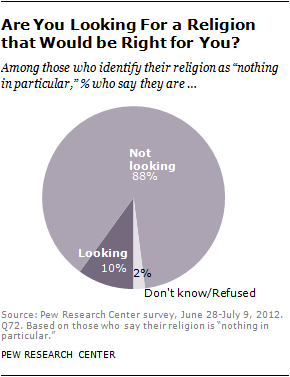 “Overwhelmingly, they think that religious organizations are too concerned with money and power, too focused on rules and too involved in politics,” says Pew.
While the ranks of the unaffiliated have grown significantly over the past five years, the Protestant share of the population has shrunk. In 2007, 53% of adults in Pew Research Center surveys described themselves as Protestants. In surveys conducted in the first half of 2012, fewer than half of American adults say they are Protestant (48%). This marks the first time in Pew Research Center surveys that the Protestant share of the population has dipped significantly below 50%.
The decline is concentrated among white Protestants, both evangelical and mainline. Currently, 19% of U.S. adults identify themselves as white, born-again or evangelical Protestants, down slightly from 21% in 2007. And 15% of adults describe themselves as white Protestants but say they are not born-again or evangelical Christians, down from 18% in 2007. There has been no change in minority Protestants’ share of the population over the past five years.
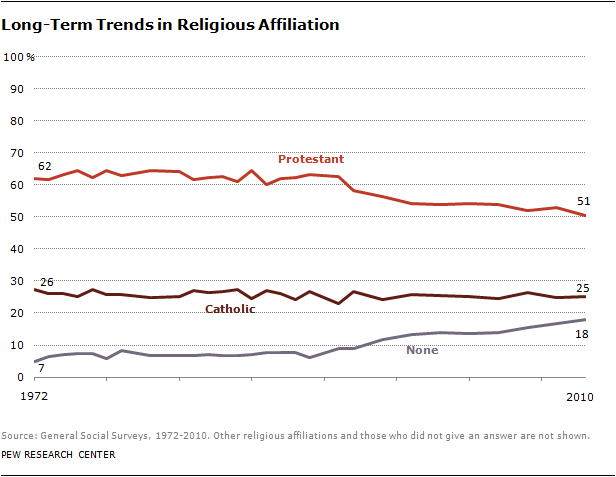
Thinking about the religiously unaffiliated people you know, what are their reasons for not seeking God? Or, is it God they seek outside of a religious connection?
In October of 2008 the Focus on the Family organization published the “Letter from 2012 in Obama’s America.” As you might imagine it was not friendly to the then-candidate for the presidency.
Sixteen pages long with 34 separate prediction points Focus laid out in deep, horrifying detail how the U.S would look in 2012. How did they do?
Look at it this way: the oft cited Old Testament standard for prophetic accuracy was 100%. A single errant prophecy would sound the end-of-life bell for the so-called prophet. If we were still under the Mosaic law it would be time to load up the rocks and descend on Colorado Springs.
A few of the predictions are still up in the air. One of them was half-right. Still others could possibly happen. One or two of Focus’ guesses would likely have happened no matter who was elected. Most, however, were just plain, old-fashioned fear mongering. They are so wrong as to be laughable in retrospect. These have been edited for length, but the original can be read at WND.com.
1. The Boy Scouts no longer exist as an organization. They chose to disband rather than be forced to obey the Supreme Court decision that they would have to hire homosexual scoutmasters and allow them to sleep in tents with young boys.
2. Elementary schools now include compulsory training in varieties of gender identity in Grade 1, including the goodness of homosexuality as one possible personal choice. Many parents tried to “opt out” their children from such sessions, but the courts have ruled they cannot do this, noting that education experts in the government have decided that such training is essential to children’s psychological health.
Many Christian teachers objected to teaching first-graders that homosexual behavior was morally neutral and equal to heterosexuality. They said it violated their consciences to have to teach something the Bible viewed as morally wrong. But state after state ruled that their refusal to teach positively about homosexuality was the equivalent of hate speech, and they had to teach it or be fired. Tens of thousands of Christian teachers either quit or were fired, and there are hardly any evangelical teachers in public schools any more.
Focus on the Family headquarters [Image credit]
3. There are no more Roman Catholic or evangelical Protestant adoption agencies in the United States. Following earlier rulings in New York and Massachusetts, the U.S. Supreme Court in 2011 ruled that these agencies had to agree to place children with homosexual couples or lose their licenses.4. All businesses that have government contracts at the national, state or local level now have to provide documentation of equal benefits for same-sex couples.
5. The Bible can no longer be freely preached over radio or television stations when the subject matter includes such “offensive” doctrines as criticizing homosexual behavior. The Supreme Court agreed that these could be kept off the air as prohibited “hate speech” that is likely to incite violence and discrimination.
6. Physicians who refuse to provide artificial insemination for lesbian couples now face significant fines or loss of their license to practice medicine
7. All other professionals who are licensed by individual states are also prohibited from discriminating against homosexuals. Social workers and counselors, even counselors in church staff positions, who refuse to provide “professional, appropriately nurturing marriage counseling” for homosexual couples lose their counseling licenses. Thousands of Christians have left these professions as a result.
8. Church buildings are now considered a “public accommodation” by the Supreme Court, and churches have no freedom to refuse to allow their buildings to be used for wedding ceremonies for homosexual couples. If they refuse, they lose their tax-exempt status, and they are increasingly becoming subject to fines and antidiscrimination lawsuits.
9. While churches are still free to turn down homosexual applicants for the job of senior pastor, churches and parachurch organizations are no longer free to reject homosexual applicants for staff positions such as parttime youth pastor or director of counseling.
10. In the first week after his inauguration, President Obama invited homosexual rights leaders from around the United States to join him at the White House as he signed an executive order directing all branches of the military to abandon their “don’t ask, don’t tell” policy and to start actively recruiting homosexuals. [Partially true, but….] As a result, homosexuals are now given special bonuses for enlisting in military service (to attempt to compensate for past discrimination) [Sorry, no sexual orientation signing bonuses.]
11. High schools are no longer free to allow “See You at the Pole” meetings where students pray together, or any student Bible studies even before or after school.
12. Tens of thousands of young churches suddenly had no place to meet when the Supreme Court ruled that public schools in all 50 states had to stop allowing churches to rent their facilities — even on Sundays, when school was not in session.
13. Campus organizations such as Campus Crusade for Christ, InterVarsity, Navigators, Baptist Campus Ministry, and Reformed University Fellowship have shrunk to skeleton organizations, and in many states they have ceased to exist.
14. Public school teachers are no longer free to lead students in the Pledge of Allegiance to the flag of the United States.
15. [F]ederal law immediately nullified hundreds of state laws that had created even the slightest barrier to abortion. States can no longer require parental involvement for minors who wish to have an abortion, waiting period, informed consent rules, restrictions on tax-payer funding or restrictions on late-term abortions. The act reversed the Hyde Amendment, so the government now funds Medicaid abortions for any reason. As a result, the number of abortions has increased dramatically.
16. Nurses are no longer free to refuse to participate in abortions for reasons of conscience.
17. Doctors who refuse to perform abortions can no longer be licensed to deliver babies at hospitals in any state. As a result, many Christian doctors have left family medicine and obstetrics, and many have retired.
18. It’s almost impossible to keep children from seeing pornography. The Supreme Court in 2011 nullified all Federal Communications Commission restrictions on obscene speech or visual content in radio and television broadcasts. As a result, television programs at all hours of the day contain explicit portrayals of sexual acts.
19. It is illegal for private citizens to own guns for selfdefense in eight states, and the number is growing with increasing Democratic control of state legislatures and governorships. This was the result of a 6-3 Supreme Court decision in which the court reversed its 5-4 decision that had upheld private gun ownership.
20. Parents’ freedom to teach their children at home has been severely restricted…the Supreme Court declared that home schooling was a violation of state educational requirements except in cases where the parents (a) had an education certificate from an accredited state program., (b) agreed to use state-approved textbooks in all courses, and (c) agreed not to teach their children that homosexual conduct is wrong, or that Jesus is the only way to God, since these ideas have been found to hinder students’ social adjustment and acceptance of other lifestyles and beliefs, and to run counter to the state’s interest in educating its children to be good citizens.
21. President Obama fulfilled his campaign promise and began regular withdrawal of U.S. troops from Iraq, completing it in the promised 16 months, by April 2010. All was peaceful during those months, but then in May 2010, Al-Qaida operatives from Syria and Iran poured into Iraq and completely overwhelmed the Iraqi security forces. A Taliban-like oppression has taken over in Iraq, and hundreds of thousands of “American sympathizers” have been labeled as traitors, imprisoned, tortured, and killed. The number put to death may soon reach the millions.
22. President Obama directed U.S. intelligence services to cease all wiretapping of alleged terrorist phone calls unless they first obtained a warrant for each case.
23. In early 2009, [Russia] followed the pattern they had begun in Georgia in 2008 and sent troops to occupy and re-take several Eastern European countries, starting with the Ukraine, Estonia, Latvia and Lithuania.
24. President Obama has also moved to deepen U.S. ties and U.S. trade with communist regimes in Cuba, Venezuela and Bolivia, regimes that had long enjoyed the favor of far-Left factions in the Democratic Party. Several other Latin American countries seem ready to succumb to insurgent communist revolutionary factions funded and armed by millions of petrodollars from Hugo Chavez in Venezuela.
25. In mid-2010, Iran launched a nuclear bomb that exploded in the middle of Tel Aviv, destroying much of that city. They then demanded that Israel cede huge amounts of territory to the Palestinians, and after an anguished all-night Cabinet meeting, Israel’s prime minister agreed. Israel is reduced to a much smaller country, hardly able to defend itself, and its future remains uncertain.
26. The new Congress under President Obama passed a nationalized “single provider” health care system, in which the U.S. government is the provider of all health care in the United States, following the pattern of nationalized medicine in the United Kingdom and Canada. The great benefit is that medical care is now free for everyone — if you can get it. Now that health care is free, it seems everybody wants more of it. The waiting list for prostate cancer surgery is 3 years. The waiting list for ovarian cancer is 2 years.
27. Because medical resources must be rationed carefully by the government, people older than 80 have essentially no access to hospitals or surgical procedures. Their “duty” is increasingly thought to be to go home to die, so they don’t drain scarce resources from the medical system. Euthanasia is becoming more and more common.
28. Tax rates have gone up on personal income, dividends, capital gains, corporations, and inheritance transfers. The amount of income subject to Social Security tax has nearly doubled. The effect on the economy has been devastating. We have experienced a prolonged recession. Everyone has been hurt by this, but the poor have been hurt most. In dozens of cities, there are no jobs to be found. [Do these folks know nothing at all of wider economic issues?]
29. The federal budget deficit has increased dramatically under President Obama, in spite of higher tax rates.
30. In 2009, Congress passed and President Obama quickly signed a “card check” program that nullified the requirement for secret ballots when voting on whether workers wanted a union shop.
31. World demand for oil continues to climb, and prices keep going up, but President Obama for four years has refused to allow additional drilling for oil in the United States or offshore. Gas costs more than $7 per gallon.
32. The FCC quickly implemented the “Fairness Doctrine,” which requires that radio stations provide “equal time” for alternative views on political or policy issues.
As a result, all radio stations have to provide equal time to contrasting views for every political or policy-related program they broadcast by talk show hosts like Rush Limbaugh, Laura Ingraham, Sean Hannity, Dennis Prager, Janet Parshall, Michael Medved and Hugh Hewitt, and broadcasters like Dr. James Dobson. Every conservative talk show is followed by an instant rebuttal to the program by a liberal “watchdog” group. Many listeners gave up in frustration, advertising (and donation) revenues dropped dramatically, and nearly all conservative stations have gone out of business or switched to alternative formats such as country or gospel or other music. Conservative talk radio, for all intents and purposes, was shut down by the end of 2010. [*COUGH *COUGH]
33. After the Supreme Court legalized same “sex marriage,” homosexual-activist groups targeted three large Christian book publishers that had publications arguing that homosexual conduct was wrong based on the teachings of the Bible…As a result, several Christian publishers have gone out of business.
34. In his first week in office, Obama followed President Clinton’s precedent and fired all 93 U.S. attorneys, replacing them with his own appointments, including the most active members of the American Civil Liberties Union (ACLU). President Obama argued this was not a selective political action like what President Bush had done, because Obama had fired all of them, conservatives and liberals alike. The Justice Department soon began to file criminal and civil charges against nearly every Bush administration official who had any involvement with the Iraq war. During his campaign, Senator Obama said, “What I would want to do is to have my Justice Department and my Attorney General immediately review the information that’s already there and to find out are there inquiries that need to be pursued.” In order to facilitate these proceedings, President Obama rescinded President Bush’s executive order that had prevented presidential papers from being released, and millions of pages of previously secret White House papers were posted on the Internet. ACLU attorneys have spent four years poring over these papers looking for possible violations of law. Dozens of Bush officials, from the Cabinet level on down, are in jail, and most of them are also bankrupt from legal costs. [What have these people been smoking??]
The issue at hand–besides the fact that they really, really need to avoid the prophecy business–is why this letter was published in October 2008. There was one and only one reason: to scare evangelical voters into voting for the Republican candidate, John McCain. (Okay, maybe also to raise money but let’s stick with the most obvious one for now…)
Of all voters Christians should be the least ones motivated by fear for any reason. We are encouraged, commanded, cajoled, challenged (pick your verb) to have not fear, fear not, to let the peace of God rule in our hearts. We are promised a peace that passes understanding. Why, then, when election time rolls around do Christ’s followers allow the fear of what might happen control how they vote? It has, it does, and it is again during this election cycle.
Regardless the candidate for whom you vote, if fear dictates it you are not approaching the election how God would have it. He is sovereign. He is in control. There is no reason to fear, so do not vote like there is.
[HT: Libby Anne]
My friend Joel Rainey recently returned from a trip to Turkey. Joel has been a pastor and church planter, is an author, blogger, husband and father. He currently is the Director of Missions for the Mid Maryland Baptist Association.
This week he blogged about his trip to the nation of Turkey; a trip he took with several pastors from his area. It is an illuminating story with truths that benefitted me, and I hope will benefit you, too. He has given me to publish, “What Turkish Muslims Taught Me About our Changing World” in its entirety. The original post is at his blog, themelios.
My job sometimes requires pretty extensive travel, and through my service to our churches, I’ve had the opportunity to, literally, see the world. But I’ve just returned from a trip that I think has had a greater impact on me than any other trip I’ve taken.
From September 21-30, six area pastors and myself traveled throughout the Republic of Turkey with members of the Muslim community. This journey actually started more than a year ago with a call from one of our state legislators who is a member of one of our churches. The Governor of Maryland had included her in a trip to Turkey as part of an eventual “sister-state” agreement that was signed between my state and a province in that country, but once the leader of the Turkish organization discovered that this representative was an evangelical Christian, he expressed hesitation, because, as he put it, “I always thought evangelical Christians hated Muslims.”Joel Rainey (back left) and team in Turkey
Seeking to put this false rumor to rest, I reached out to the members of this community, and got a warm embrace in response that has lasted more than a year. I’ve been in the company of people from nearly every tribe and tongue, but when it comes to hospitality, no one does it better than the Turkish people! They are some of the finest and most gracious people I’ve ever met! Eventually, this new relationship resulted in their invitation for us to join them in their home country last week.
Let me say that again. Muslims openly invited more than a half dozen Baptist preachers to the middle east, and even covered a significant portion of the cost of the trip!
During our time abroad with our new friends, I have never experienced such hospitality! We toured sites together that were important to both Christians and Muslims. We visited schools, newspapers, and hospitals built by this group in the hopes of improving the lives of others in their home country. We visited the homes of influential Turkish business leaders and learned of their own involvement in trying to improve conditions, not only in Turkey, but throughout the middle east. One young pharmacist we met near the border with Syria told me “I want to take what we have done in this city, and spread that peace across the border and throughout this part of the world. I want my city to be the starting gate for peace.” I love that guy’s heart!
It is unfortunate that nearly everything about this part of the world that is broadcast on American news media focuses on extremist elements. To be sure, those elements are very present (as was demonstrated after our departure with the Syrian violence crossing the border into Turkey), but the so-called “Muslim world” is full of good people who are trying to make a positive difference, and its working!
All of this probably sounds very strange coming from the mouth of an evangelical Christian, and to be sure, my convictions have not changed. I still believe the Bible is the Word of God. I still believe Jesus is God, that He was crucified as a substitute for sinners, that he rose bodily from the dead, and that nothing short of repentance and total faith in His death and resurrection will save. But these convictions don’t hold me back from the relationship I now have with my Muslim friends. On the contrary, they propel me more deeply into relationship with these precious people!
This experience is but one example of how the way we engage the world as followers of Jesus needs to change, and I’ve addressed that issue in more depth here. But as we explore further ways to walk together with the Muslim community here, I’m taking several things away from our recent trip that will continue to inform our ongoing relationship.
1. The sincerety of their faith is motivating them to change the world, starting with the region where they live. Our Turkish-American guide for this trip told me that years ago he asked the question, “why is it that when it comes to science and technology, education, and health care, that the Muslim world seems to lag behind everyone else?” According to his own testimony, he found mentors within his own faith who believed that Islam should actively engage all these areas, and contribute to the global community. In short, he and others like him who live in Turkey have found meaning and purpose that they believe is anchored in their faith.
2. The Movement we witnessed in Turkey is cross-generational. While many young people are “out in front” seeming to make positive waves, older generations are seeing their passion and responding with financial support and other things necessary to accomplish their goals. Inspired by Imams of centuries past who encouraged Muslims to invite “outsiders” in, they have taken one step further and are taking the initiative to introduce themselves to the non-Muslim world. They are disheartened by the way the media have focused almost exclusively on the radical elements of their faith, are weary of being automatically identified with those radical elements, and are eager to share the good that is happening throughout the middle east and among Muslims worldwide which is so under-reported. It was not uncommon for us to visit a home where three or four generations of Turkish Muslims spoke of their commitment to these goals.
3. They speak boldly and loudly to the violent elements in their faith, and so should we! Though the media pay them little attention (honest appraisal of the positive elements of a movement or religion rarely sells a lot of newspapers or increases viewer ratings), they are quick to condemn violence committed in the name of Islam. We had barely landed when our guests openly and forcefully condemned the recent attack on our embassy in Libya in response to the “Innocence of Muslims” film made in the U.S., and apologized to us for the way their faith was represented in that violence. (We responded by condemning the film itself. The language and sexual content alone should make that film as offensive to Christians as it is to Muslims. We also acknowledged that idiots are entitled to their 1st amendment rights also!)
Call it propaganda if you want, but the truth is that Muslim critics of violence abound, we just don’t listen for their voices. (Harris Zafar is but one example in our own country.) Instead, we tend to suppress our awareness of the violent tendencies present in ourselves. Sure, we Christians don’t have anyone flying airplanes into skyscrapers. But when was the last time you heard a Christian openly condemning a violent attack on an abortion clinic, or the bullying of a homosexual? Our new Muslim friends agree with us that ALL people are created in God’s image and likeness, and when violence is done to any of them, the reason doesn’t matter. Such violence should be condemned.
4. This new relationship is a new platform for the very kind of “public square” evangelism in which Paul participated. You could spend years as a “traditional” missionary in a Muslim country and never achieve the level of access we achieved in a single week! From the beginning, we have been up front with our Muslim friends regarding what we believe, and told them our greatest desire is for them to come to know Jesus as we know Him. But we have also stressed that our continued friendship is not contingent on whether they become Christian. After all, “forced conversion,” is not conversion. It is conquest, and both Christians and Muslims have already given each other too much of that in our history together.
At the same time, I can’t help but think that if Paul were alive today, this is precisely the platform he would leverage in order to spread the Gospel. On several occasions, our group had this opportunity, and we seized it with the blessing of our hosts, most of whom were and are curious about Jesus. In general, Muslims have great respect for Jesus. They just don’t know much about him, and recognize that Christians spend much more time focusing on Him. So when they encounter Christians, they are often anxious to hear a story about him. Though most seminary textbooks on the subject claim that Muslims reject the doctrine of penal substitution, the truth is that many Muslims have never even been offered the opportunity to consider the concept. In one of my conversations this past week, one man asked “tell me again what you mean by ‘Jesus paid the price.’ I’ve never heard that before!”
5. In our current North American context, walking in close relationship with Muslims is the epitome of being “counter-cultural.” Let’s face it. Most Americans, even Christians, are afraid of Muslims. We are conditioned by our media, and even most of our political leadership to keep our distance. So what could possibly be more counter-cultural than our willingness to to walk together with these precious people, and do it publicly?
6. If the Gospel is truly “the power of God unto salvation,” then what on earth are we afraid of? I still believe Romans 1:16-17 is true. And because I believe this, I want to walk closely with those who have yet to accept its claim. Our new friends are anxious to talk about faith, and there is much that we hold in common! But in the midst of discussing those commonalities, I have, and will continue to challenge them concerning the basis for forgiveness, and a sure hope of eternal life. And I’ll do it because they are my friends.
Our group learned much while traveling with our friends, and we look forward to learning more, to engaging them in matters of common interest, and to consistently present the Gospel of Jesus to them at every opportunity. God is at work in places we too quickly brush off as “lost.” I saw it for myself, and I look forward to experiencing all that He has in store in the future for us, and for our new friends.
I will just add that Joel’s strategy for meeting and learning from members of the Islamic religion is also needed for any area where you and I differ from others. We cannot claim to “know” about Islam if we do not know any Muslims. We cannot claim to know the needs of the homeless unless we talk to them and ask. Those in the racial majority cannot claim to know how racial minorities are affected by government policy unless those in the majority are friends with minorities. Wisdom requires nothing less of us.

Tonight the major networks will host a debate between Barack Obama and Mitt Romney. (Third party candidates have been asked to stay home. Upsetting the accepted narrative is frowned upon by the Presidential Debate Commission.)
Of these few things you can be sure:
1. Both men will say something good.
2. Both men will make gaffes.
3. Even if Barack Obama falls off the stage, drops an F-bomb, and lights up a Marlboro while talking about healthcare, Democrats will proclaim him the winner within a nanosecond of the host’s “Goodnight and thanks for watching.”
4. Even if Mitt Romney breaks out a roll of thousand dollar bills as thick as Andre the Giant’s fist, introduces his two other wives to America, and calls for dispersing the Social Security Trust Fund among the Forbes 400, Republicans will shout down the Democrats in proclaiming a win.
5. Both men will be unswervingly bold in their promises and incomprehensibly vague in their substance.
6. Mitt Romney will say Obama has gotten almost nothing right.
7. Barack Obama will say Romney would get almost nothing right.
8. Obama will say “47%” enough times for an entire frat house to be drunk from beer pong.
9. Romney will mention “unemployment” enough times for Joe Biden to realize his four year burden comment was actually a slam on his boss.
10. No Democrats will change their minds.
11. No Republicans will change their minds.
12. Anyone who decides to vote based on a debate should probably have their voter registration card revoked.
Good night, and good luck.
For no particular reason I have never been a fan of rap or hip-hop, but last week I was drawn into that genre. The fellow responsible for the drawing is an artist known as Propaganda, a self-described “fire baptized, battle rapper, who’s heavily influenced by boat music and bound creative freedom in poetry.” At least I think that’s what he says. The song by which I was drawn is called “Precious Puritans.”
The song, from Propaganda’s new project, Excellence, takes pastors to task for uncritically quoting the theology of many Puritan pastors. These would be the same Puritans who owned and abused slaves, while excusing it as the order of things. The lyrics to the song (below) are blistering, insightful, and revealing.
Puritan pastor Jonathan Edwards [Image credit]
The second is an interview with Propaganda, with a lengthy discussion about the song.
In short order a twitter exchange broke out with Owen Strachan taking the position the song went too far and would possibly cause avoidance of Puritans altogether. Like not enough fiber in ones diet, I suppose. Last week Strachan took to his blog with the same assertions. It was a weak attempt at a critique. If anything Strachan demonstrated with sterling clarity the very mindset challenged by Propaganda.
Next, influential blogger Steve McCoy weighed-in. McCoy is well known for his breadth of musical knowledge and affirmation of the arts. He correctly notes too many people have missed the point of “Precious Puritans.” I could not agree more. Today Steve asks, “Where are the voices of our white, Puritan-loving Southern Baptist leaders, and seminary presidents, and deans, and entity leaders, and prominent pastors? We need your voices on this.” It is a needed, important question.
I do not fit into any of those categories, but I do have a few thoughts.
One, mainly.
Where are the white believers who are seeking responses from African-Americans? Why, when issues of race propel themselves to the fore, do so many white folks think a white opinion is all that is needed? Worse, why do we so readily believe that we automatically provide a correct analysis on any racial issue?
Today, Dr. Anthony Bradley, associate professor of theology and ethics at The King’s College in New York City and research fellow at the Acton Institute for the Study of Religion and Liberty, tackled the issue on the Urban Faith blog. Addressing this crucial item he writes:
Propaganda’s point is that if white evangelicals do not talk about the bones of their heroes they run the risk of doing great harm to people of color. Many of us are beginning to wonder why white evangelicals do not seem to care much about this and seem willing to trade off “honoring” their forefathers for their own comfort over doing what is necessary to build racial solidarity. Some of my liberation theology friends, in the end, would see Strachan’s critique as a dismissal of acknowledging the importance of caring about how the Puritans are presented to African Americans and would constitute a racial microaggression or a micro-invalidation.
There is an ongoing disconnect between most white evangelicals and anything to do with minority culture, especially as it relates to African-American culture. We are so blind and insular that we do not even attempt bridging divides. This is not typically out of hate, but because we know of no such divide.
Were the slaves not freed? Was the Voting Rights Act not passed? Was the Civil Rights Act not passed? Do we not have a president who is African-American? Then, what is the fuss? Such is a typical white line of thinking.
Two of my African-American pastor friends took the time to respond with their thoughts on “Precious Puritans.” James Roberson III is the Missional Communities Pastor at Blueprint Church in Atlanta, GA. Dr. Dwight McKissic is the Senior Pastor of Cornerstone Baptist Church in Arlington, TX.
From James Roberson:
Here are some historical facts that aren’t talked about:
George Whitfield campaigned to have slaves at his orphanage.
Jonathan Edwards owned slaves as well.
The Southern Baptist Convention made negro inferiority a theological conviction amongst its convention.Did these negative attributes define who these people were? Not in my opinion. But I wonder if the issue was abortion?
What if George Whitfield campaigned for the rights of women to have abortions.
Jonathan Edwards owned abortion clinics.
The Southern Baptist Bonvention made a woman’s right to choose a theological conviction amongst its convention.I have heard abortion and slavery compared on more than one silly occasion so I figured I would use it here. I think abortion would make us think of these folks very differently. It shows how we value certain issues more than others.
I love what Propaganda said in his album and I’m surprised that he hasn’t received more flack than he has. Prop was right. I think the entirety of the poem speaks to the flaws of all leaders, which is a healthy reminder. But what I think we are unwilling to embrace is that white people are far too often tired of the slavery conversation and want to move on.
I understand that many white people feel like they shouldn’t have to discuss something they weren’t apart of. Yet what we should embrace is that humans were once used like a rake or luggage; nothing but tools. Black people were considered three-fifths of a human and made white people a fortune. A fortune that many whites have gained a considerable amount of privilege from. It would only be healthy to consistently take a look at how we actually thought God was ok with that. It would also be a benefit to our missiology within cities to understand how slavery and Jim Crow have effected the black population to day.
Sin is never easy to talk about. Yet my prayer is that we grow more comfortable with examining, confessing, and praying over the sins of our fathers. It will as James 5:16 promises, bring healing to our nation.
From Dwight McKissic:
(1) It is alright for the pastor to quote Puritans, because anyone quoted could probably be disqualified in someones eyes for various reasons, including Propaganda who is bothered by the pastor quoting Puritans. (2) I applaud and appreciate Propaganda for voicing his viewpoint. Whenever I quote someone that may be objectionable to a large segment of my audience (for whatever reasons), I usually make some kind of disclaimer or qualifying remark to make that person more palatable to my audience. Similar to the song I’ve said, “God sometimes hit straight licks with crooked sticks,” or “The Great Puritan, Jonathan Edwards was a slavemaster–we’ll forgive him for that without him asking. He preached a great sermon, “Sinners in the Hands….”. You get the point.
So, the preacher needs to qualify or “ask permission” to quote the slaveholder, and the rapper must accept the fact that one never receives ministry from a person totally without fault or sin. He alludes to this in his song.
And certainly, I recognize that slaveholding was a sin on par with abortion, murder, and even more egregious than same-sex marriage. But to the slave-holder, it was a blind spot. That is no excuse, but the reason we call it a blind spot is because–they were blind. Both parties need to seek to understand the other on this issue and meet somewhere in the middle.
Below are the lyrics to “Precious Puritans,” and the song itself from YouTube.
If you would allow me second to deal with some in-house issues here…
Pastor, you know it’s hard for me when you quote puritans.
Oh the precious puritans.
Have you not noticed our facial expressions?
One of bewilderment and heart break.
Like, not you too pastor.
You know they were the chaplains on slaves ships, right?
Would you quote Columbus to Cherokees?
Would you quote Cortez to Aztecs?
Even If they theology was good?
It just sings of your blind privilege wouldn’t you agree?
Your precious puritans.They looked my onyx and bronze skinned forefathers in they face,
Their polytheistic, god-hating face.
Shackled, diseased, imprisoned face.
And taught a gospel that says God had multiple images in mind when he created us in it.
Their fore-destined salvation contains a contentment in the stage for which they were given which is to be owned by your forefathers’ superior image-bearing face.
Says your precious puritans.And my anger towards this teaching screams of an immature doctrine and a misunderstanding of the gospel.
I should be content in this stage, right? Isn’t that Paul taught?
According to your precious puritans.Oh, you get it but you don’t get it.
Oh, that we can go back to an America that once were, founded on Christian values.
They don’t build preachers like they used to. Oh, the richness of their revelations.
It must be nice to not have to consider race.
It must be nice to have time to contemplate the stars.
Pastor, Your colorless rhetoric is a cop-out.
You see my skin, and I see yours. And they are beautiful.
Fearfully and wonderfully divinely designed uniqueness.
Shouldn’t we celebrate that rather that act like it ain’t there?
I get it. Your puritans got it. But,How come the things the Holy Spirit showed them in the valley of vision didn’t compel them to knock on they neighbors door and say, “You can’t own people!”?
Your precious puritans were not perfect.
You romanticize them as if they were inerrant. As if the skeletons in they closet was pardoned due to the they hard work and tobacco growth.
As if abolitionists weren’t racist and just pro-union.
As if God only spoke to white boys with epic beards.
You know Jesus didn’t really look like them paintings. That was just Michaelangelo’s boyfriend.
Your precious puritans.They got it but they didn’t get it.
There’s not one generation of believers that figured out the marriage between proper doctrine and action.
Don’t pedestal these people, your precious puritans partners purchased people.
Why would you quote them?
Step away.Think of the congregation that quotes you. Are you inerrant?
Trust me I know the feeling.
It’s the same feeling I get when people quote me.
Like, if you only knew!
I get it. But I don’t get it.
Ask my wife.
And, it bothers me when you quote puritans, if I’m honest, for the same reason it bothers me when people quote me–they precious propaganda.
So, I guess it’s true.
God really does use crooked sticks to make straight lines.
Just like your precious puritans.
A week or so ago results from a recent in-depth investigative report on America’s drone war were released. Despite horrid reviews for President Obama’s involvement in it, several “mainstream” news outlets reported the findings.
A CNN report entitled Drone strikes kill, maim and traumatize too many civilians, U.S. study says states
The report accuses Washington of misrepresenting drone strikes as “a surgically precise and effective tool that makes the U.S. safer,” saying that in reality, “there is significant evidence that U.S. drone strikes have injured and killed civilians.”
It also casts doubts on Washington’s claims that drone strikes produce zero to few civilian casualties and alleges that the United States makes “efforts to shield the drone program from democratic accountability.”
When I wrote about drones in September (“One former British soldier talks about drone warfare”) a linked Washington Post story revealed 92 U.S. drone attacks from January 2011-June 2012 resulted in only five Al Queda leaders being killed. That is 87 misses out of 92 tries.
“Misses” being qualified by saying many people have been killed or injured, just not so much the actual enemy. The surgical precision about which our government likes to brag is akin to using a chainsaw to take out an appendix. The scars being about equal.
In the second of his two broadsides on why he will not vote for either major party candidate, Atlantic staff writer, Conor Friedersdorf, notes this about drone warfare:
Obama terrorizes innocent Pakistanis on an almost daily basis. The drone war he is waging in North Waziristan isn’t “precise” or “surgical” as he would have Americans believe. It kills hundreds of innocents, including children. And for thousands of more innocents who live in the targeted communities, the drone war makes their lives into a nightmare worthy of dystopian novels.
Forgive me, but the word “terrorizes” is tellingly ironic.
Mitt Romney, the Republican nominee, can be expected to dial up the hubris meter during the election approach. He may even hit 11. To fire up his base he must demonstrate he is even tougher on terrorism than Obama, which, following the most recent 9/11, should not be difficult. But Romney has offered no indication he would scale back the targeted killing program Predators provides.
Just yesterday, October 1, 2012, a Washington, DC, CBC affiliate reported drones will soon be able to seek and destroy on the battlefield without human input.
Ronald Arkin, a professor at the Georgia Institute of Technology, believes that drones will soon be able to kill enemies on their own independently.
“It is not my belief that an unmanned system will be able to be perfectly ethical in the battlefield, but I am convinced that they can perform more ethically than human soldiers are capable of,” Arkin told AFP.
Arkin added that robotic weapons should be designed as “ethical” warriors and that these type of robots could wage war in a more “humane” way.
And we thought Skynet was so far in the future.

A Predator drone fires two Hellfire missiles
Right.
This post, however, is not primarily concerned with the politics involved with the drone war. My concern is the relationship of its effects to the kingdom of God.
We have been told that drone warfare provides safety to American troops and provides for less collateral damage than other types bombing. Drones are able to provide visuals clearer than a set of latitude and longitude coordinates, I suppose. A Hellfire missile launched from a drone should cause fewer casualties than a Tomahawk fired from a ship. Cleaner shots, better identification, direct hits. All of this adds up to more dead terrorists and a better protected homeland.
Except it doesn’t.
The Bureau of Investigative Journalism in London, reports,
from June 2004 through mid-September 2012, available data indicate that drone strikes killed 2,562-3,325 people in Pakistan, of whom 474-881 were civilians, including 176 children. TBIJ reports that these strikes also injured an additional 1,228-1,362 individuals. Where media accounts do report civilian casualties, rarely is any information provided about the victims or the communities they leave behind. This report includes the harrowing narratives of many survivors, witnesses, and family members who provided evidence of civilian injuries and deaths in drone strikes to our research team. It also presents detailed accounts of three separate strikes, for which there is evidence of civilian deaths and injuries, including a March 2011 strike on a meeting of tribal elders that killed some 40 individuals.
Also noted in the report is whenever men of fighting age are killed, even if they are completely unknown, and even if their activity is undefined, they are classified as combatants. That is, if a Hellfire missile lands in the middle of 20 sixteen to eighteen year olds playing soccer, they are classified as enemy combatants. Why? Because we killed them in the course of prosecuting a war. Not because they have been or are in a training camp or have plans to join Al Queda.
A quick review: How do we know they were enemy combatants? Because the government said so. How does the government know they were enemy combatants? Because we killed them.
They might as well be since, as the NYT reports, “some in the Obama administration joke that when the CIA sees ‘three guys doing jumping jacks,’ they think it is a terrorist training camp.” Very funny.
The drone war in Asia and the Middle East has become the “War on Terror” equivalent of the bombing of Laos and Cambodia during the Vietnam War.
As if this were not enough our drone strategy includes the very behaviors for which we would condemn terrorists: double strikes.
Drones hover twenty-four hours a day over communities in northwest Pakistan, striking homes, vehicles, and public spaces without warning. Their presence terrorizes men, women, and children, giving rise to anxiety and psychological trauma among civilian communities. Those living under drones have to face the constant worry that a deadly strike may be fired at any moment, and the knowledge that they are powerless to protect themselves. These fears have affected behavior. The US practice of striking one area multiple times, and evidence that it has killed rescuers, makes both community members and humanitarian workers afraid or unwilling to assist injured victims. Some community members shy away from gathering in groups, including important tribal dispute-resolution bodies, out of fear that they may attract the attention of drone operators. Some parents choose to keep their children home, and children injured or traumatized by strikes have dropped out of school. Waziris told our researchers that the strikes have undermined cultural and religious practices related to burial, and made family members afraid to attend funerals. In addition, families who lost loved ones or their homes in drone strikes now struggle to support themselves. Emphasis mine
One report has a drone striking a funeral where mourners had gathered to remember the victims of a previous drone strike.
Additionally the
FATA [Federally Administered Tribal Area] suffers from one of highest poverty rates in the world. The per capita income is approximately US$250 per year, with 60 percent of the population living below the national poverty line. Undeveloped infrastructure and low per capita public development expenditure have resulted in an overall literacy rate of only 17 percent. Most of the population depends on subsistence agriculture, manual labor, small-scale local business, or remittances from relatives working abroad or in other regions of Pakistan for survival. In North Waziristan, chromite mining operations also provide limited contract jobs near the Afghan border. There are only 41 hospitals in the region, and an estimated one doctor for every 6,762 residents.
Who lives there?
FATA is inhabited almost entirely by Pashtuns, a group of tribes that first settled in the area more than 1,000 years ago. The various Pashtun tribes live not only in FATA, but also in large parts of south and east Afghanistan. Altogether, there are some 25 million Pashtuns worldwide, making it one of the largest tribal groups in the world.
Who are the Pashtuns? They are virtually all Muslims who span the border between Afghanistan and northwestern Pakistan. This means they are not followers of Christ. This means they are being bombed into a Christless eternity.
As a follower of Christ it disturbs me to know my government is randomly, regularly, inefficiently, deceptively, and erroneously killing people with whom we are not at war; targeting first responders and mourners for missile strikes; creating an ongoing situation where bearers of the gospel cannot enter with eternal good news. Why do we who give money for missions, pray for the fulfillment of the Great Commission, long for the day when some from every nation tribe and tongue sing praises to our great God seem so content to have one of those tribes bombed into oblivion? Have we bought so thoroughly into a kingdom of this world it has priority over the kingdom of God? Are we so fearful of what might happen to us we are willing to overlook anything that is happening to people around the world?
My friend Emily said today in a Facebook conversation, “I think we should do our best not to have these conversations in a theoretical moral and ethical sphere that is separate from the Christian narrative. The crucifixion and resurrection of Christ should be the basis for thinking through all of these things, IMHO.” If we are to call ourselves “followers of the Way,” then, I believe, it must thus be.
You can read or download the entire report pdf from Stanford-NYU here.
Sed ut perspiciatis unde omnis iste natus error sit voluptatem accusantium doloremque laudantium, totam rem aperiam, eaque ipsa quae ab illo inventore veritatis et quasi architecto beatae vitae dicta sunt explicabo. Nemo enim ipsam voluptatem quia voluptas sit aspernatur.
Sed ut perspiciatis unde omnis iste natus error sit v[pullquote]Here is the quote.[/pullquote]oluptatem accusantium doloremque laudantium, totam rem aperiam, eaque ipsa quae ab illo inventore veritatis et quasi architecto beatae vitae dicta sunt explicabo. Nemo enim ipsam voluptatem quia voluptas sit aspernatur.
Sed ut perspiciatis unde omnis iste natus error sit voluptatem accusantium doloremque laudantium, totam rem aperiam, eaque ipsa quae ab illo inventore veritatis et quasi architecto beatae vitae dicta sunt explicabo. Nemo eni
Sed ut perspiciatis unde omnis iste natus error sit voluptatem accusantium doloremque laudantium, totam rem aperiam, eaque ipsa quae ab illo inventore veritatis et quasi architecto beatae vitae dicta sunt explicabo. Nemo enim ipsam voluptatem quia voluptas sit aspernatur.
Sed ut perspiciatis unde omnis iste natus error sit voluptatem accusantium doloremque laudantium, totam rem aperiam, eaque ipsa quae ab illo inventore veritatis et quasi architecto beatae vitae dicta sunt explicabo. Nemo enim ipsam voluptatem quia voluptas sit aspernatur.
fj[wqpoejfqwoei
hweoivhweoaie
anvweopapweoai

In spite of myself another new post
Another new post…





![[Image credit]](http://www.martyduren.com/wp-content/uploads/2013/03/culture.jpeg)
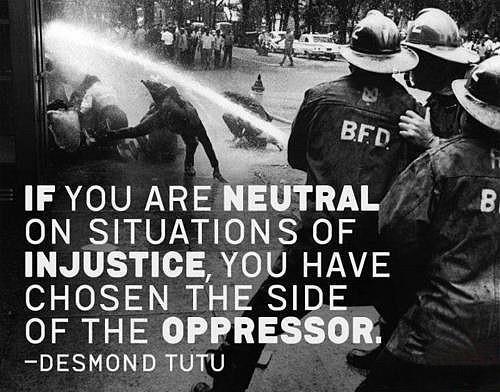

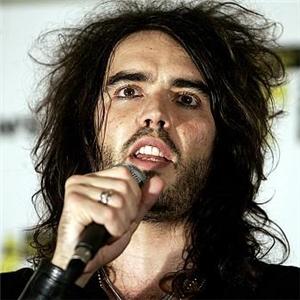





![Megan Phelps [Image Credit]](http://www.martyduren.com/wp-content/uploads/2013/02/meganphelps.jpg)

![[Image credit]](http://www.martyduren.com/wp-content/uploads/2013/01/kids.jpeg)




![[Image Credit]](http://www.martyduren.com/wp-content/uploads/2013/01/spiritual-bullying-e1357651873937.jpeg)



![[Image credit]](http://www.martyduren.com/wp-content/uploads/2013/01/Bible_Ring_Heart_by_JoshuaCollins-e1357173051682.jpg)